
Phuket
Where to Stay in Phuket
The best area to stay in Phuket comes down to one fact: the island is fifty kilometres long and one bus route covers a third of it, so the base you pick decides how the whole week feels. Nine areas compared on the sea in front of them and on whether you can leave without a car.
Phuket is not a resort town, it is an island roughly fifty kilometres from end to end, and that single fact decides more about a trip here than any hotel review. Where you sleep sets which beach you wake up on, how long the airport transfer takes, and whether an evening out is a walk or a negotiation with a taxi driver. One bus route covers the west coast and nothing covers the rest, and taxi fares are high by Thai standards, so a base that looks a short distance away on a map can quietly add an hour and a substantial sum to every day. Pick the area first, the hotel second.
The best area to stay in Phuket
For a first visit, Kata. It keeps enough restaurants and beach life to fill a week without arranging transport every evening, it avoids the volume of Patong, and it sits on the bus route. Karon next door is the same idea with more space. Patong if the nightlife is the point, Bang Tao if you want a resort to settle into, Kamala or Surin for quiet with the island still reachable, and the old town if you would rather eat well than swim.
One input that is easy to miss, and that comes from our own wave measurements on the Phuket weather page: the west coast gets steadily calmer from south to north, by about forty per cent between Kata and Mai Khao, in the same order every month of the year. That gradient matters far more in the monsoon than in February, and it is the reason the quiet northern beaches are also the swimmable ones when the rest of the coast has red flags.
The nine areas compared
Two columns here are ours rather than anyone’s marketing. The sea figures are our own measurements at each beach, and the transport column is the published Smart Bus route, which is the thing most guides to this island still get wrong.
| Area | Sea, Feb to Jul | Public transport | Evenings | Suits |
|---|---|---|---|---|
| Nai Harn and Rawai | 0.61m to 1.34m | On the Smart Bus | Some walking | Repeat visitors, longer stays, anyone who wants a bay rather than a resort front |
| Kata | 0.61m to 1.34m | On the Smart Bus | Walk to dinner | First visits, couples, families who want to walk to dinner |
| Karon | 0.53m to 1.30m | On the Smart Bus | Walk to dinner | Families, longer stays, anyone who found Kata a little busy |
| Patong | 0.53m to 1.30m | On the Smart Bus | Walk to dinner | Short stays, nightlife, shopping, anyone without transport |
| Kamala | 0.45m to 1.26m | On the Smart Bus | Walk to dinner | Families, couples, anyone who wants Patong reachable but not audible |
| Surin | 0.45m to 1.26m | On the Smart Bus | Some walking | Couples, quiet, a resort you intend to use |
| Bang Tao and Laguna | 0.40m to 1.21m | Near the Smart Bus | Some walking | Resort holidays, families settling in, anyone who wants calmer water |
| Nai Yang and Mai Khao | 0.37m to 1.13m | No bus | Car needed | A first or last night by the airport, quiet, long empty walks |
| Phuket Old Town | Inland | Town routes only | Walk to dinner | Food, architecture, budget, a rainy stretch of the monsoon |
The same nine areas, priced: our Phuket villas guide gives the number of villas Agoda lists in each one, the median nightly rate and the middle half of prices, all on a single set of dates, with the median hotel rate in the same area beside it. It is the arithmetic behind the choice this table describes in words.
Getting around without a car
This site used to say, in several places, that Phuket has no useful public transport between the beaches. That was wrong and it has been corrected everywhere it appeared.
Phuket Smart Bus runs a route from the airport down the west coast to Rawai, and its published stops include Cherng Talay, Surin, Kamala, Patong, Karon, Kata, Sai Yuan, Rawai and Promthep Cape. The fare is 100 baht for the length of it. Separately, a 50 baht flat-fare service links Bus Terminal 2 and Phuket Town with Patong, and a free shuttle circles the old town.
What that changes, and what it does not. It genuinely means a west-coast holiday without a car is possible in a way most guides still say it is not: seven of the nine areas below sit on or beside that line. What it does not do is make Phuket flexible. It is a fixed route on a fixed timetable, it reaches neither the northern beaches nor the east coast, and the operator publishes its times as a photograph of a printed board with a note that they are approximate. So it changes the economics of a day out considerably and the economics of a late evening not at all.
We do not quote its frequency or its last departure anywhere on this site, because the operator does not publish either in a form we would be willing to stand behind. The stops and the fares above were read on 29 August 2026. If you are relying on it, check before you travel: a bus route is exactly the sort of fact that moves.
Nai Harn and Rawai
The southern tip of the island, and the least Phuket-like part of it. Nai Harn is a near-perfect bay backed by a lagoon and a monastery rather than a strip of shops, with a headland at each end and Promthep Cape a few minutes further on for the sunset everybody photographs. Rawai around the corner is not really a swimming beach at all: it is where the longtails moor and where the seafood restaurants line the road, and it is the departure point for the small islands offshore.
The trade-off is that the two of them together still amount to less choice than Kata alone, and the drive to the airport is the longest on the island at around an hour. What you get for it is a corner where Thai life carries on around the tourism rather than being replaced by it, and the end of the bus line, which means you can reach the rest of the coast cheaply if not quickly.
Who this area suits
Repeat visitors, longer stays, anyone who wants a bay rather than a resort front and does not need a choice of forty restaurants.
Kata
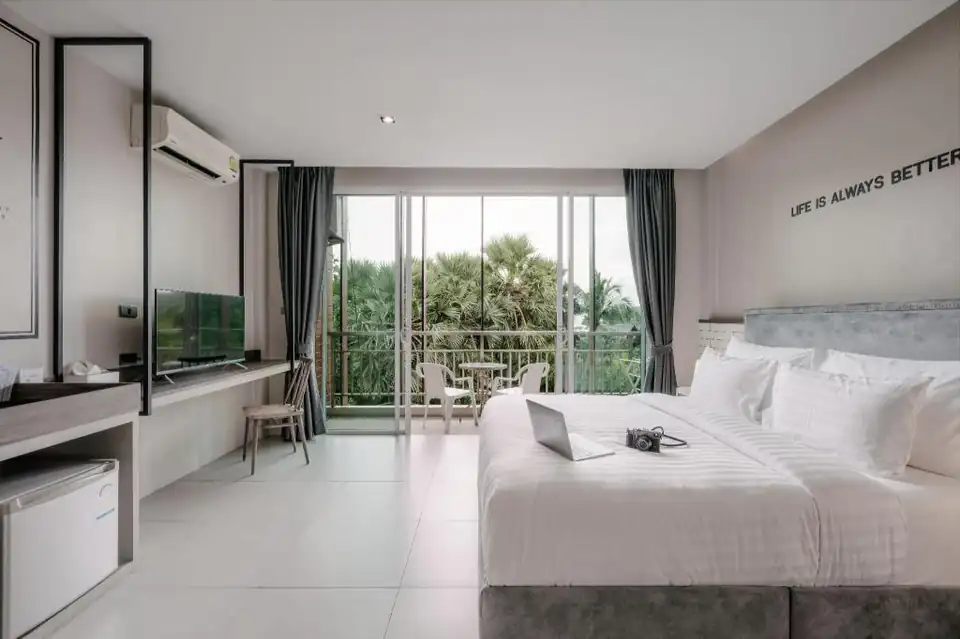
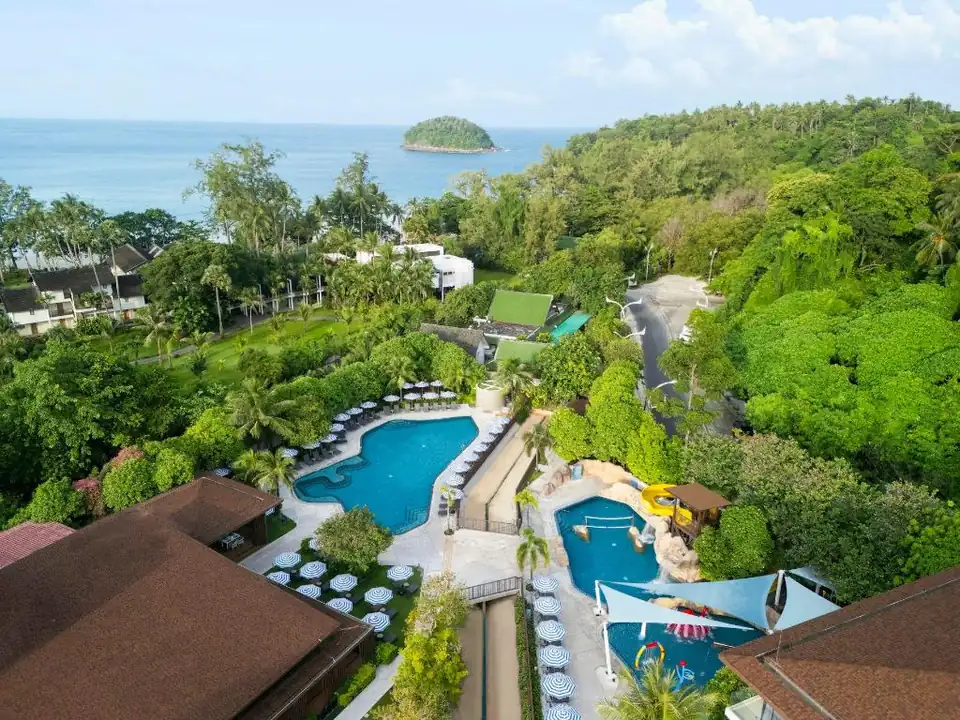
The one most people mean when they picture a Phuket beach: broad, swimmable, busy without being Patong, with the island of Koh Pu sitting offshore in every photograph. Behind it is enough of a town to fill a fortnight, restaurants, dive shops and bars along two roads, without any of it being a strip. It is the compromise choice and it is the right one for a lot of first visits.
Two things to know. Kata is on the rougher half of the coast, at about 0.60 metres of wave in February against 0.37 up at Mai Khao, and in the monsoon that gap widens rather than closes; the red flags here mean rip currents and they are not decorative. And it is forty-five minutes to an hour from the airport, which is worth factoring into a late arrival. See the Kata beach page for the detail.
Who this area suits
First visits, couples and families who want a proper beach with restaurants in walking distance and no interest in Bangla Road.
Karon
Kata’s longer, quieter neighbour, and better value for the same standard of room. Three kilometres of the squeaking white sand the island is known for, with far more space between the sunbeds than Kata or Patong and a shallower, wider entry to the water. It shares Patong’s marine grid cell, so the sea does the same thing here as it does ten minutes north, but the beach itself is emptier by a wide margin.
The cost of that space is that the restaurants are not evenly spread along it. Karon is a beach you can walk and a town you cannot, quite, so where along it you book matters more than in Kata. The northern end towards the roundabout has the density; the middle is quiet in both senses. The Karon beach page has the measurements.
Who this area suits
Families, longer stays and anyone who found Kata a little busy and Patong out of the question.
Patong
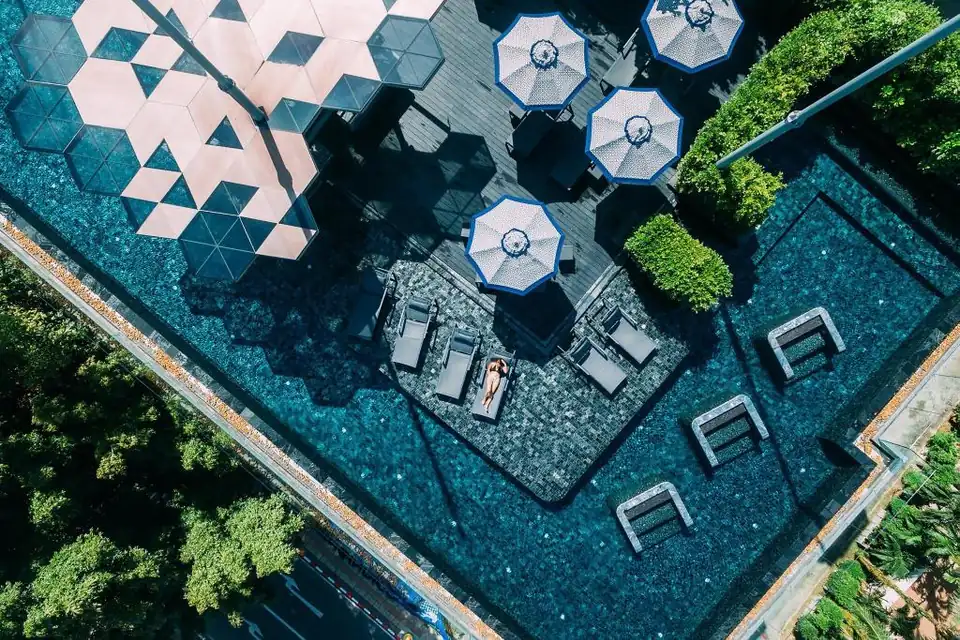
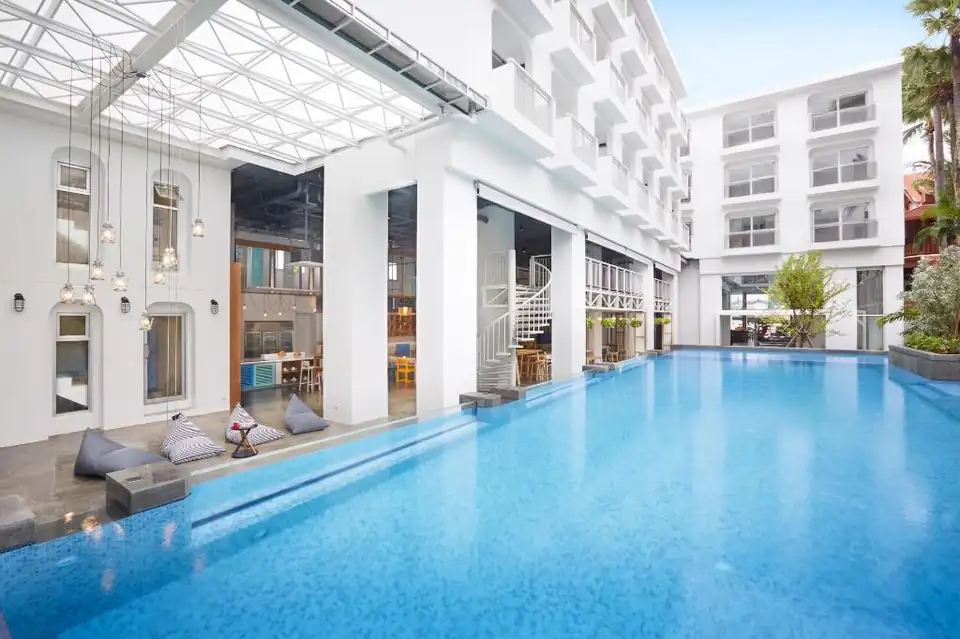
Patong is the busiest part of the island and the reason many people either love Phuket or avoid it. It has the widest choice of hotels at every price, a long beach with every water sport on offer, shopping malls, and Bangla Road, which is the centre of the island’s nightlife and is loud until the early hours. Practically, it is also the most convenient base for a short stay: you can eat, drink, shop and swim without arranging transport, which is not true of most of Phuket.
The trade-offs are the ones you would expect. The beach is crowded in high season, the sales pressure along the front is constant, and hotels within a few streets of Bangla Road will be noisy well past midnight. If Patong suits you otherwise, book at the northern end towards Kalim, or a few streets inland on the hill, both of which are quieter without being far. Anyone travelling with children or hoping for a quiet beach should look south to Kata and Karon instead, or north to Kamala.
Who this area suits
Short stays, first visits built around convenience, and travellers who want nightlife, restaurants and shopping within walking distance of the sand.
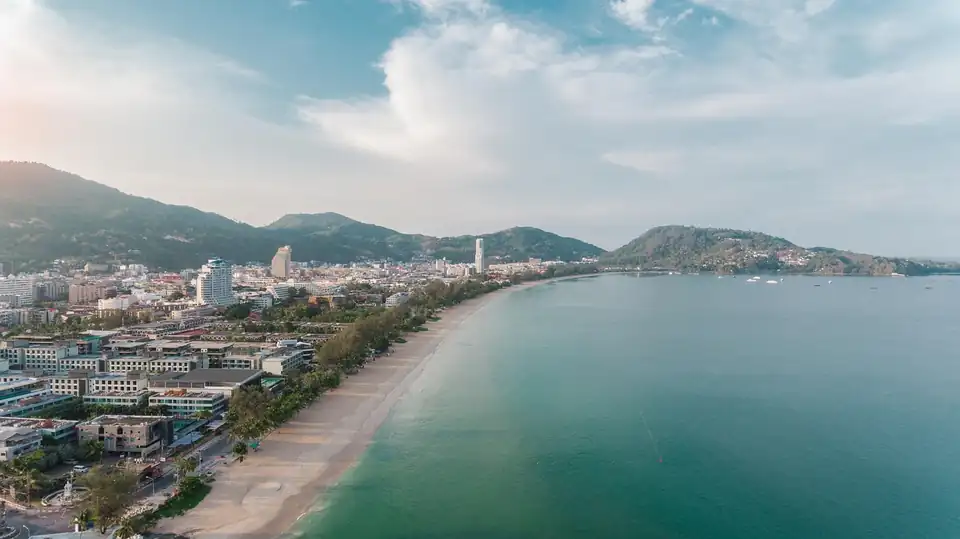
Resorts in Patong
Patong is where the word “resort” does the least work on this island. Only a small minority of its properties are filed as resorts at all, and most of the stock is three-star or below: a dense grid of mid-range rooms two or three streets back from the sand rather than a coast of walled estates. A resort here usually means a hotel with a pool and a garden, on a plot, inside the town.
- 51 5-star
- 127 4-star
- 337 3-star
- 101 2-star or under
- 10 no star rating
626 places to stay, the largest stock of the nine areas and bigger than the next two combined 372 of them carry fifty guest reviews or more, and 75 are filed as resorts rather than hotels median rate $28 a night on our sample dates, furthest below the local villa median of any area on the island median guest score 8.1 , the lowest of the nine, against 8.7 in Phuket Old Town
Two things follow from that shape. The first is that the star rating tells you less here than the address does. Bangla Road runs until the early hours and the streets behind it carry the sound, so a five-star three hundred metres from it is still three hundred metres from it; the quiet rooms in Patong are at the northern end towards Kalim and up the hill inland, at every price. The second is that the median guest score is a property of the stock, not a verdict on any one hotel: six hundred places competing on price in one town, most of them reviewed by thousands of people, is what a low median looks like. The better-reviewed end of it is easy to find, and it is not the cheap end.
Rates follow the same logic, and the distance between a room and a villa here is the real argument for a hotel in Patong: elsewhere on the island the two prices come much closer together, and the villa starts to look like the better value. Our Phuket villas guide sets the two side by side in all nine areas.
Kamala
Ten minutes north of Patong and a different proposition entirely. Kamala is a village beach with a school, a temple and a market behind it, short enough to keep an eye from one end to the other, and it has the useful property of being close enough to Patong to visit and far enough not to hear it. The sea here measures about 0.45 metres in February against Kata’s 0.60, and less jet-ski traffic crosses in front of the swimmers.
What it does not have is choice. There are perhaps a dozen places to eat rather than a hundred, and the northern end has been given over to a large entertainment complex that some visitors will want and others will want to be away from. It is on the bus route, which makes the lack of choice much less of a problem than it would otherwise be. The Kamala beach page has more.
Who this area suits
Families and couples who want Patong reachable but not audible, and a beach they can supervise from one spot.
Surin
Small, green and expensive. Surin is a short bay backed by casuarina trees and a road of villas rather than hotels, and it has the quietest feel of any of the developed west-coast beaches. It shares Kamala’s marine cell and so its measurements, which puts it on the calmer half of the gradient, and its sand is the finest on this stretch of coast.
It is also the area where the gap between the price of a room and the number of things to do is widest. There is very little budget accommodation, the beach clubs that made the area’s name have come and gone with successive rounds of enforcement, and an evening here means the resort’s restaurant or a taxi. Book Surin if that is what you want rather than in spite of it. The Surin beach page covers the detail.
Who this area suits
Couples, quiet, and a resort you intend to use rather than a base you intend to leave.
Bang Tao and Laguna
North of Surin, Bang Tao is six kilometres of the widest sand on the island, and behind much of it sits Laguna, an estate of linked resorts sharing a lagoon, golf course and a shuttle bus between them. This is where Phuket’s upmarket accommodation concentrates, along with a growing strip of beach clubs and restaurants at the Cherng Talay end. It is twenty minutes from the airport, which makes it the easiest area to reach on arrival, and it is genuinely restful in a way Patong is not.
Be clear about the trade-off before booking. Bang Tao has very little budget accommodation, and what appears at low prices tends to be new and barely reviewed, so there is no real backpacker tier here the way there is in Patong or the old town. The area is also spread out: leaving the resort for dinner usually means a taxi or a shuttle rather than a walk. The Smart Bus stops at Cherng Talay, the village behind the beach, rather than on the sand. It works best if you intend to spend most of the holiday on the property. The Bang Tao beach page has the measurements.
Who this area suits
Travellers who want a resort to settle into rather than a base to explore from, and who are happy to pay for quiet and space.
Nai Yang and Mai Khao
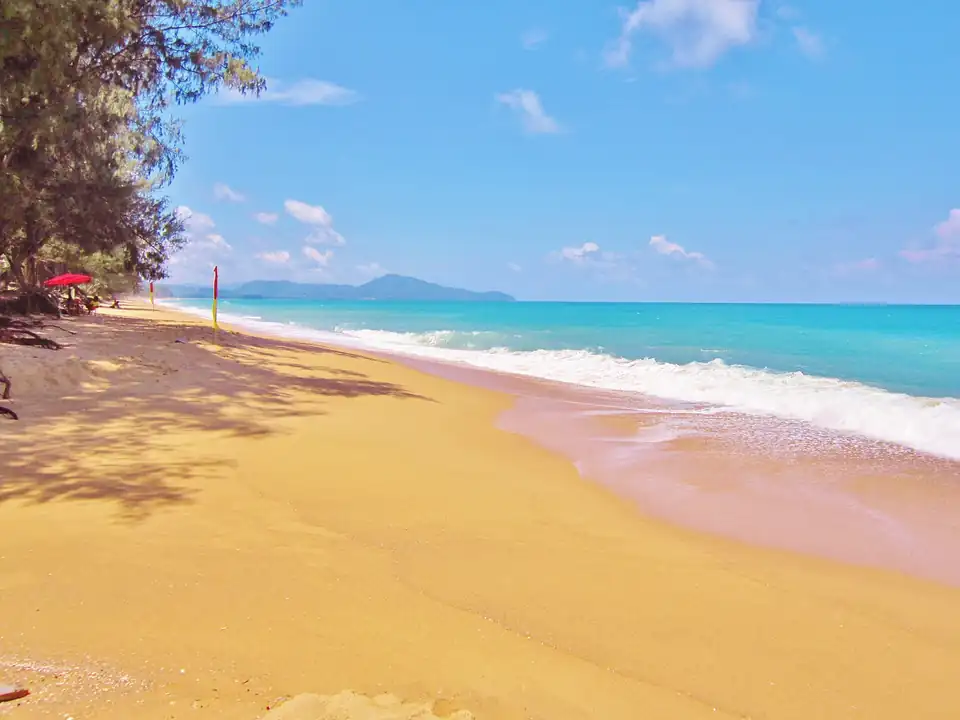
The empty north, inside Sirinat National Park and minutes from the runway. Nai Yang is a shallow curve backed by casuarina pines with a handful of restaurants along the sand, and it is the calmest measured water on the whole west coast, about 0.37 metres in February against Kata’s 0.60. Mai Khao beyond it is eleven kilometres long and is the emptiest beach on Phuket by a distance.
Two warnings, and they matter more here than anywhere else on this page. The Smart Bus does not come this far north, so without a car this is a genuinely isolated base rather than a quiet one. And Mai Khao’s calm measurement is misleading at the shoreline: it shelves steeply, pulls hard, has no lifeguard along most of its length and has drowned people. It is the clearest case on this site of a figure that needs a person beside it.
Who this area suits
A first or last night by the airport, and travellers with a car who want the quietest sand on the island. Not a week without transport.
Phuket Old Town
Phuket Town sits on the east side of the island and has no beach at all, which is exactly why it stays cheap and why it is worth considering. The old quarter is a grid of Sino-Portuguese shophouses in ochre and green along Thalang, Dibuk and Phang Nga roads, built on tin money in the nineteenth century and now holding the island’s best concentration of local food, coffee and small bars. Rooms cost a fraction of the west coast for the same standard, and the Sunday walking street on Thalang Road is the most enjoyable market on the island.
The obvious cost is that every swim is a journey: Patong is around forty minutes by road, Kata a little more. That suits travellers who came for the food, the architecture and the boat trips out of the east-coast piers more than for the sand, and it suits anyone on a tight budget who is content to make the beach a day trip. It is also the strongest base for anyone continuing to Phi Phi or Krabi, since most boats leave from this side, and it is the one area on the island where a free town shuttle and a 50 baht bus to Patong genuinely cover your daily movement. The old town page has more on what is there.
Who this area suits
Budget travellers, repeat visitors, and anyone who would rather eat well and walk through old streets than step straight onto a beach.
Choosing by the trip rather than the beach
A first week on Phuket. Kata, or Karon if you want more room. Both sit on the bus, both have dinner within walking distance, and both are close enough to everything else to make day trips reasonable.
A honeymoon or a quiet fortnight. Surin or Bang Tao on the calm half of the coast, or Kamala if you want somewhere walkable as well as quiet. The honeymoon guide works through which coast your month sends you to before the question of which beach arises.
With small children. Kamala or Karon for shallow water with food nearby, and read the flags rather than the wave column: the number that looks calmest on this page, Mai Khao, is the one beach we would not send a family to. Our Thailand with kids guide explains why.
On a budget. The old town, and it is not close. Rooms are a fraction of the west coast, the food is better, and the bus and the free shuttle mean you can live here without a vehicle.
Nightlife. Patong, and stay where you intend to drink. The nightlife page covers what runs where, and the reason getting home at two in the morning is the part people forget.
One night either side of a flight. Nai Yang, ten minutes from the terminal, or Bang Tao at twenty if you want restaurants on the same evening.
Plan the rest of the trip
With the base chosen, line it up against the boat trips and day tours that leave from the island.
Where to stay, area by area
Well-rated stays in Patong
Well-rated stays in Kata
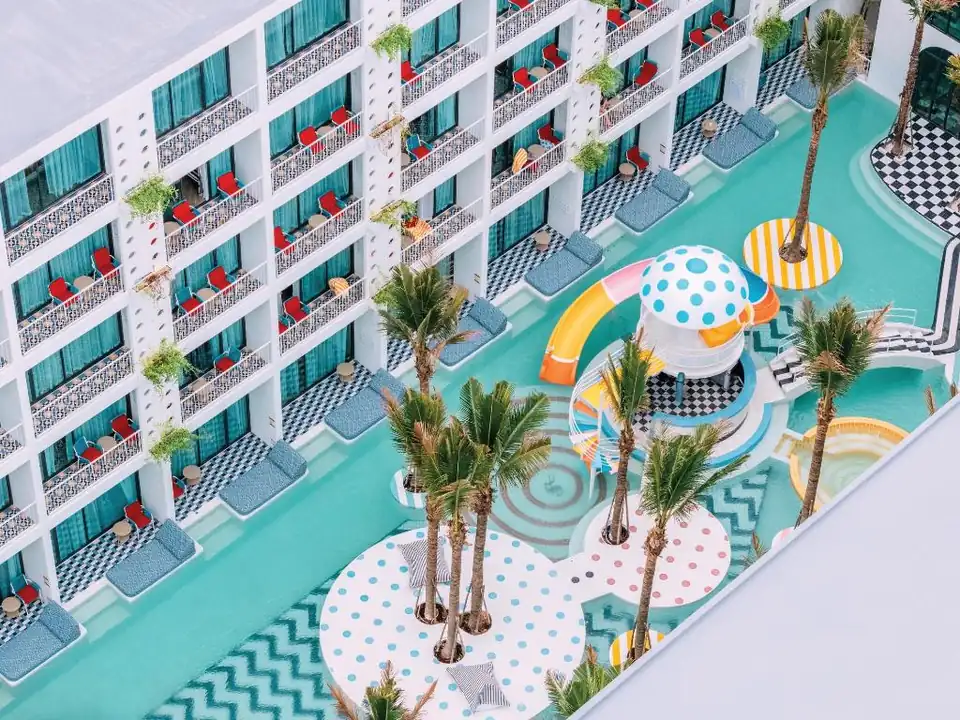
Well-rated stays in Bang Tao
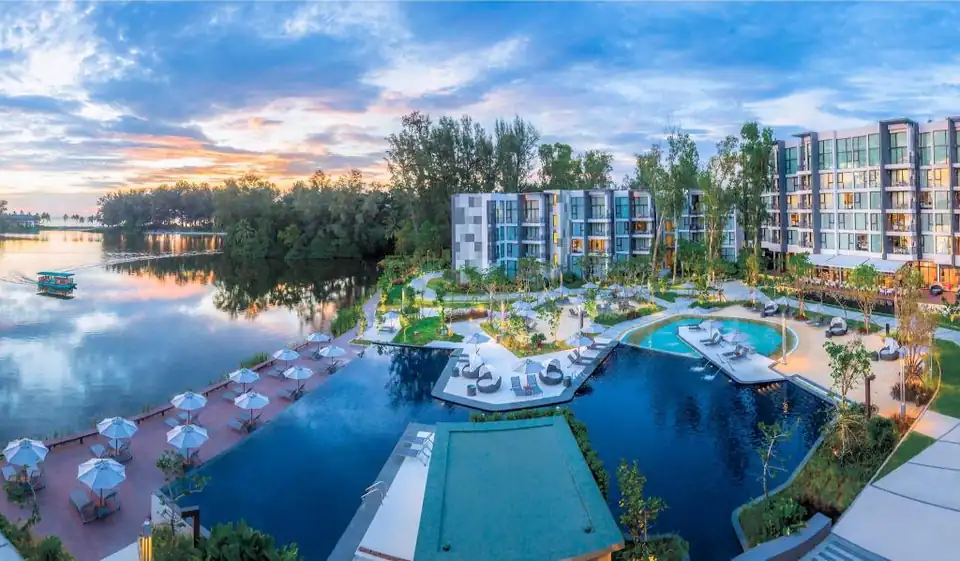
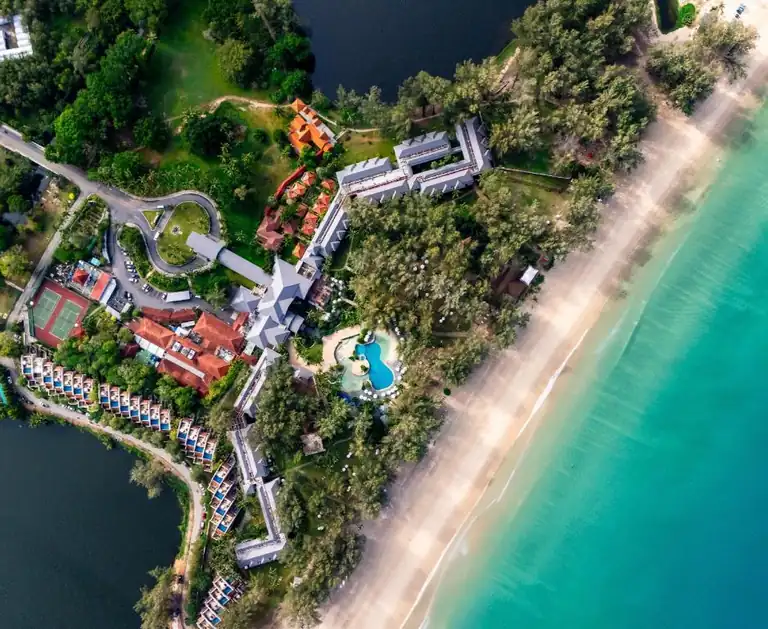
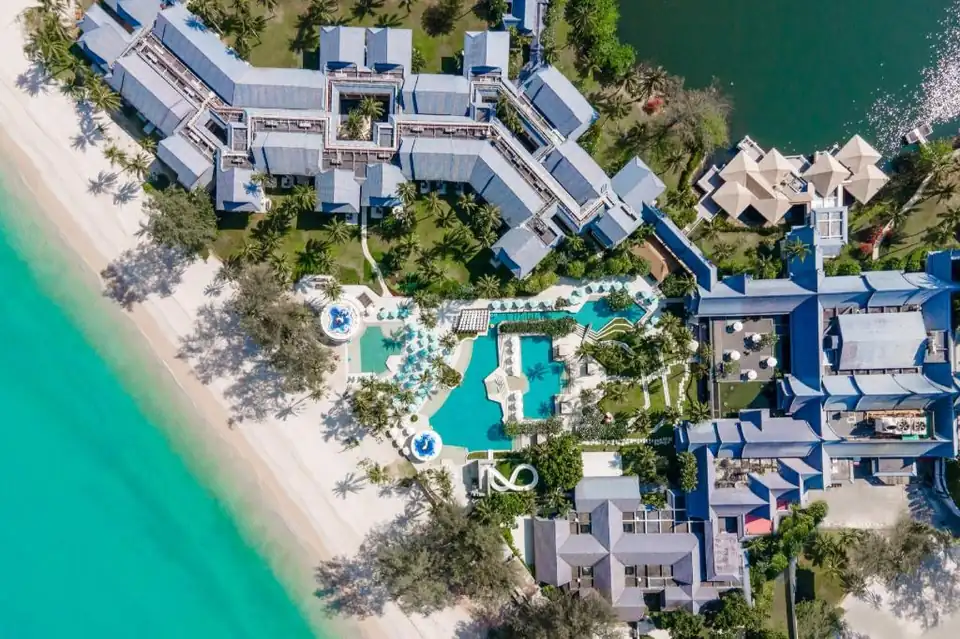
Well-rated stays in Phuket Old Town
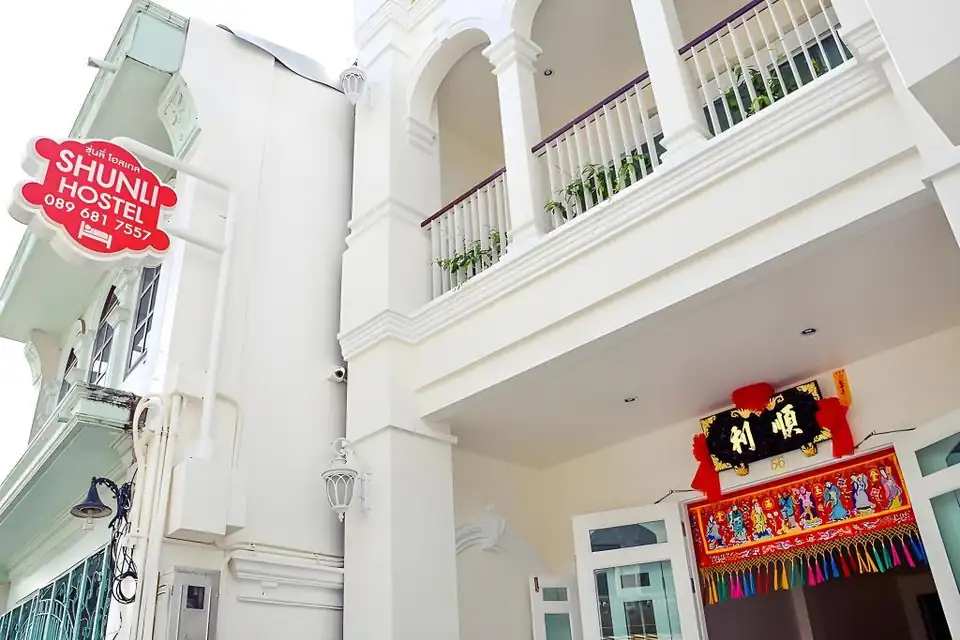
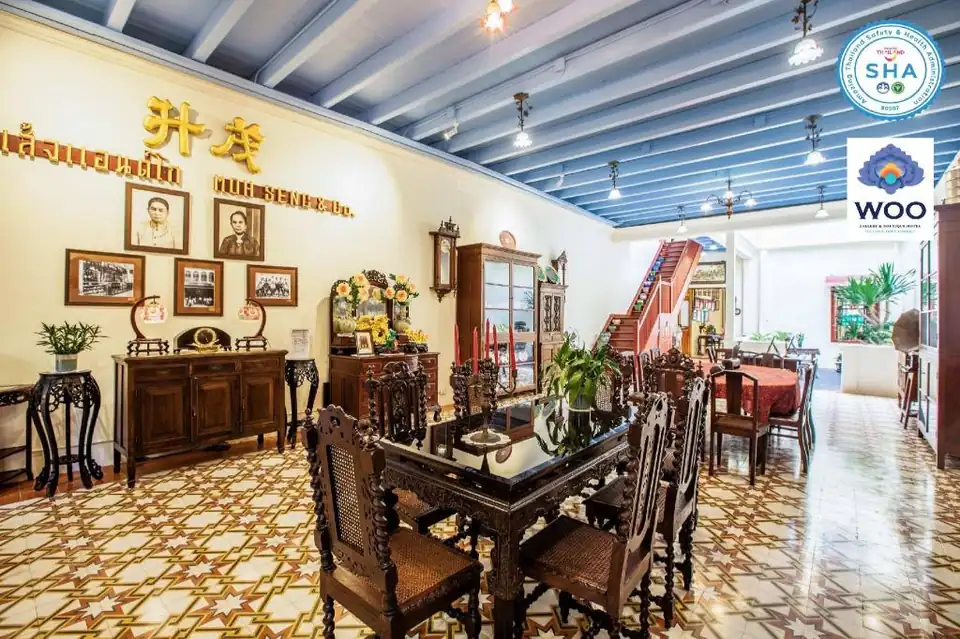
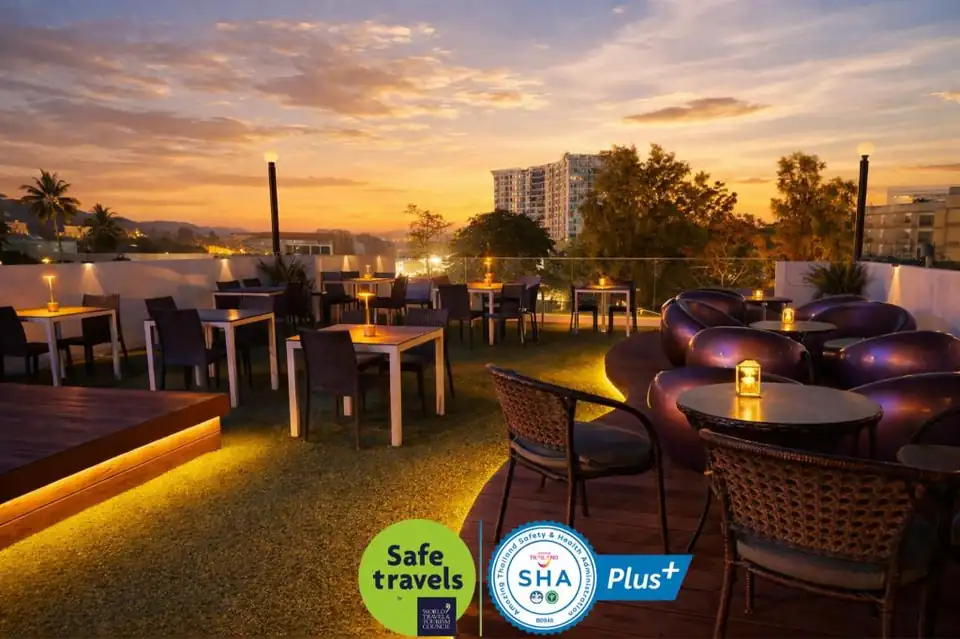
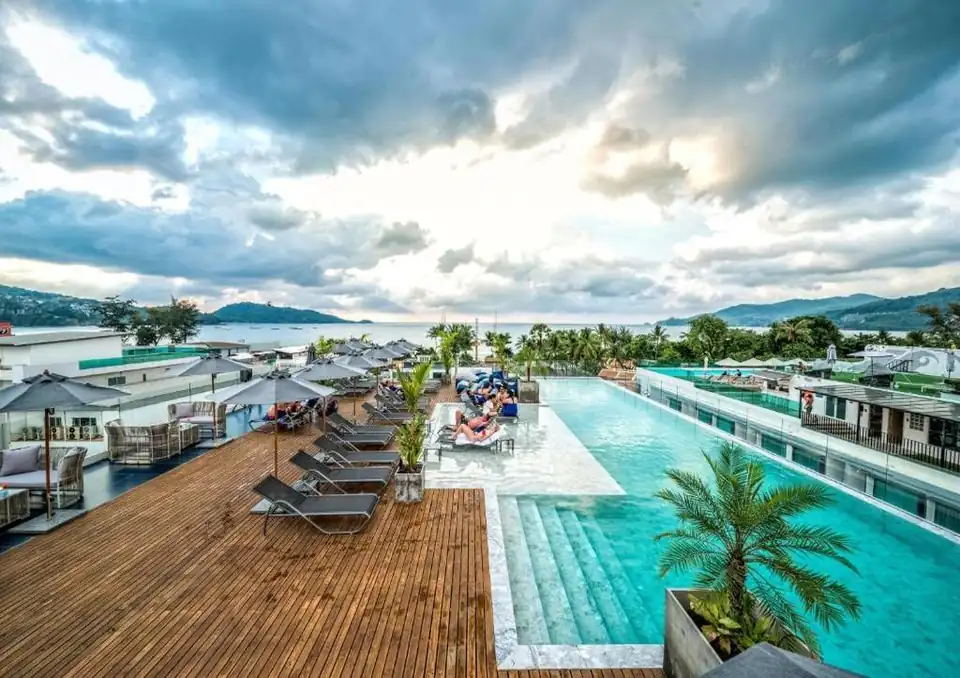
Every area above lists the best-rated properties closest to it, ranked on Agoda’s guest score weighted by how many reviews stand behind it, so a high score across a handful of stays does not outrank a slightly lower one across thousands. We have not stayed in them: the ranking is Agoda’s data, not our verdict. Scores and review counts read on 2026-09-03.
Where to Stay in Phuket FAQs
Which area should first-time visitors choose?+
Kata or Karon, for most people. They keep enough restaurants and beach life to fill a holiday without arranging transport every evening, and they avoid the volume of Patong. Choose Patong instead if nightlife is a priority, or Bang Tao if you want an upmarket resort and intend to stay in it.
How much does getting between the beaches actually cost?+
Enough to matter, though less than it used to. The Smart Bus covers the west coast from the airport to Rawai for 100 baht, which is the cheap way between Patong, Karon and Kata if your timing is flexible. Off that line, metered taxis are scarce and fares are negotiated or set by app at rates well above the Thai norm. Renting a scooter is far cheaper and is what many visitors do, though the island's accident rate is high and it is not a decision to make lightly. The practical answer is to choose an area where you can walk to dinner, which is why Patong, Kata and Karon suit shorter trips.
Is there a bad time of year for the west coast beaches?+
May to October is the southwest monsoon, when Patong, Kata, Karon and Bang Tao all face into the weather. Expect rougher seas, frequent red flags and periods of heavy rain, alongside the lowest prices of the year and a much emptier island. Drownings in the surf are a real problem in these months, so take the flags seriously. November to April is the dry, calm high season, and December and January are the busiest and most expensive weeks.
Is it worth staying near the airport?+
Only for a very short stay or an awkward flight. The northern beaches such as Nai Yang and Mai Khao are close to the airport and pleasantly quiet, but they are a long way from everything else on the island, so they work better as a first or last night than as a base. Bang Tao, at about twenty minutes from the airport, is the compromise that still has restaurants and beach clubs nearby.