
Plan your trip
Getting around Thailand
Eight ways to move, and each one is right for a different length of journey. The country is about 1,600km long with islands on both sides of it, so the honest answer to almost any question here starts with how far you are going.
Three worked examples
- Koh Samui to Koh Phangan 20m by boat
- Phuket to Koh Samui 55m by flight
- Krabi to Koh Samui 1h by flight
All 24 routes we have checked, with times, frequencies and fares.
-
Domestic flights
Anything the length of the country
The default for a long hop and cheaper than the distance suggests. Bangkok to Phuket is ninety minutes against roughly twelve hours on the road, and the corridor carries about 150 departures a week. Thai AirAsia, Thai Lion Air, Nok Air, Thai Vietjet and Bangkok Airways all compete on it.
Watch for this. Check which Bangkok airport your ticket names. Suvarnabhumi and Don Mueang are an hour apart across the city and the low-cost carriers mostly use the second.
-
The sleeper train
Bangkok to Chiang Mai, and the south
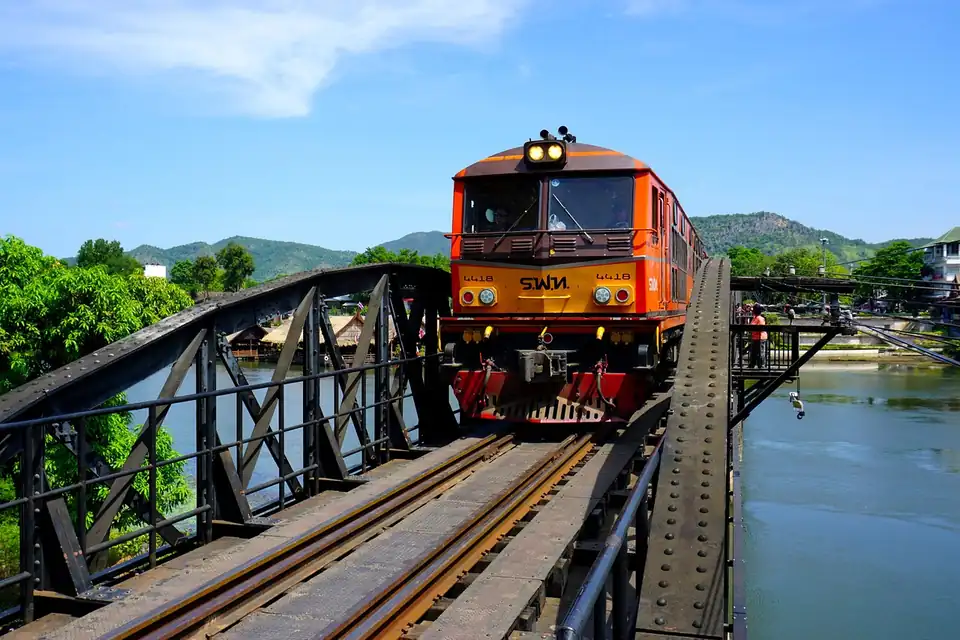
State Railway of Thailand runs overnight sleepers with proper berths. Bangkok to Chiang Mai leaves in the evening and arrives at breakfast, which replaces a hotel night and is a journey rather than a transfer. It is the one route in the country where the slow option is the better one.
Watch for this. Trains leave Krung Thep Aphiwat, not the old Hua Lamphong station. Berths sell out weeks ahead in high season.
-
Buses and minivans
Everything in between
The connective tissue of Thai travel and very cheap. Minivans go door to door and run through the day on the short hops; overnight VIP coaches cover the long ones. Phuket to Krabi is two and a half to three hours for a few hundred baht, and Bangkok to Pattaya is about two.
Watch for this. Minivan driving standards vary. On a route where a bus and a minivan both run and the time difference is small, take the bus.
-
Ferries and speedboats
Every island
There is no other way to most of them. Ferries are slower, steadier and cheaper; speedboats halve the time, cost roughly double and are unpleasant in a swell. Both leave from a handful of piers, principally Rassada in Phuket and Klong Jilad in Krabi.
Watch for this. The last boat is often early afternoon. A late arrival at the airport can mean a night on the island you were leaving.
-
Grab and taxis
Cities and airports
Grab is the ride-hailing app and it settles the fare before you get in, which removes the entire negotiation. Metered taxis in Bangkok are cheap when the meter is used. Motorbike taxis, in numbered vests, are the fastest way through Bangkok traffic and the least safe.
Watch for this. If a taxi driver will not use the meter, get out and find another. There is always another.
-
Tuk-tuks and songthaews
Short hops, and the experience
A tuk-tuk is a negotiation, not a fare: agree the price before you sit down and expect it to be above what a metered taxi would charge. A songthaew is a converted pickup running a fixed route with benches in the back, and it is how locals move around Chiang Mai and much of Phuket for very little.
Watch for this. In Phuket in particular, tuk-tuk pricing is notoriously high. Grab is usually a third of it.
-
The Bangkok BTS and MRT
Bangkok, at any hour with traffic
The Skytrain and the underground between them cover most of the parts of Bangkok a visitor wants, they are air-conditioned, and they are entirely immune to the traffic that makes the same journey by road unpredictable. A stored-value card saves queuing.
Watch for this. They do not reach the old city and the Grand Palace directly. That corner is the river boat's job.
-
Renting a scooter
Islands and small towns
Cheap, everywhere, and the way most visitors get around Koh Lanta, Koh Samui or Pai. It is also the single most dangerous thing most visitors do in Thailand, and doing it legally requires more than the rental shop will ask you for.
Watch for this. Read the licence and insurance position before you rent anything.
Driving and scooters in Thailand
Two things that decide more than the mode does
The last boat. Island ferries mostly stop in the early afternoon, and a flight that lands at four means a night on the mainland. Work backwards from the boat, not forwards from the flight.
Which coast. Thailand's two big coasts run about three months out of step, and crossing between them is the longest and most expensive kind of journey in the country: Phuket to Koh Samui is 261km and can take ten hours by road and ferry. There is a third coast that needs none of this. The eastern seaboard, from Pattaya down to Koh Chang, is reached from Bangkok by road alone, and Pattaya is about two hours from the city and ninety minutes from Suvarnabhumi. Which combinations work in which month
Frequently asked questions
What is the best way to get around Thailand?+
Fly the long hops, take the sleeper train to Chiang Mai, and use ferries for the islands because there is no alternative. Buses and minivans fill in everything else cheaply. Within Bangkok the BTS and MRT beat road transport at almost any hour.
Is the train in Thailand worth it?+
The Bangkok to Chiang Mai overnight sleeper is, and it is the only route where that is clearly true. A berth is about a thousand baht, it replaces a night's accommodation and it arrives at breakfast. Daytime trains are slow enough that a bus or a flight usually wins.
Do I need to book transport in Thailand in advance?+
Sleeper berths, yes, weeks ahead in high season. Flights, yes, for the price rather than the seat. Buses, minivans and most ferries, no: turn up, or book the day before. Songkran in April and the last fortnight of December are the exceptions where everything sells out.
Is Grab available in Thailand?+
Yes, in Bangkok, Phuket, Chiang Mai, Krabi, Koh Samui and most places a visitor goes. It fixes the fare in the app before you get in, which is why it is usually cheaper than a tuk-tuk and always cheaper than an argument.
More planning: routes and transfers, driving and scooters, when to come.