

Koh Kood · Central Thailand
Koh Kood Travel Guide
Thailand's fourth-largest island and one of its least developed: about two thousand people, a few villages, no nightlife and no town, at the far eastern end of the country near Cambodian water. It is the quietest place with good beaches on this site, and the wettest place on it.
- Driest months
- November to March 5 months under 150mm, 15 rain days or fewer
- Best for
- Quiet, December to March
- Airport
- Trat (TDX), then a boat from Laem Sok
- Getting around
- Hired scooter. One road down the west side
Koh Kood, or Ko Kut, is the fourth-largest island in Thailand and one of the least developed. It sits at the far eastern end of the country, a short way from Cambodian water, with a population of roughly two thousand, a handful of villages, no nightlife and no town.
It is a coconut island that has been left largely alone, and it is the quietest place with good beaches that this site covers. It is also among the wettest.
One of the three wettest places this site measures
- Rainfall, millimetres per month
- Koh Chang, for comparison
Driest is December at 21mm over 5 rain days, wettest is July at 624mm over 30 rain days. Against Koh Chang, Koh Kood is wetter in 5 months of the twelve, and the largest gap is in June.
Thirty years of reanalysis put July at 624mm across thirty rain days. For scale: Koh Chang, forty kilometres north in the same province, takes 566mm in the same month, and Koh Mak, between the two, takes 675. Khao Lak, whose own page calls its year severe, takes 400mm at its peak on the Andaman coast.
May to September runs 407, 528, 624, 526 and 544. The annual total is 3,242mm, second here only to Koh Mak.
This is regional, not local. The three Trat islands are the three wettest places we measure and they sit within forty kilometres of each other. ⛔ It is not a tidy gradient, either: Koh Mak, which lies between the other two, is the wettest of the three at 675mm. Whatever is happening here is happening to the whole archipelago rather than sliding evenly down it.
And then it is genuinely dry
The other half of the year is the surprise. December takes 21mm across four rain days, January 30, February 32. Those are drier than the same months on Koh Samui, drier than Phuket, drier than most of the country.
So Koh Kood has the sharpest year on this site in both directions: a factor of thirty between its driest month and its wettest. The planning rule is correspondingly simple. Come between December and March. Outside it, a great many places on the island close.
The beaches
Almost everything is on the west coast, and the three main beaches run north to south with progressively less on them.
Klong Chao is the main one and the only one with a choice: a long shallow curve with a river mouth at its northern end, most of the island’s places to stay, and a few places to eat that are not attached to a resort. The river is the reason to bring a kayak or hire one, because you can paddle up it to a waterfall.
Ao Tapao, just south, is the same water with fewer people and no village.
Ao Phrao, further south again, is long, almost empty, and a drive from anything that serves dinner.
The measured sea runs from 0.27 metres to 0.99 across the year on the west coast. All three beaches sit in one five-kilometre cell and share a single series, so the model cannot separate them: what differs between them is the number of people and the distance to a restaurant, and no wave figure measures that.
The interior
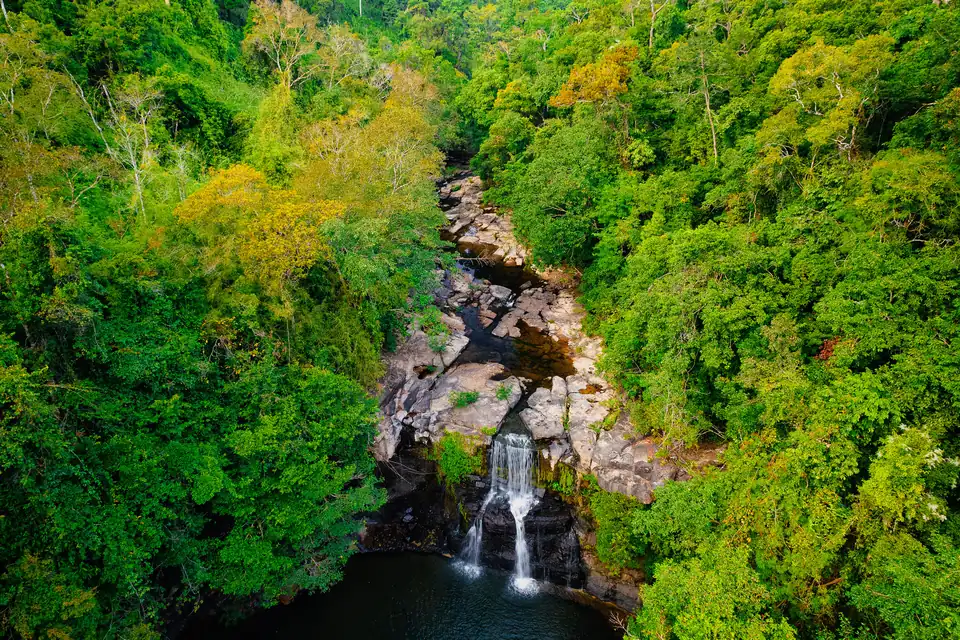
Most of Koh Kood is forest. Khlong Chao is the accessible waterfall, reachable by kayak up the river from the beach of the same name or on foot, and Khlong Yai Ki is the smaller one nearer the road. There is also a coconut and rubber landscape rather than a wild one across much of the island, which is what most of it was before anyone came.
The same awkwardness applies here as on Koh Chang: the waterfalls are at their best in the months the beaches are not.
Getting there
Boats run from Laem Sok pier near Trat: speedboats in about an hour, ferries in ninety minutes or so, and the schedule thins considerably out of season. Trat is five to six hours from Bangkok by road, or an hour by air to Trat airport and then half an hour to the pier.
In season there are also boats from Koh Chang and from Koh Mak, which is how a good number of people arrive: the three make an obvious chain down the coast.
Who it suits, and who it does not
Koh Kood for a quiet week, for couples, for anyone who has found the rest of Thailand’s islands too busy, and for people who intend to read. It is also the most expensive of the three eastern islands per night, because what exists is largely resorts rather than guesthouses.
Not Koh Kood for a first trip to Thailand, for anyone who wants a choice of restaurants, or for anyone travelling outside the dry season, when the boats reduce and the rain is the heaviest in the country.
Where it sits against every other island here, month by month, is on the islands overview.
Koh Kood FAQs
Is Koh Kood worth visiting?+
If quiet is the requirement rather than a preference, it is probably the best answer in Thailand. Around two thousand people live on it, there is no nightlife, no strip and very little building, and the beaches are as good as any in the Gulf. The costs are the journey and the rain.
When should you visit Koh Kood?+
November to April, and December to March in particular. December takes 21mm of rain, January 30 and February 32, which is genuinely dry. Outside that window it is among the wettest places this site measures: 624mm in July across thirty rain days.
How wet is Koh Kood?+
624mm in July, against 675 for Koh Mak and 566 for Koh Chang, its two neighbours, and 400 for Khao Lak on the Andaman coast. The three Trat islands are the three wettest places this site measures and they are within forty kilometres of each other, so this is a regional pattern rather than an island one.
How do you get to Koh Kood?+
By speedboat or ferry from Laem Sok pier near Trat, about an hour to ninety minutes depending on the boat. Trat is five to six hours from Bangkok by road or an hour by air. Boats also run from Koh Chang and Koh Mak in season, which is how most people arrive.
Is there nightlife on Koh Kood?+
No, and that is the point of it. A handful of beach bars attached to resorts, and that is the whole of it. If an evening out matters, Koh Chang is two hours north by boat and has one.
Which beach should you stay on in Koh Kood?+
Klong Chao for a first visit: it has the most places to stay and eat and a river you can kayak up to a waterfall. Ao Tapao and Ao Phrao further south are quieter still and commit you to eating where you sleep.
Koh Kood or Koh Chang?+
Koh Chang is bigger, has a mountain range, a road, a nightlife strip and more to do; Koh Kood is quieter, prettier at the waterline and has almost nothing arranged. Koh Chang for a first trip to this coast, Koh Kood if the appeal of Koh Chang is that it is not Phuket.
 Bangkok
  Chiang Mai
  Phuket
  Krabi
Krabi  Koh Samui
 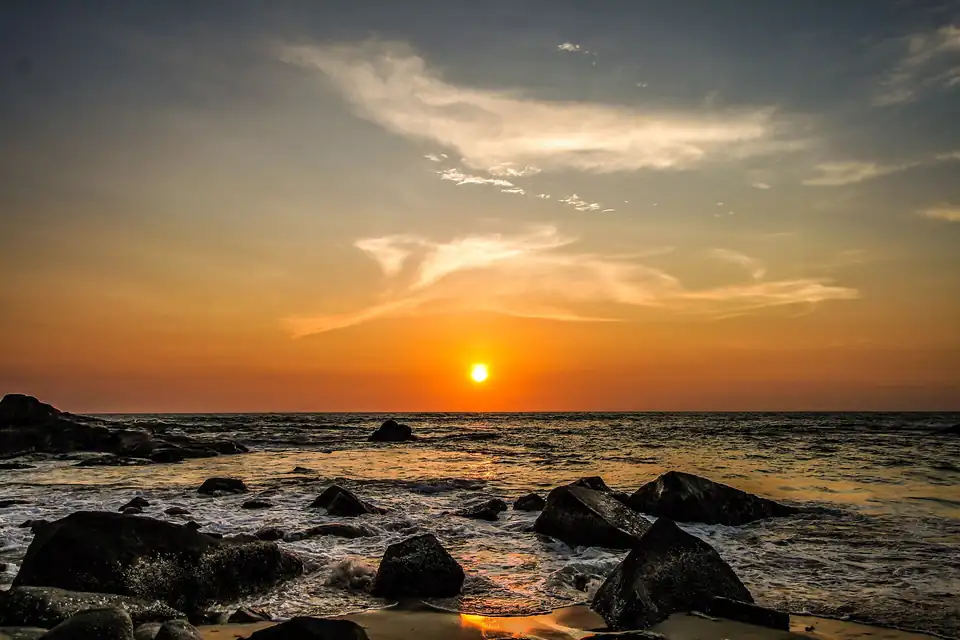 Khao Lak
  Chiang Rai
  Pai
Pai  Ayutthaya
  Sukhothai
  Koh Phangan
  Koh Tao
  Trat
Trat  Koh Mak
  Koh Chang
  Koh Samet
  The Similan Islands
  Pattaya
  Koh Phi Phi
  Koh Lanta
  Koh Lipe
  Thailand Islands