
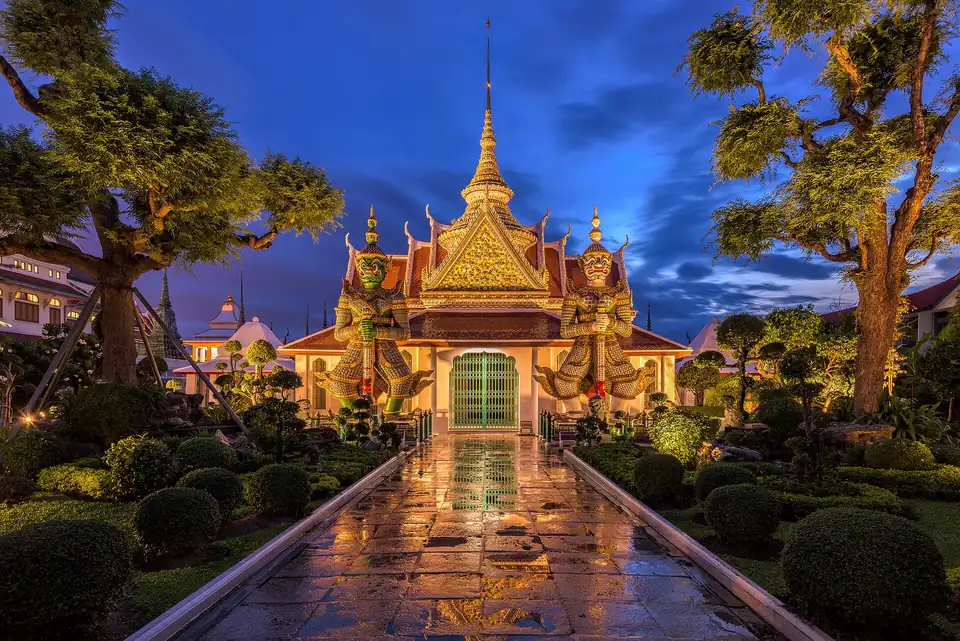
Bangkok · Central Thailand
Bangkok, Thailand Travel Guide
Thailand's capital and its main gateway: royal temples on the river, a modern city on the rail lines, and one of Asia's strongest street-food cultures in between. It works once you stop treating it as one city centre.
- Driest months
- November to April 6 months under 150mm, 15 rain days or fewer
- Best for
- Temples, markets and food
- Airport
- Suvarnabhumi (BKK) and Don Mueang (DMK)
- Getting around
- BTS, MRT and river boats
Bangkok is Thailand’s capital, its main international gateway and the place most first trips begin or end. It is also the city visitors most often plan badly, and almost always in the same way: by treating it as one centre with a ring of sights around it. It is not. The royal temples sit on the river in the west, the modern city sits on two rail lines to the east, and the two barely touch.
Plan around that and Bangkok becomes straightforward. Group the Grand Palace, Wat Pho and Wat Arun into one river morning. Use the BTS and MRT for Siam, Silom and Sukhumvit. Keep Chinatown for an evening. Three days covers the headline sights without turning the trip into a series of taxi rides.
Bangkok at a glance
How Bangkok fits together
Five parts of the city account for almost everything a first visit does, and the distances between them are the reason itineraries fall apart. The Old City is seven kilometres from Sukhumvit; Chatuchak is eight kilometres north of the Old City. Those are short distances on a map and long ones on a Bangkok afternoon.
Old City, or Rattanakosin
The royal quarter on the river, and where the Grand Palace, Wat Pho and, across the water, Wat Arun all sit within a walk or a short ferry of each other. It is the one part of the city the BTS does not reach at all. The MRT Blue Line clips its southern edge at Sanam Chai, ten to fifteen minutes’ walk from the palace gates, and the Chao Phraya boats are often the quicker way in.
Chinatown, or Yaowarat
Gold shops and herbal halls by day, and one of the best street-food streets in Asia after dark. The MRT extension put a station at Wat Mangkon directly on Yaowarat Road, which is what turned Chinatown from a taxi trip into a train stop. Go in the evening.
Siam and Silom
The commercial middle. Siam is where the two BTS lines cross and where the big malls are; Silom is the business district south of it, busy on a weekday and quieter at the weekend. Neither is a sightseeing destination so much as the part of the city that makes crossing it possible.
Sukhumvit
The long eastern corridor along the BTS: most of the hotels, most of the international restaurants, and most of what happens after ten at night. Its numbered sois run off one road, and the useful ones are the ones near a station.
Riverside
The stretch of the Chao Phraya south of the Old City, around Saphan Taksin, where the river hotels are and where the BTS meets the boat piers. A scenic base, and the one that makes the river work as transport rather than as a view.
Where to stay in Bangkok
Three areas, and the choice is a trade rather than a ranking.
| Area | Best for | Main trade-off |
|---|---|---|
| Old City | Temples, the river, a slower first trip | No BTS, and the MRT only reaches its edge |
| Sukhumvit | BTS access, restaurants, nightlife | Far from the Old City sights |
| Riverside and Chinatown | River access, food, atmosphere | Dense and busy, and cross-town trips take longer |
Which one suits you depends on what your days are made of, not on which is better. Our guide to where to stay in Bangkok compares all three on price, noise, walkability and what is actually within reach of each.
Which area suits your trip?
The three bases compared on what each one costs you: transport, restaurants, and what is left when you walk out of the hotel.
Compare Bangkok’s best areasWhat to see on a first trip to Bangkok
Start with the Old City and the river temples, then add one district or market rather than crossing the city repeatedly in a day. The Grand Palace, Wat Pho and Wat Arun belong together geographically and can be done as one morning. Chinatown works after dark. Chatuchak is a weekend market eight kilometres north and is its own outing, not something to squeeze onto the end of a temple day.
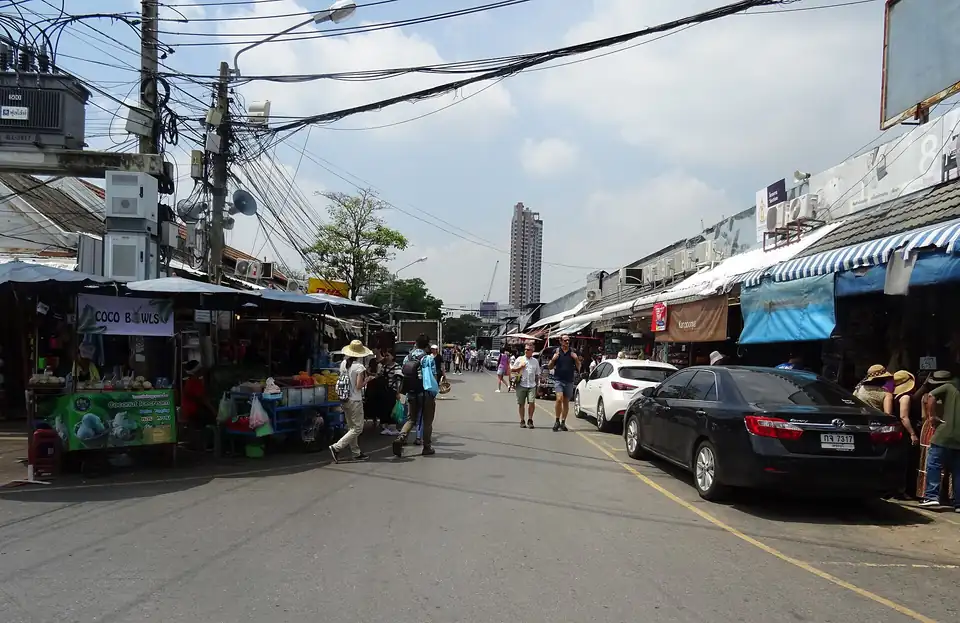 Chatuchak Weekend MarketFifteen thousand stalls in numbered sections, open mainly at weekends.
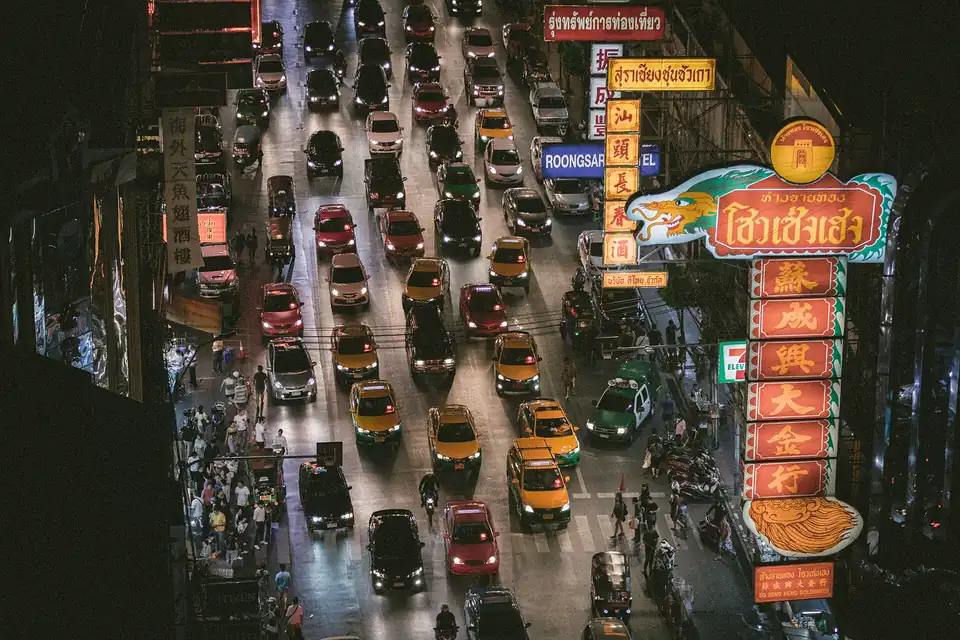 Chinatown & YaowaratGold shops and herbal halls by day, street-food stalls after dark.
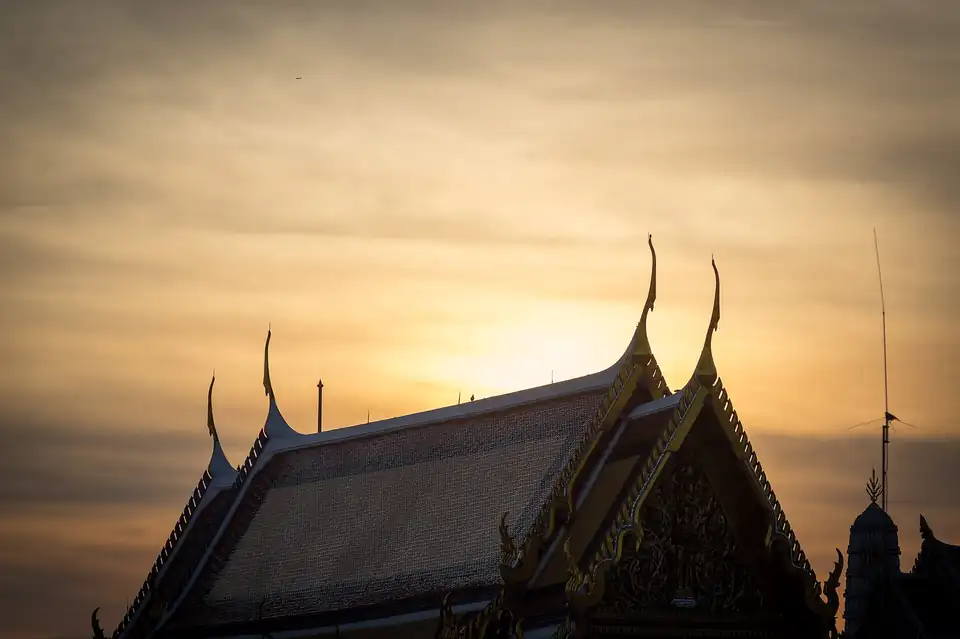 The Grand PalaceThe walled complex Rama I built in 1782 and the home of the Emerald Buddha.
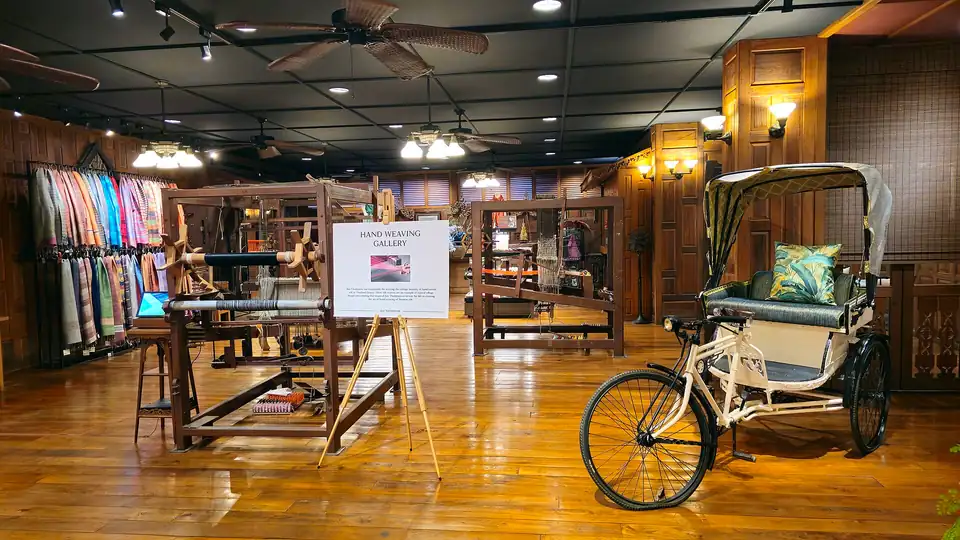 Jim Thompson HouseSix antique teak houses on a canal, the Southeast Asian art collection inside them, and the American silk trader who assembled both and then vanished in Malaysia in 1967.
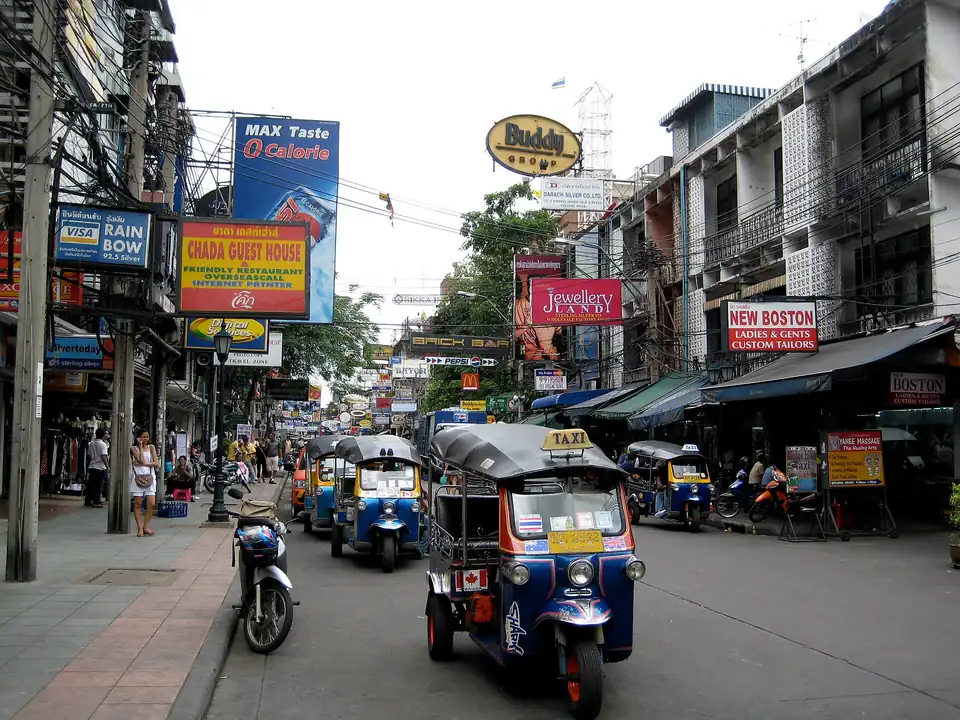 Khao San RoadFour hundred metres of guesthouses, bars and travel agents that became Southeast Asia's most famous backpacker street by accident.
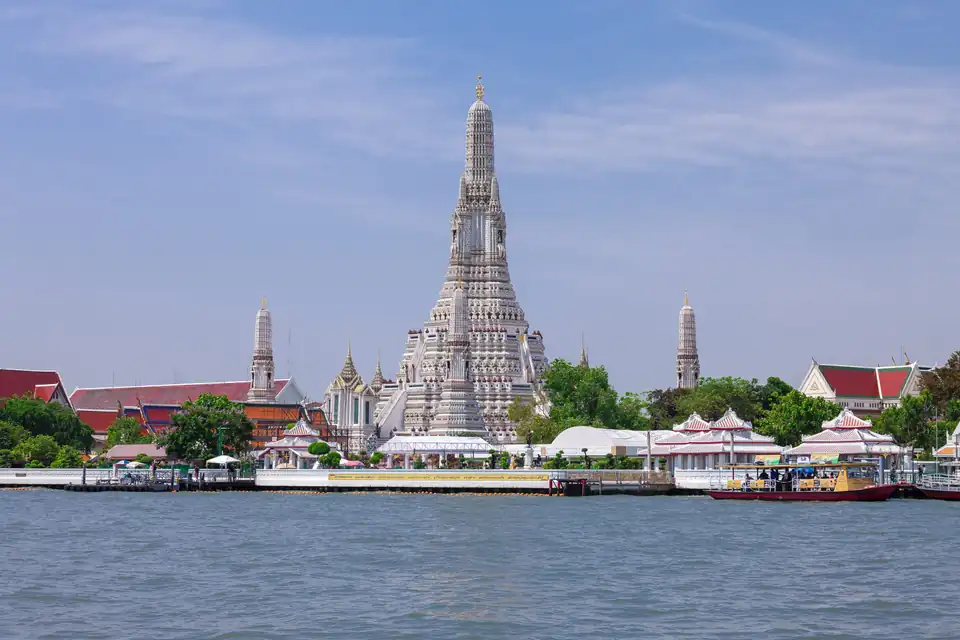 Wat ArunThe Temple of Dawn, a 70-metre prang of porcelain on the Thonburi bank, and the hours when the light actually does what the name promises.
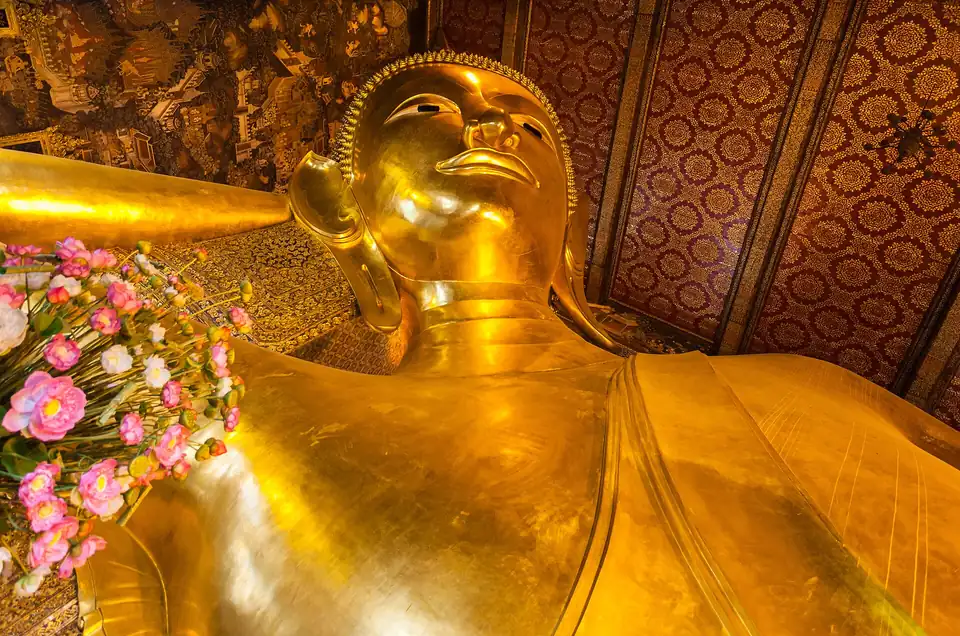 Wat PhoThailand's largest reclining Buddha, 46 metres of it with mother-of-pearl soles, in a temple older than Bangkok that still teaches the country's traditional massage.
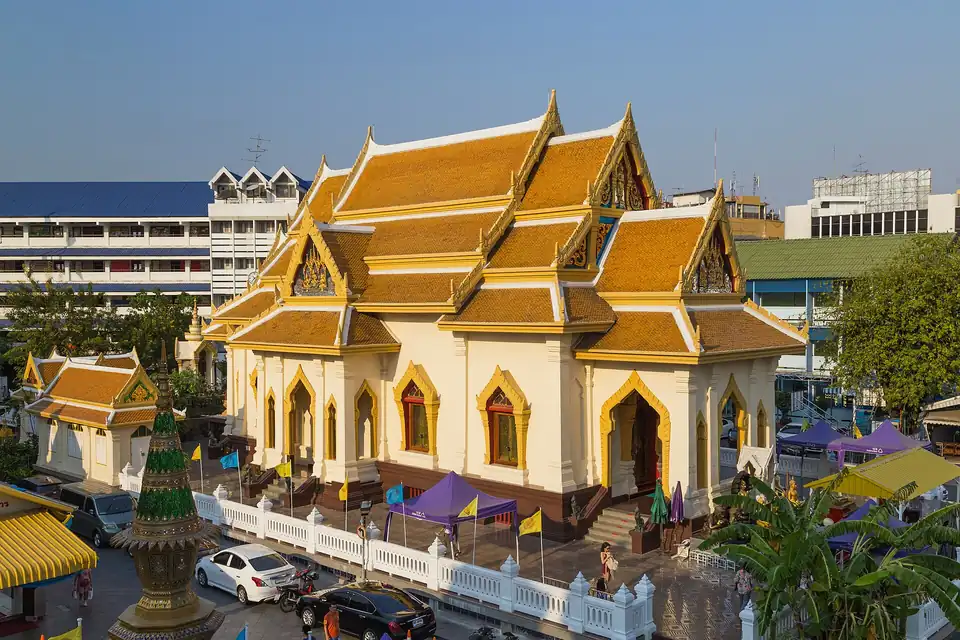 Wat TraimitA five-tonne Buddha cast in solid gold, hidden under plaster for most of the last century and found by accident.
The full list, in order of what is worth your time
Every sight above with what it costs, how long it takes and when to go, plus the ones that did not make this page.
See all things to do in BangkokBest time to visit Bangkok
Bangkok has three seasons rather than a wet one and a dry one, and the useful thing to know is which of them your dates fall in.
November to February: cooler and driest
The comfortable window and the busy one. December takes 11mm of rain across two days and January 16mm across three, measured from thirty years of reanalysis at the city’s own coordinates. Prices and crowds are at their highest, and hotels in the good areas sell out weeks ahead.
March to May: hot
The heat builds through March and peaks in April, which is also when Songkran falls. Sightseeing works if you plan around it: temples early, museums and malls in the middle of the day, markets in the evening. May is the month the rains start.
June to October: wetter
September is the wettest month of the Bangkok year at 263mm across 26 days with rain, and October is not far behind. Showers are typically short and heavy rather than all-day, and Bangkok absorbs rain better than a beach destination does because so much of what you came for is indoors or under cover. Prices and crowds are at their lowest.
Why our own facts strip says November to April
The strip above measures the driest run, which is a month under 150mm of rain and under sixteen days with rain in it. Both conditions matter here: May takes 148mm, which clears the first, and rains on 21 days, which does not. That is why a rainfall total alone is a poor guide to a Bangkok month, and why the comfortable window is the narrower November to February rather than the whole dry run.
The best time to visit Thailand sets Bangkok against the two coasts, which keep different calendars again.
How many days do you need in Bangkok?
One or two days
A stopover, and enough for the river temples plus one evening in Chinatown. Stay near the river or near a BTS station and do not attempt both ends of the city.
Three days
The first-trip baseline. One day on the river and in the Old City, one for the central city and Chinatown, and a third for Chatuchak if it is a weekend or a day trip if it is not.
Four or five days
What three days lacks is slack. A fourth day buys a full day trip to Ayutthaya or Kanchanaburi without spending Bangkok itself on it, and a fifth lets the city be somewhere you are rather than somewhere you are working through.
Three days, in order
The river temples together, the silk house and Chinatown together, and the third day left open.
Follow the 3-day Bangkok itineraryGetting around Bangkok
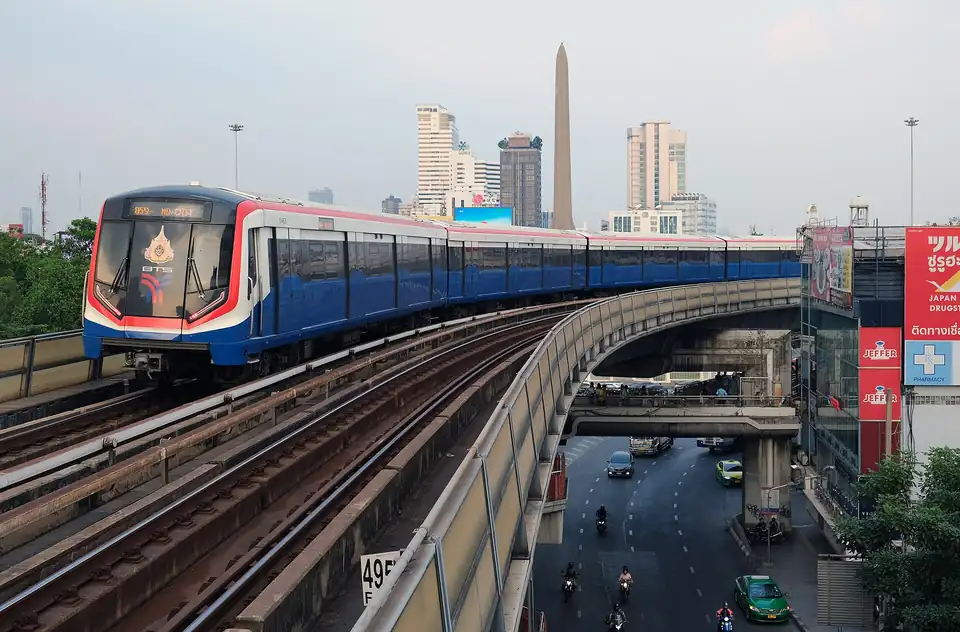
Bangkok runs on two networks that barely overlap. The BTS and MRT cover the modern commercial city quickly and predictably; the Chao Phraya and its canals cover the historic riverside city, which the rail network mostly does not reach. Knowing which one serves where you are going is the difference between an efficient day and an afternoon in traffic.
The full Bangkok transport guide has the fares, the cards and how each system is actually used.
Bangkok’s airports: BKK or DMK?
Bangkok has two international airports on opposite sides of the city, and they are not interchangeable.
Suvarnabhumi (BKK)
The main international gateway, about 24 kilometres east of the centre, with the Airport Rail Link into town and most of the long-haul traffic.
Don Mueang (DMK)
The low-cost and domestic hub, about 20 kilometres north, on the other side of the city and with a different set of ground-transport options.
Check the code before you book anything
A connection that arrives at one and departs from the other is a cross-city transfer through Bangkok traffic, not an airport change. The same goes for a hotel transfer booked before the flight is confirmed. Neither airport is closer to everywhere: it depends where you are staying.
Bangkok map
Where the districts on this page actually are, and which rail line reaches them. The Old City sits away from both BTS lines, with the MRT Blue Line touching its southern edge at Sanam Chai; Siam, Silom and Sukhumvit sit along the BTS; Chatuchak is a long way north of all of it.
What to eat in Bangkok
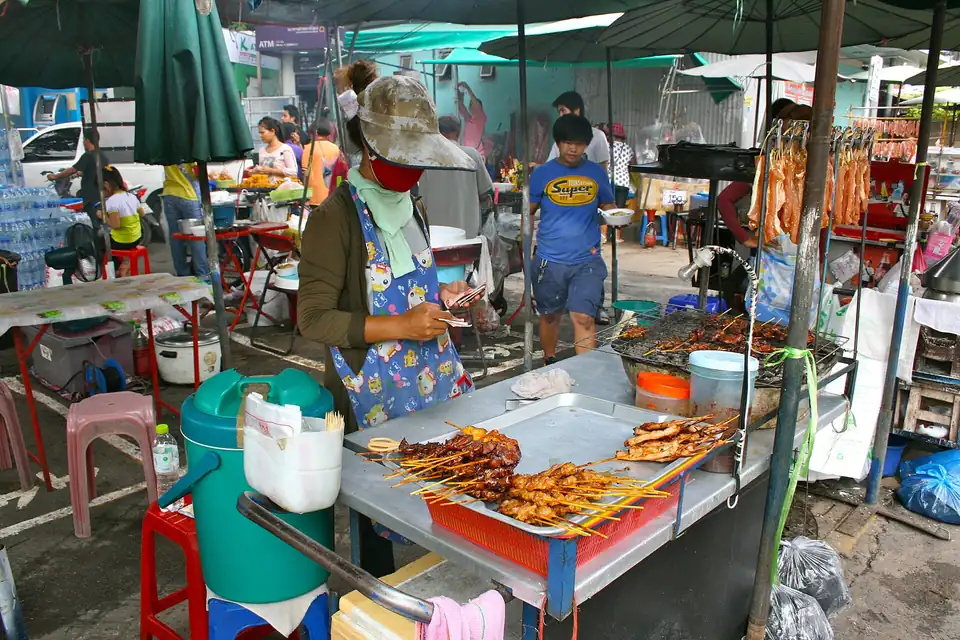
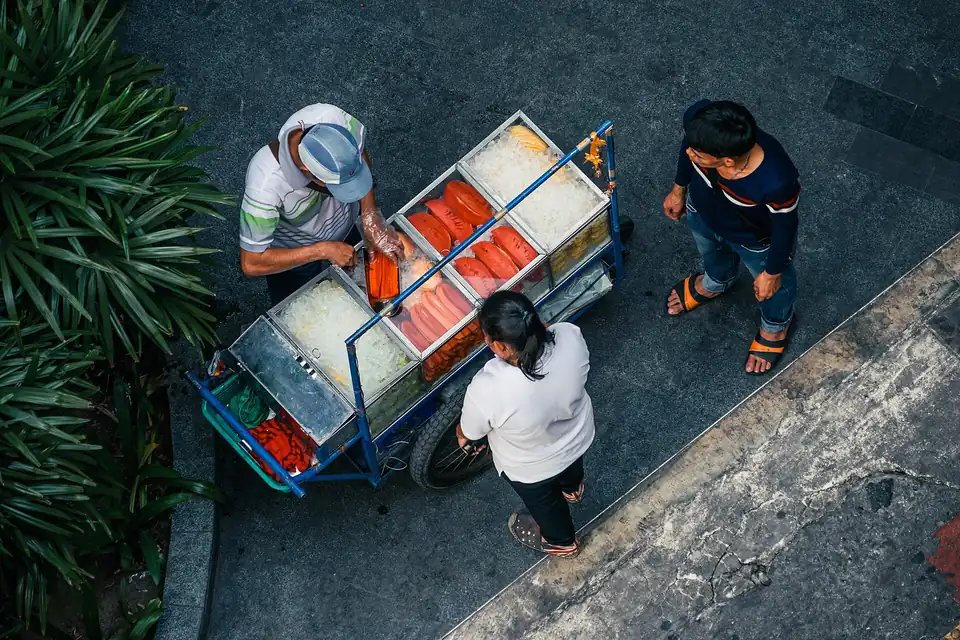
Bangkok’s street food is not one thing. Most stalls do one dish and have done it for years, which is why the good ones are specific rather than general and why a stall with a queue is usually worth the queue.
- Yaowarat after dark is the densest eating in the city and the easiest place to start, now that the MRT reaches it.
- Food courts in the malls are the low-stress entry point: air-conditioned, card or coupon payment, and the same dishes.
- The dishes to know are pad krapow, the noodle soups, the curries over rice, and pad thai, which is better here than its reputation abroad suggests.
The Bangkok food guide covers the dishes, the districts and how to eat well without a reservation.
Best day trips from Bangkok
Ayutthaya
The ruined former capital, an hour and a half to two hours by train. The strongest day trip here, and it doubles as a stop on the way north. The Ayutthaya guide.
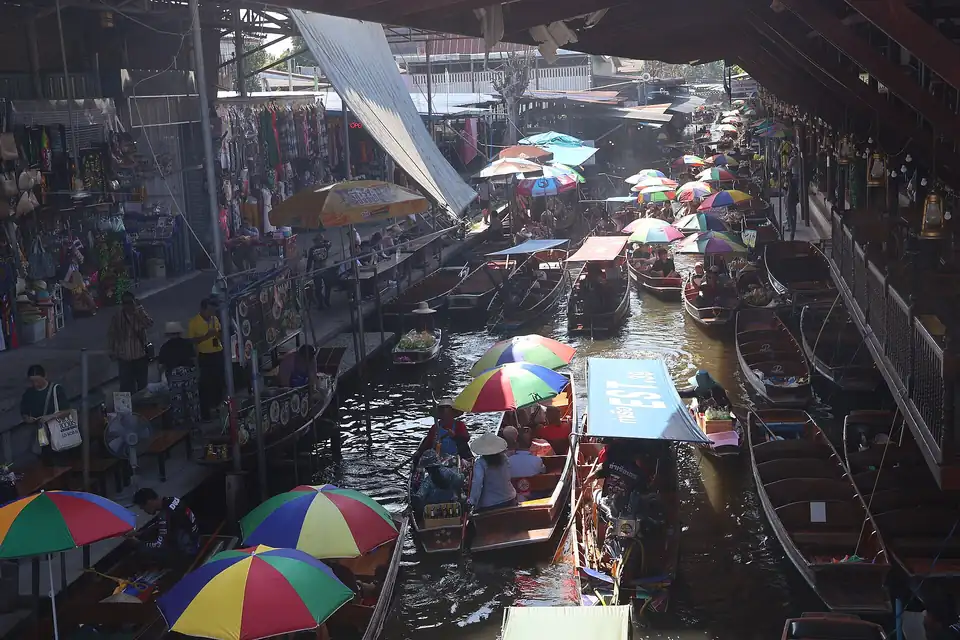
Floating markets
Damnoen Saduak and Amphawa, and the Maeklong railway market alongside them. Best understood before you book: they are very different from each other.
Kanchanaburi
The River Kwai, the bridge and the war cemeteries. A longer day, and better as an overnight if you can spare one.
Ancient City
Muang Boran, south-east of the city. A shorter cultural day and the easiest of the four to fit around a flight.
Which day trip is worth the day?
All four compared, including which are worth doing independently and which are not.
Compare Bangkok day tripsWhere to go after Bangkok
Bangkok is the hub, so the question is usually not whether to come but what to attach to it. The times below come from our route pages, which carry the fares and the operators.
- Chiang Mai, for northern temples, food and the hills. An hour by air or an overnight train. Both compared.
- Phuket, for the largest Andaman beach base and the widest choice of hotels. About an hour and a half by air.
- Krabi, for limestone scenery and island days. About an hour and twenty-five minutes by air.
- Koh Samui, for the Gulf islands, which keep a different calendar from the Andaman. Just over an hour by air.
- Ayutthaya, as a day trip or as the first stop on the way north. An hour and a half by train.
The routes index has the rest, and multi-centre trips covers how these pair up over a fortnight.
Getting to and from Bangkok
Times, how often each runs, and what it costs, for every route we have checked.
Popular Bangkok tours and day trips
 Free cancellation
Bangkok Canal Tour: 2-Hour Longtail Boat Ride
 Free cancellation
Half-Day Floating Market and Railway Market Tour from Bangkok
 Free cancellation
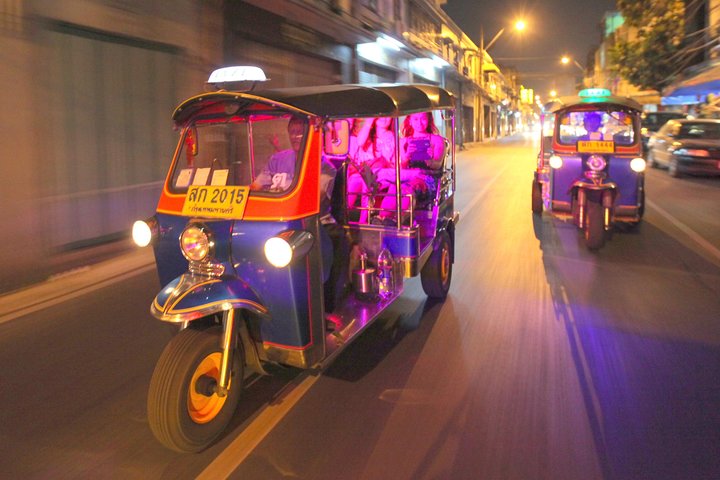
Bangkok by Night: Temples, Markets and Food Tuk-Tuk Tour
 Free cancellation
Bangkok Backstreets Food Tour with 15+ Tastings
 Free cancellation
UNESCO's Ayutthaya Historical Park: Full-Day Tour from Bangkok
 Free cancellation
Grand Palace & Temples of Bangkok with experienced guide
Bangkok FAQs
How many days do you need in Bangkok?+
Three is the baseline for a first trip, and it works because the sights group geographically: the river temples on one day, Chinatown and the central city on another, and a third left open for Chatuchak or a day trip. Four or five gives you a full day trip without spending it instead of Bangkok.
Where should first-time visitors stay in Bangkok?+
The Old City if temples and the river are what you came for, and Sukhumvit if you want the BTS on your doorstep, the widest choice of restaurants and something to do after ten at night. Neither is the right answer for everyone, which is why our guide to where to stay compares them on what each one costs you.
What is the best time to visit Bangkok?+
November to February. Those are the coolest months and among the driest: December takes 11mm across two days with rain and January 16mm across three. It is also the busiest and most expensive stretch of the year.
What is the best way to get around Bangkok?+
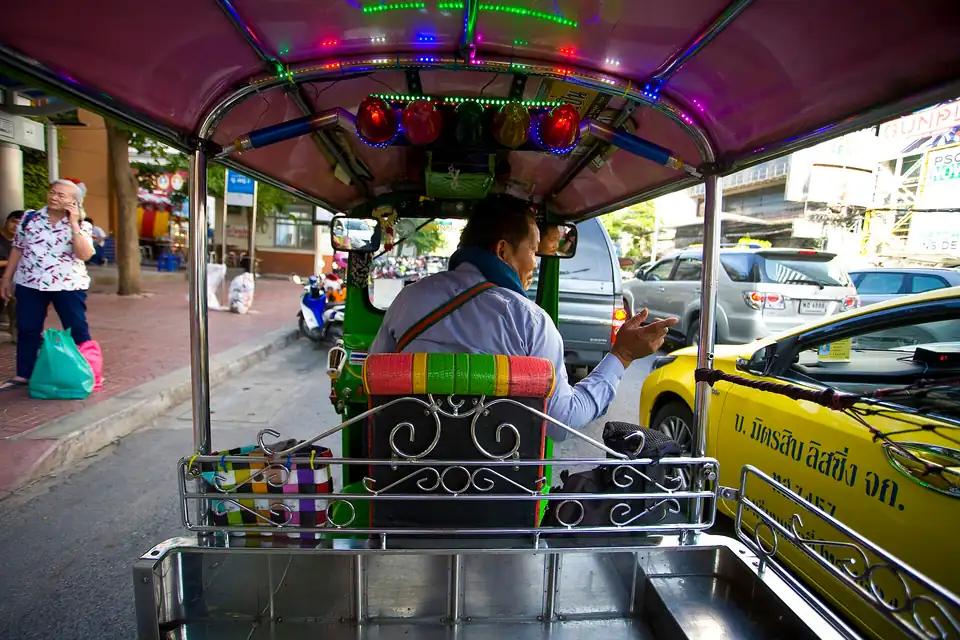
The BTS and MRT for the modern city, and the Chao Phraya boats for the Old City and the river temples, because the rail network barely reaches them. Taxis and ride-hailing fill the gaps, but road traffic makes them a poor default for a whole day.
Is BKK or DMK the main Bangkok airport?+
Suvarnabhumi (BKK) is the main international gateway, about 24 kilometres east of the centre. Don Mueang (DMK) is the low-cost and domestic hub, about 20 kilometres north. They are separate airports on opposite sides of the city, so check the code on your booking before you arrange a transfer or a connection.
Is Bangkok walkable?+
In parts, and not as a whole. Yaowarat, the Old City temple cluster and the Sukhumvit sois are all walkable once you are in them. Between districts it is not: the Old City is seven kilometres from Sukhumvit and Chatuchak is eight kilometres north of the Old City, on roads that are slow for much of the day.
Is 3 days enough for Bangkok?+
For a first trip's headline sights, yes, as long as you group them by area rather than crossing the city twice a day. Our three-day itinerary is built that way: the river temples together, the silk house and Chinatown together, and the third day left open.
What are the best day trips from Bangkok?+
Ayutthaya for the ruined capital, which is an hour and a half by train and also works as a stop on the way north. The floating markets at Damnoen Saduak and Amphawa, and Kanchanaburi and the River Kwai for a longer day. Our day-trips guide compares them, including which are worth doing independently.
-
 Things to Do in Bangkok
 -
 Where to Stay in Bangkok
 -
 Day Trips from Bangkok
 -
 3 Days in Bangkok
 -
 Getting Around Bangkok
 -
 Where to Eat in Bangkok
Areas covered: Old City (Rattanakosin), Sukhumvit, Riverside & Chinatown.