The Similan Islands · Andaman Coast
The Similan Islands Travel Guide
The Similans are nine granite islands sixty kilometres off the Andaman coast and the best diving in Thailand. They are a national park with no hotels, they close for roughly half the year, and every visit starts from Khao Lak: this is a place you go to rather than stay in.
- Driest months
- December to March 4 months under 150mm, 15 rain days or fewer
- Best for
- Diving, mid-October to mid-May
- Airport
- Phuket (HKT), then Khao Lak
- Getting around
- Boat only
The Similans are not a place you stay. They are a national park of nine uninhabited granite islands in the open Andaman, sixty kilometres west of the Phang Nga coast, with no hotels, no roads and no permanent population. Every visit begins on the mainland and ends there, the same day or after a few nights on a boat.
They are also, by most accounts, the best diving in Thailand, and the best sand: granite boulder formations on the west side of the chain, coral gardens on the east, water clear enough that the day boats anchor over reef you can see from the deck.
And they are shut for about half the year. That is the first thing to understand about them, and it is the thing this page can tell you something new about.
The closure is not a whim, and here is what it tracks
Every page about the Similans reports the closure as a pair of dates. Almost none of them says why the dates are there, and the reason is the reason the whole trip works or does not.
| Mean daily-maximum wave height | J | F | M | A | M | J | J | A | S | O | N | D |
|---|---|---|---|---|---|---|---|---|---|---|---|---|
| Koh Similan The middle of the chain, 60km offshore, no land in front of it. | 0.67 January: 0.67 metres | 0.66 February: 0.66 metres | 0.60 March: 0.60 metres | 0.64 April: 0.64 metres | 1.17 May: 1.17 metres | 1.42 June: 1.42 metres | 1.61 July: 1.61 metres | 1.40 August: 1.40 metres | 1.53 September: 1.53 metres | 1.01 October: 1.01 metres | 0.76 November: 0.76 metres | 0.76 December: 0.76 metres |
| Richelieu Rock Further north and more sheltered. Liveaboard range only. | 0.55 January: 0.55 metres | 0.50 February: 0.50 metres | 0.43 March: 0.43 metres | 0.44 April: 0.44 metres | 0.82 May: 0.82 metres | 1.05 June: 1.05 metres | 1.20 July: 1.20 metres | 1.05 August: 1.05 metres | 1.14 September: 1.14 metres | 0.69 October: 0.69 metres | 0.58 November: 0.58 metres | 0.66 December: 0.66 metres |
| Nang Thong, Khao Lak The mainland beach the boats leave from. | 0.30 January: 0.30 metres | 0.30 February: 0.30 metres | 0.29 March: 0.29 metres | 0.35 April: 0.35 metres | 0.65 May: 0.65 metres | 0.80 June: 0.80 metres | 0.93 July: 0.93 metres | 0.82 August: 0.82 metres | 0.90 September: 0.90 metres | 0.57 October: 0.57 metres | 0.38 November: 0.38 metres | 0.34 December: 0.34 metres |
The shaded months are when Mu Ko Similan has historically been closed, roughly mid-May to mid-October.
Three things fall out of that table.
The park is shut for exactly the months when the sea doubles. Across the six closed months the wave height at Koh Similan averages 1.36 metres; across the six open ones, 0.68. That is not a coincidence of the calendar. These are small islands in open ocean with nothing to windward, and the southwest monsoon turns a ninety-minute speedboat crossing from a boat ride into an ordeal.
The sea at the pier tells you nothing. Nang Thong beach at Khao Lak, where the boats leave from, runs at less than six-tenths of the Similan figure in every single month. Standing on flat sand at eight in the morning is not evidence about the water you will be in at half past nine.
October is not February. The park reopens around mid-October while the sea is still coming down: October averages 1.01 metres against February’s 0.66. An early-season trip is cheaper and it is a rougher crossing, and both of those are true at once.
None of this predicts the dates. The park authority sets them each season and they move by weeks, sometimes announced late. If your flights depend on the Similans being open, check the current season directly rather than trusting any page including this one.
Day trip or liveaboard
There are two ways to do this and they are barely the same activity.
A day trip is a long day. An early pickup, an hour and a half to two hours each way in a speedboat, three or four stops, and back on the mainland by late afternoon. It is the affordable way and it is how most people see the islands, divers and snorkellers together on the same boat. In any swell it is uncomfortable, and the swell is the thing the table above is about.
A liveaboard of two to five nights is what the Similans have their reputation for. It is the only way to reach the northern sites, to dive the good ones at the right time of day, and to be at the islands when the day boats are not. It is also, for a certain kind of diver, the point of coming to Thailand at all.
The diving page sets out the sites, what a liveaboard actually costs you in time, and where Richelieu Rock fits.
Snorkelling, and the beaches
Worth saying plainly, because a lot of pages imply otherwise: the Similans are excellent for snorkelling and a large share of day-trip passengers never put a tank on. The reef comes shallow, the water is clear, and the granite makes for better swimming than a flat reef flat does.
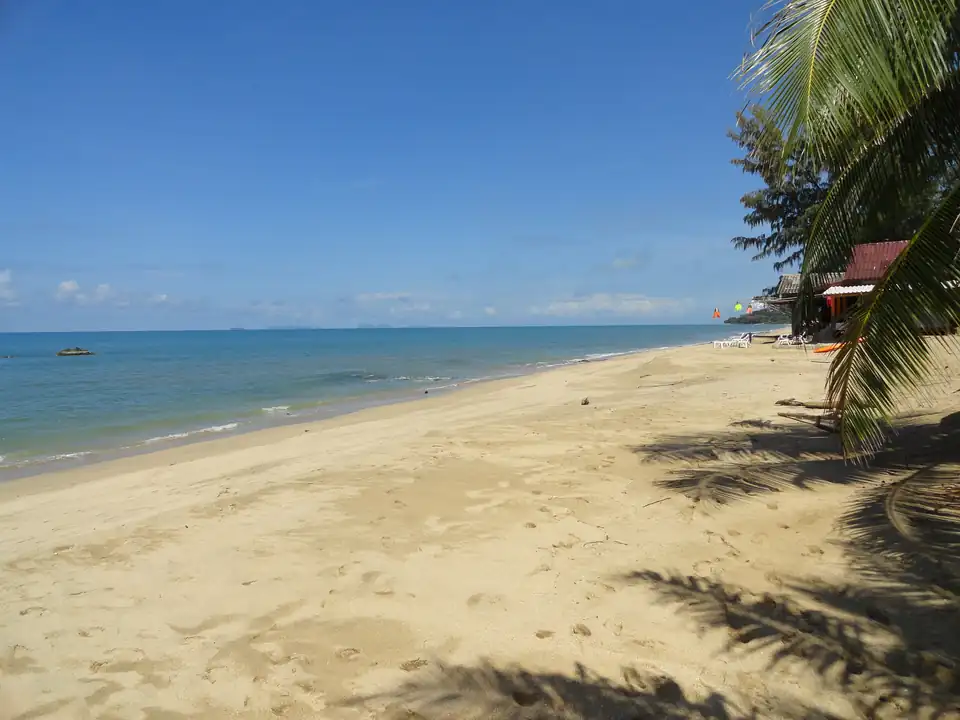
The sand is the other half of it. Koh Similan and Koh Miang have beaches that are white in the way photographs promise and rarely deliver, and it is coral rather than quartz: the white sand here is ground reef. It is also, in season, shared with several hundred other people who arrived on the same boats, which is the trade the day trip makes.
Visitor rules, and how much they change
The park caps daily numbers, restricts which islands you may land on, and ended most overnight stays some years ago. Rules here have moved several times in the past decade and consistently in one direction, towards fewer people and fewer places.
The practical consequence is that any specific claim about which island you will set foot on, or where you might sleep, is worth checking with an operator in the season you are travelling rather than reading off a page. We are not going to publish a list that is likely to be wrong by the time you use it.
The Surin Islands, and how they differ
Further north and on a similar calendar, the Surin Islands are the quieter alternative: better shallow snorkelling, less infrastructure, a fraction of the boats, and a Moken sea-nomad community on Koh Surin Tai. They are what the Similans were before the Similans became the thing everyone books.
They are the answer when the Similans are full rather than when the Similans are shut, because they close for the same monsoon and for much the same reason.
Getting there
Everything leaves from Thap Lamu pier, a few kilometres south of Khao Lak, whether you book in Khao Lak, in Phuket or online. That single fact settles most of the planning, and it is the reason a Phuket booking costs you two or three extra hours in a minibus for exactly the same boat.
Getting to the Similan Islands has the comparison from Khao Lak, Phuket and Krabi, and what each actually costs in time.
How long to give it
One long day if you are snorkelling, and build the rest of the trip around Khao Lak rather than around the islands. Three or four nights on a boat if you dive, in which case the boat is the holiday and the mainland is the airport.
Either way the season decides everything before you decide anything. The Khao Lak weather page sets out what the mainland does month by month, and the Andaman Coast guide covers which months work on this side of the country.
The Similan Islands FAQs
When are the Similan Islands open?+
Mu Ko Similan national park has historically opened around the middle of October and closed around the middle of May, and the exact dates are set each season by the park authority and move by weeks. Outside that window there is no legal way to visit. If the Similans are the reason for the trip, check the current dates before booking flights.
Why do the Similan Islands close?+
Because of the sea, not the rain. In the six months the park is shut the wave height at Koh Similan averages 1.36 metres against 0.68 in the six it is open, almost exactly twice as much. These are small islands in open ocean with no shelter, reached by open speedboat across sixty kilometres, and the southwest monsoon makes that crossing a bad idea rather than merely a wet one.
Can you stay overnight on the Similan Islands?+
Not in the way you could a decade ago. The park ended most overnight accommodation and the tents and bungalows that once existed on Koh Miang have been heavily restricted. In practice the two ways to spend a night out there are a liveaboard dive boat or nothing, and the rules have changed several times, generally towards fewer people.
Are the Similan Islands worth it if you do not dive?+
Yes, and roughly half the people on a day boat do not dive. The snorkelling is genuinely good, the reef comes shallow, and the beaches on Koh Similan and Koh Miang are the best sand in Thailand by some distance. What you are paying for is a long day on a boat, so the question is whether you like boats.
Similan Islands from Phuket or Khao Lak?+
Khao Lak, if you have the choice. Every boat leaves from Thap Lamu pier just south of Khao Lak whichever you book, so a Phuket booking is the same boat with two or three extra hours of minibus attached to each end of the day. Our getting there page sets out both.
How rough is the crossing to the Similan Islands?+
Rougher than the beach you left, always. The Similans run between 1.7 and 2.2 times the wave height of Nang Thong beach at Khao Lak in every month of the year, because they sit in open ocean with no land in front of them. Flat sand at the pier tells you nothing about the hour and a half ahead.
What is the best month for the Similan Islands?+
February and March. The park is open, the sea at Koh Similan is at its annual flattest at about 0.6 metres, and visibility is generally at its best. Late October and early November are the cheapest part of the open season and the sea is still coming down from the monsoon.
 Bangkok
  Chiang Mai
  Phuket
  Krabi
Krabi  Koh Samui
  Khao Lak
  Chiang Rai
  Pai
Pai  Ayutthaya
  Sukhothai
  Koh Phangan
  Koh Tao
  Trat
Trat  Koh Mak
  Koh Kood
  Koh Chang
  Koh Samet
  Pattaya
  Koh Phi Phi
  Koh Lanta
  Koh Lipe
  Thailand Islands