
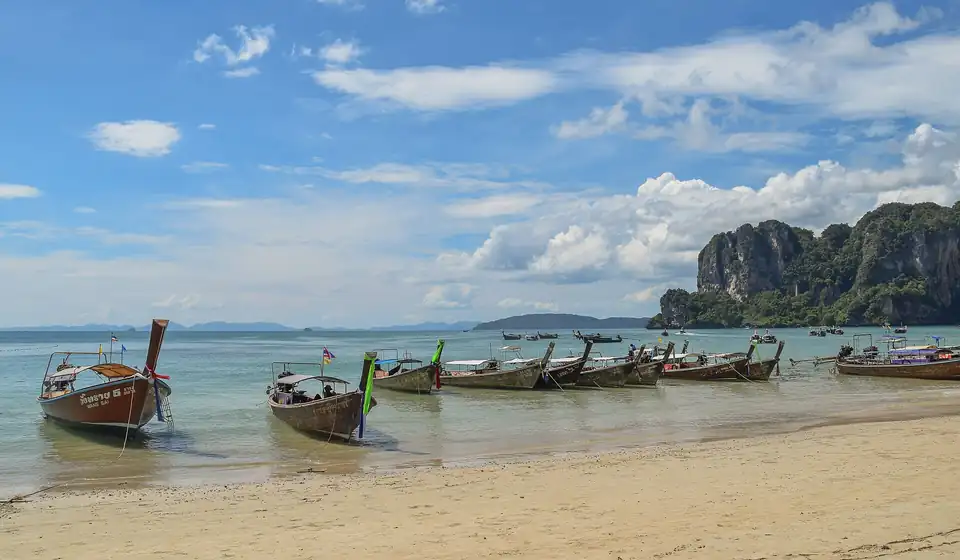
Krabi · Andaman Coast
Krabi, Thailand Travel Guide
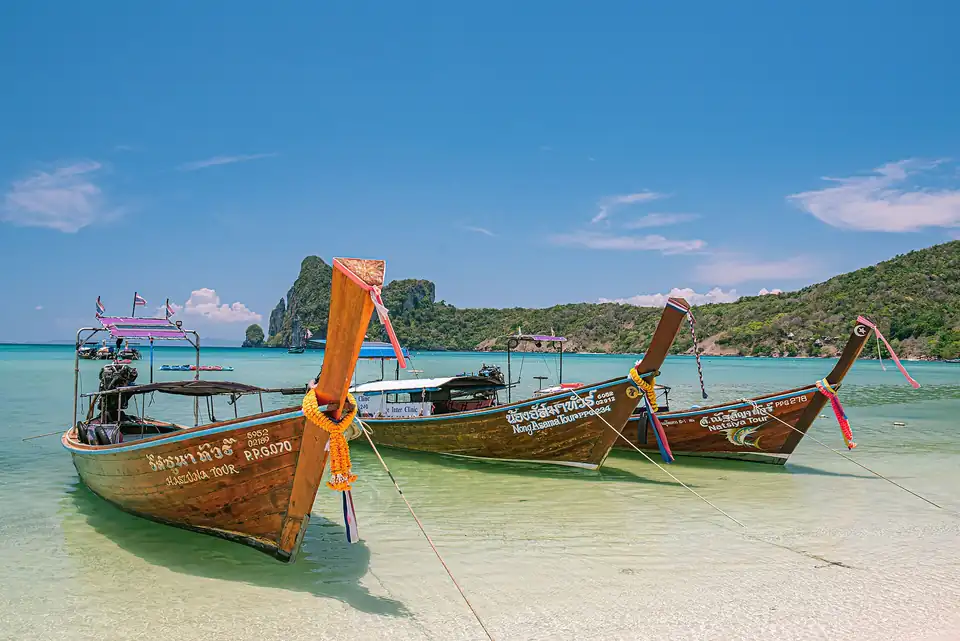
Thailand's limestone coast: Railay's cliffs and car-free beaches, Ao Nang's longtail boats, and the shortest ferry crossing to Phi Phi. Quieter and more compact than Phuket, with less nightlife and a stronger sense of the landscape.
- Driest months
- December to March 4 months under 150mm, 15 rain days or fewer
- Best for
- Limestone scenery and island days
- Airport
- Krabi (KBV)
- Getting around
- Longtail boat and songthaew
Krabi is a province rather than a town, and the difference matters before you book anything. The name covers a working provincial capital on a river, a beach strip with the boats, a peninsula with no road on it at all and a quiet resort coast further north, and they are not variations on one another. This page is the decision: which of them suits your trip, when to come, how long to give it, and how it compares with the island across the bay.
Krabi at a glance
Where to stay in Krabi: the main bases
Four places on the mainland, and the choice between them decides more here than the hotel does. The short version is below; the full comparison, with what each one costs you in convenience, is in our guide to where to stay in Krabi.
Ao Nang
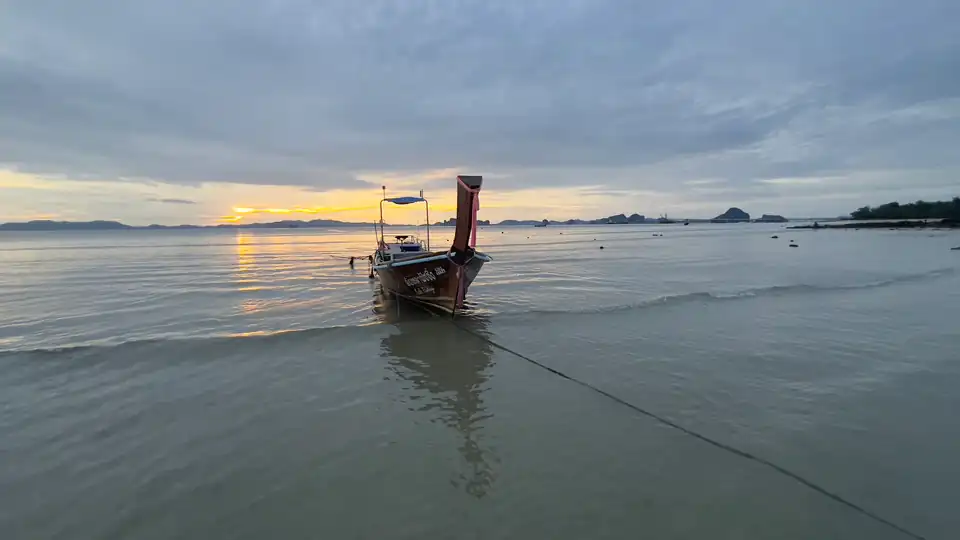
The practical base, and the right answer for a first trip or anything longer than four nights. It is one walkable strip of restaurants, dive shops and travel agents behind a beach that is not the best in the province, and the boats to everywhere else leave from its shore and from Nopparat Thara next door. You give up some of the scenery and get back the ability to change your mind at nine in the morning.
Railay
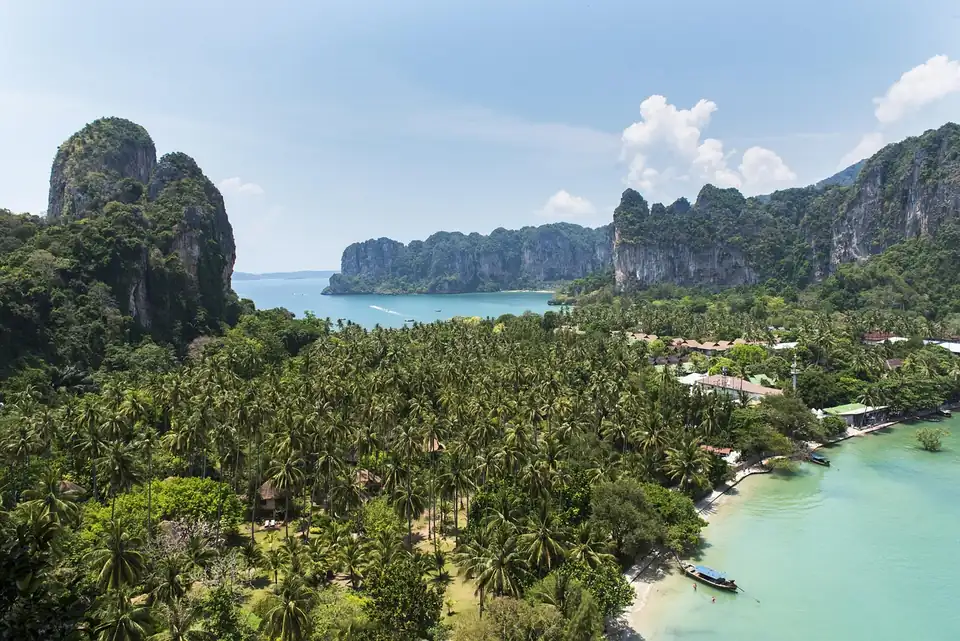
The setting, three kilometres along the coast and reachable only by longtail boat. No roads, no cars, four beaches, and the climbing that made the peninsula internationally known. It is more expensive than Ao Nang because everything on it arrived by boat, the choice of somewhere to eat is short, and the last boats go in the evening. Best as a stay of two or three nights, or as a day out from Ao Nang.
Klong Muang and Tub Kaek
The quiet resort coast, seven and eleven kilometres north of Ao Nang, on a shallow sheltered stretch looking out at the islands. Individual resorts with very little between them, which is the appeal and the catch: you will eat where you are staying most nights and a taxi is involved in everything else.
Krabi Town
A working provincial town on the river, eleven kilometres inland from Ao Nang, with a good night market, much lower prices and no beach at all. Sensible for a night either side of a flight or a bus. Not a beach holiday.
Which base suits your trip?
All four compared on what they actually cost you: walkability, the choice of restaurants, how the boats work and what happens after dark.
Compare all Krabi areasKoh Lanta is administratively part of Krabi province and is sometimes sold as part of a Krabi trip. Treat it as a separate island stay rather than a base for the mainland: it is a ferry or a minivan away, and the crossing is a half day once you have counted the transfers at each end.
What Krabi is best for
Four things, in the order most trips end up doing them. The detail, attraction by attraction, is in our guide to things to do in Krabi.
Island days
The reason most people come. The four islands trip is the standard one and takes in the sandbar that appears at low tide; the Hong Islands, sixteen kilometres offshore, are quieter and to many eyes better; Phi Phi is the famous one and the busiest. Budget for at least one full day on the water, and understand that this is the part of the trip the weather can cancel.
Railay and Phra Nang
Worth a day even if you are not staying there. Phra Nang is the cliff-backed beach on the point, reached on foot from Railay East across the peninsula, and the walk between them takes minutes.
Rock climbing
Railay and Tonsai are a genuine international climbing destination, with an established school scene and routes from complete beginner upwards. It is one of the few things Krabi is better known for abroad than at home.
Inland
The Tiger Cave temple and its long stairway to a summit view over the karst plain, the Emerald Pool, and the hot springs. One day covers the three of them and it is the day that saves a trip when the sea is closed.
What to actually book
Which island trip is worth the day, which temple is worth the stairs, and how to fit them around a beach.
See the best things to do in KrabiKrabi’s beaches: what to expect
Krabi’s beaches are short, backed by cliffs and mostly reached along the coast rather than down a road, which is why the province has nothing like Phuket’s fifteen-kilometre run of west-facing sand. What it has instead is shelter.
- Ao Nang: the working beach. Boats come and go off it all day and it is not where you swim for its own sake, but everything else starts here.
- Nopparat Thara: the quieter continuation west of Ao Nang, longer and emptier, with a national park office on it.
- Railay West: the wide one, facing the sunset, with the cliffs at both ends. This is the postcard.
- Phra Nang: small, backed by an overhanging cliff and a cave shrine, and the most photographed beach in the province for a reason.
- Klong Muang and Tub Kaek: shallow, calm and quiet, looking north at the islands rather than west at the open sea.
Wave heights across all of them are measured, month by month, in our beach-by-beach comparison.
Best time to visit Krabi
Krabi has two seasons that are often described as one, and the difference between them is worth understanding before you book. The driest stretch is December to March, the four months that come in under 150mm of rain with fifteen rain days or fewer, measured from thirty years of reanalysis at Krabi’s own coordinates. The calm-sea stretch is longer, roughly November to April, because the wave heights in the bays fall away before the rain does and come back after it.
They are not the same thing, and where guides say “November to April is dry” the rainfall does not support it: November takes 263mm here, more than May does. A November trip is a gamble on rain rather than on the sea.
December to March, the driest months
February is the driest month of the year at 53mm across seven days with rain, and December, January and March are the other three under the threshold. The boats run, the sea is at its quietest, and this is also the busiest and most expensive stretch of the year.
April and November, either side
April is the transition: 185mm and rising, hot, and still calm at sea. November runs the other way and improves through the month, but at 263mm it is one of the wetter months on the calendar and its reputation as a shoulder month comes from the sea, not the sky.
May to October, the southwest monsoon
Between 241mm and 338mm in every one of those months, with October the wettest at 338mm across 28 days with rain. Prices are at their lowest, the crowds thin, and the rain generally arrives in bursts rather than as all-day drizzle. What it costs you is the boats: crossings thin out and day trips get cancelled, and since the islands are the point here, that matters more in Krabi than it would inland.
Why Krabi’s sea reads differently from Phuket’s
Krabi’s main bays sit inside Phang Nga bay with Phuket island between them and the open Andaman. In four years of marine reanalysis the modelled wave height at Ao Nang, Railay and Phra Nang runs between 0.18 and 0.43 metres, and that is the whole annual range. Patong, on Phuket’s exposed west coast, does not get below 0.47 in any month and reaches 1.30 in July.
Two things are worth saying about that measurement rather than leaving it as a slogan. The three Krabi beaches share one cell of the marine grid, so they carry identical figures and the model cannot tell them apart. And the comparison holds against Phuket’s main west-coast beaches, not against all of them: the sheltered northern ones, Bang Tao and Mai Khao, come down to 0.39 and 0.37 in the dry months, close to Krabi’s summer. The gap opens in the monsoon, when Patong runs from 0.85 to 1.30 and the Krabi bays stay under 0.45. That is the difference between a wet week with a closed beach and a wet week with swimmable water.
Thailand month by month, which sets this against the Gulf coast, where the wet season falls at a different time of year.
How many days do you need in Krabi?
Three nights
The minimum, and the right length when Krabi is one stop on a longer route. Ao Nang as the base, a day on Railay and Phra Nang, and one island trip. You will not have a spare day if the weather takes one.
Five nights
The comfortable length. A second island day, one day inland for the temple and the pools, and time on a beach that is not on a schedule. This is the length most first trips should book.
Seven nights
Adds the thing three nights lacks, which is slack: a spare day for weather, room to split the stay between Ao Nang and two nights on Railay, or the option of carrying on to Koh Lanta rather than turning round.
Krabi or Phuket?
The two are seventy kilometres apart across the bay and answer different questions. Neither is the better destination in the abstract.
| Krabi | Phuket | |
|---|---|---|
| Overall feel | Quieter, landscape-led | Larger, busier, more built |
| Best for | Scenery, Railay, island days | Convenience, nightlife, choice |
| Airport | Krabi (KBV) | Phuket (HKT) |
| Nightlife | Limited | Much stronger |
| Beach choice | A handful of short bays | Fifteen kilometres of west coast |
| Limestone | The reason to come | Reached on an excursion |
| Sea, May to October | Bays stay under 0.45m | West coast 0.85m to 1.30m |
| Rain, annual | 2,450mm | 2,251mm |
| First-trip convenience | Good | Strongest |
Note the last two rows together: Krabi is the wetter of the two and the calmer at sea. That combination is the whole argument for it in the monsoon, and the whole argument against reading “calm” as “dry”.
The Phuket guide, or the wider Andaman Coast if the choice is really between three or four bases rather than two.
Krabi map
Where the places on this page actually are. Krabi Town is inland on the river, the airport is further inland still, Ao Nang is the beach strip, and Railay is the peninsula three kilometres along the coast with no road to it.
How to get to Krabi
By air. Krabi International (KBV) takes domestic flights from Bangkok, about an hour and twenty-five minutes, along with a smaller number of regional international routes. Flying in direct is usually the right call rather than flying to Phuket and driving: the road between them is around three hours.
From Phuket. Minivan or bus in two and a half to three hours, running through the day, or the high-season ferry across the bay in an hour and a half to two hours, which lands at Ao Nam Mao or East Railay rather than in Krabi Town. Both compared.
From the islands. Phi Phi is an hour and a half to two hours by ferry from Klong Jilad pier. Koh Lanta is the same by high-season ferry and a minivan the rest of the year. Koh Samui is on the other coast, so every version of that trip crosses land: four to five hours all in.
The route cards at the foot of this page carry the times, the fares and the operators for each of them, checked and dated, and the routes index has the rest of the country.
Getting around Krabi
The pattern to plan around is that the water is not a scenic extra here: it is the road. How transport works across Thailand covers the rest of the country.
Getting to and from Krabi
Times, how often each runs, and what it costs, for every route we have checked.
Popular Krabi tours and day trips
 Free cancellation
Krabi 4 Island Sunset Snorkeling Cruise + Bioluminescent Swim
 Free cancellation
Deep Mangrove and Canyon Kayak Tour in Krabi
 Free cancellation
All day Krabi Jungle Tour (Hot Spring Water, Emerald Pool, Tiger Cave Temple)
 Free cancellation
One Day Tour Khao Sok Cheow Lan Lake from Krabi
 Free cancellation
Full-Day Phi Phi Islands Tour with Lunch from Krabi
 Free cancellation
Discover Krabi - Emerald Pool, Hot Springs & Tiger Cave Temple
Krabi FAQs
Is Krabi worth visiting?+
If the landscape is what you came for, yes. Krabi is limestone: towers rising vertically out of shallow water, the car-free beaches of Railay underneath them, and a scatter of islands offshore that most trips here are built around. What it does not have is Phuket's nightlife, its choice of hotels or its flight schedule.
How many days do you need in Krabi?+
Three nights is the minimum and works when Krabi is one stop on a longer route: Railay and one island day. Five to seven is the length to give it when Krabi is the trip, which buys a second boat day, a day inland and time that is not on a schedule.
Is Ao Nang or Railay better?+
Ao Nang is the practical base and Railay is the setting. Ao Nang has the restaurants, the transport and the boats to everywhere else; Railay has no road, a shorter list of places to eat and one of the most striking beaches in the country. Our guide to where to stay in Krabi compares all four mainland bases.
What is the best month to visit Krabi?+
February, on the measurements. It is the driest month of the year here at 53mm across seven days with rain, and the sea is at its calmest end. December, January and March are the other three months that clear the threshold, and all four are the busiest and most expensive of the year.
Is Krabi better than Phuket?+
They answer different questions. Krabi has the limestone and sheltered bays; Phuket has the flights, the range of hotels, the nightlife and more beach to choose from. If the sea itself is the point, the wave measurements favour Krabi by a wide margin from May to October.
Can you visit Phi Phi from Krabi?+
Yes, and it is the shortest ferry crossing to the islands: about an hour and a half to two hours from Klong Jilad pier to Tonsai. Phuket's ferry takes about two hours and its speedboat about one, so which gateway is quicker depends on the boat rather than on the map.
Does Krabi have an airport?+
Yes, Krabi International Airport, KBV. It sits inland east of Krabi Town and takes domestic flights from Bangkok along with a smaller number of regional international routes, which often makes it cheaper to reach than its size suggests. Every arrival at the beaches is a road transfer from there, and Railay needs a boat on the end of it.
Is Krabi Town the same as Ao Nang?+
No, and booking one thinking it is the other is the most common mistake made here. Krabi Town is the provincial capital, inland on the river, with a night market and no beach. Ao Nang is the beach strip eleven kilometres to the west, and it is where almost every visitor stays.
Other destinations
 Bangkok
  Chiang Mai
  Phuket
  Koh Samui
  Khao Lak
  Chiang Rai
  Pai
Pai  Ayutthaya
  Sukhothai
  Koh Phangan
  Koh Tao
  Trat
Trat  Koh Mak
  Koh Kood
  Koh Chang
  Koh Samet
  The Similan Islands
  Pattaya
  Koh Phi Phi
  Koh Lanta
  Koh Lipe
  Thailand Islands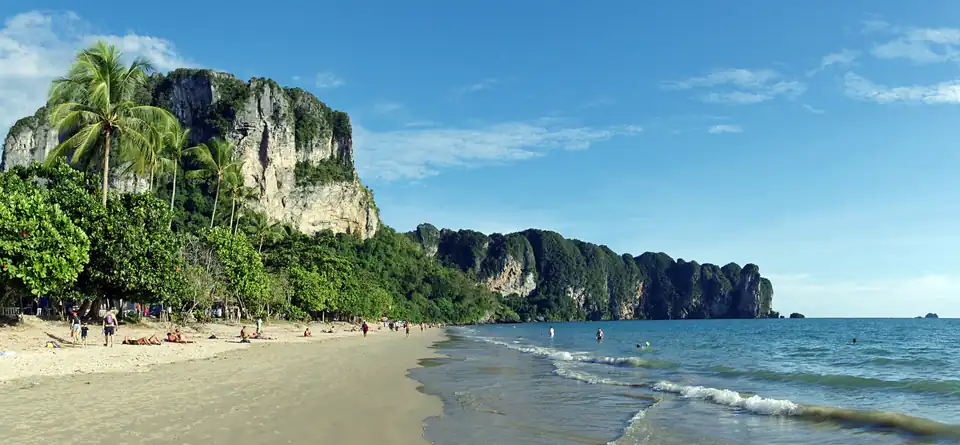
Areas covered: Ao Nang, Railay, Klong Muang & Tub Kaek, Krabi Town.