
Koh Samui
Nathon, Koh Samui
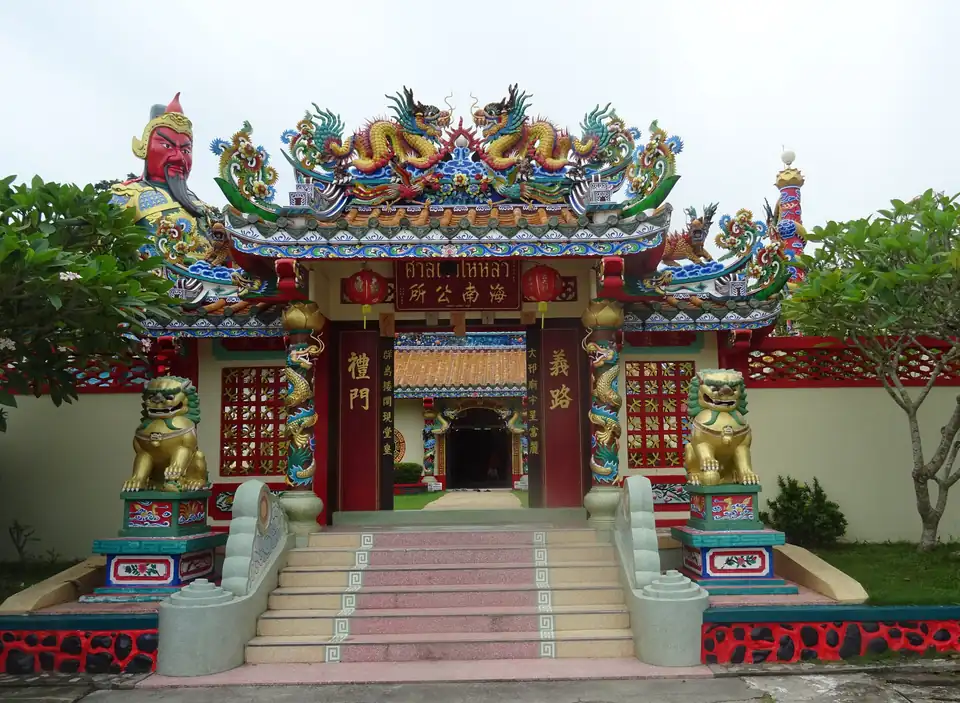
Samui's administrative town and its main passenger port: three streets of Chinese-Thai shophouses, a morning fish market and a Hainanese shrine from 1862. Almost nobody stays here, which is most of the reason to spend a morning in it.
Nathon is the one part of Koh Samui that is not about you. It is the island’s administrative town, its main passenger port and the place its residents go to renew a licence or buy fish, and it has almost nothing arranged for visitors, which is exactly why it is worth a morning.
A Chinese town on a Thai island
Samui was a coconut island for far longer than it has been a beach one, and the trade that took the crop to Bangkok ran through this port. The people who ran it were largely Hainanese Chinese, and the town they built looks it: two-storey shophouses with shuttered fronts and living quarters above, in three streets parallel to the water.
The shrine of 1862 is the most visible piece of that history left standing, and it is a working temple rather than a monument. It is a short walk from the pier and costs nothing.
The fish market
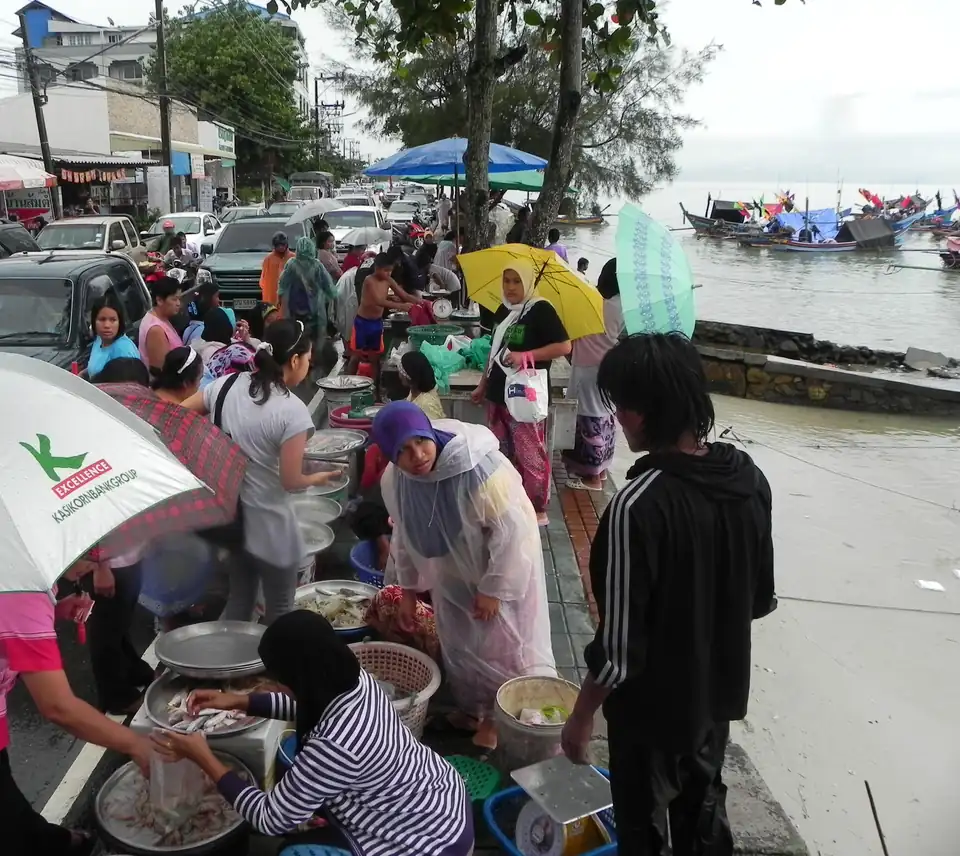
The seafront market runs in the early morning and is where a good number of the island’s kitchens buy. It is a working market rather than a tourist one: fish in bowls on the pavement, scales, umbrellas when it rains, and prices that bear no relation to Chaweng’s.
The food around it is the cheapest good eating on Koh Samui, which is the practical reason to come even if the history is not your thing.
The piers, and which one you will use
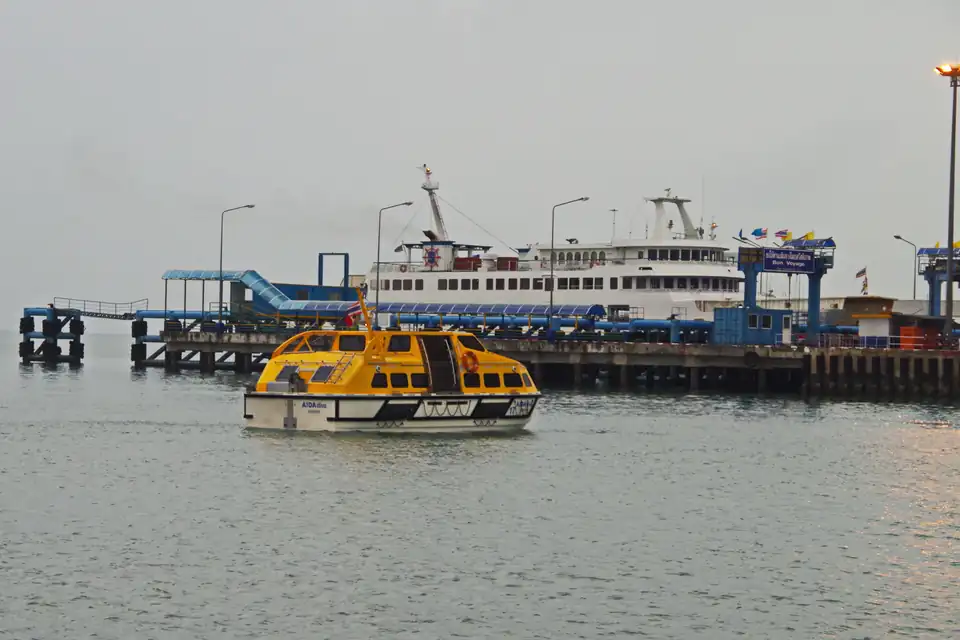
Nathon takes the passenger catamarans: from Don Sak on the mainland, and from Koh Phangan and Koh Tao. Some services use Maenam or Bang Rak instead, and the Raja vehicle ferries land further south at Lipa Noi.
Which pier you arrive at is decided by the operator you booked rather than by where you are going, and it is worth checking, because Nathon and Lipa Noi are twenty minutes apart and both are a long way from the east coast.
How long, and when
Two or three hours, in the morning, and preferably before the heat. The market is early, the shrine takes twenty minutes, and the shophouse streets take as long as you want to spend looking at them.
Sunday evening has a walking street along the front: smaller and more local than Lamai’s, which is either a recommendation or a warning.
Where to actually stay on the island is on where to stay, and the beaches, including the quiet west coast either side of the town, are on Koh Samui’s beaches.
Nathon, Koh Samui FAQs
Is Nathon worth visiting on Koh Samui?+
For a morning, and it is the only part of the island that is not arranged around visitors. Three parallel streets of century-old Chinese-Thai shophouses, a seafront fish market, a Hainanese shrine from 1862 and the ferry port. It is not a beach and it does not pretend to be.
Where do ferries to Koh Samui arrive?+
Passenger catamarans from the mainland and from Koh Phangan and Koh Tao use Nathon, with some services at Maenam and Bang Rak. The Raja vehicle ferries land further south at Lipa Noi. Which pier you arrive at depends on the operator rather than on your destination.
Should you stay in Nathon?+
Almost nobody does and there is little reason to unless you have an early ferry. There is no beach worth the name in the town itself, and the accommodation is aimed at Thai business visitors rather than holidaymakers. It is a morning, not a base.
What is there to see in Nathon?+
The fish market on the seafront in the early morning, the Hainanese shrine of 1862, the shophouse streets one block back from the water, and the walking street on Sunday evening. It takes two or three hours and it is the cheapest good food on Koh Samui.
Why is there a Chinese temple in Nathon?+
Because Hainanese Chinese traders founded the town. Samui's coconut trade ran to the mainland and to Bangkok through this port long before anyone came here for a beach, and the shrine, built in 1862, is the clearest surviving evidence of the community that built it.
When is the Nathon walking street?+
Sunday evening, along the seafront and the streets behind it. It is smaller than Lamai's and more local, which is either the recommendation or the warning depending on what you are after.