
Koh Samui
Chaweng Beach, Koh Samui
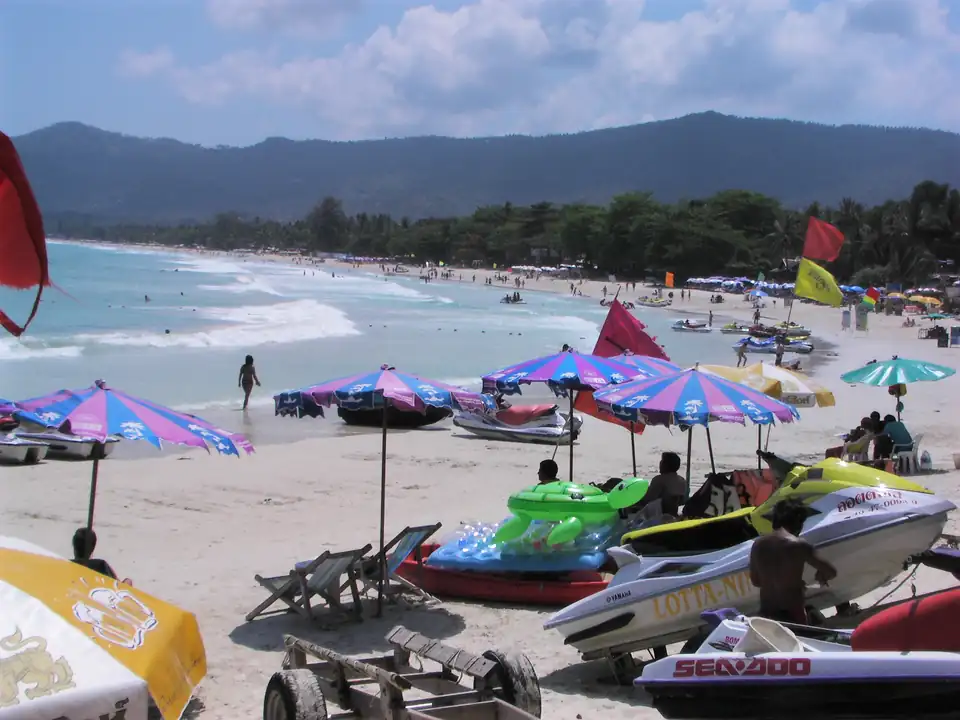
Seven kilometres of east-facing sand and everything Koh Samui sells: the hotels, the bars, the jet skis. The sea here is flattest in the second-wettest month of the year and roughest in the dry season, which is the opposite of what anyone expects.
Chaweng is seven kilometres of east-facing sand on Koh Samui’s busiest coast, and it is where most people who come to the island stay. It has the best sand on Samui, the most places to eat, effectively all of the nightlife, and the highest concentration of jet skis in the Gulf.
It is also long enough that “Chaweng is too busy” and “Chaweng is quiet” can both be true, depending which kilometre you booked.
Which part of seven kilometres
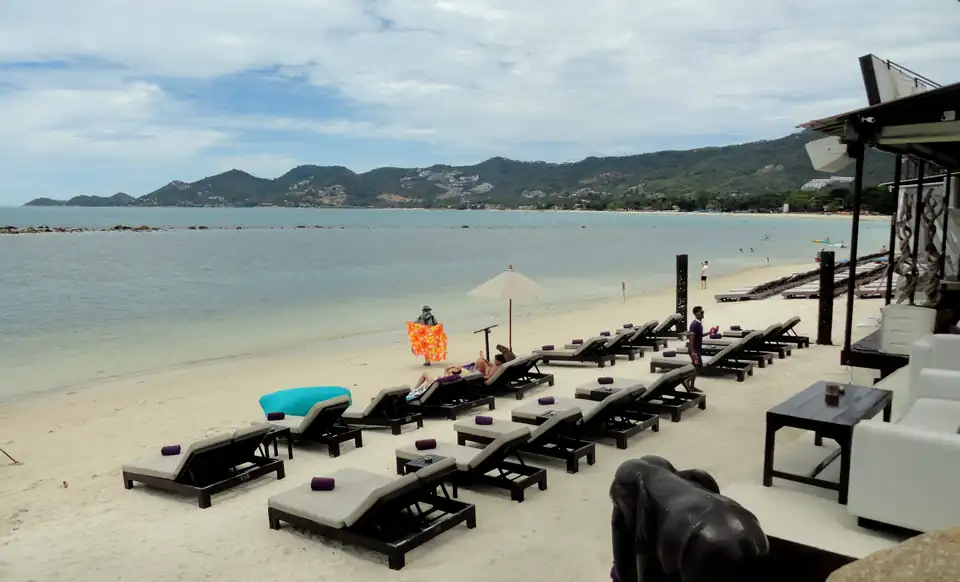
North Chaweng, above the lake, has the widest sand and the fewest people, and it is far enough from the centre that you will walk or take a taxi to dinner. It is where the bigger resorts sit.
Central Chaweng is the strip: the hotels, the bars, the tailors, the pharmacies and the noise. Everything you might want is within a few hundred metres and so is everything you might not.
Chaweng Noi, over the headland at the southern end, is a separate and much smaller bay. It is quieter, prettier in a conventional way, and about ten minutes from the strip. It is what second visits tend to choose.
The thing about the sea here
This is the fact worth planning around, and it is not what anyone expects from a tropical island.
- Rainfall, millimetres per month
- Phuket, for comparison
Driest is February at 41mm over 7 rain days, wettest is November at 313mm over 23 rain days. Against Phuket, Koh Samui is wetter in 4 months of the twelve, and the largest gap is in November.
The calmest month at Chaweng is October, at 0.24 metres. October is also Koh Samui’s second-wettest month, at 270mm. The roughest are December at 0.64 and January at 0.58, which are two of the driest months of the Samui year.
The reason is the northeast monsoon. It brings the Gulf’s weather from November into January and Chaweng faces east, straight into it, so the dry, bright, high-season weeks are also the weeks with a shore break and flags on the sand. Meanwhile the southwest monsoon that ruins the Andaman coast from May to September barely touches this side: it arrives across the peninsula, and the sea here goes flat.
So the best month by both measures is June, at 85mm and 0.29 metres, with April and May close. That run is the northern summer, when Phuket and Krabi are at their worst, and it is the entire argument for the Gulf.
A caveat about that number
Chaweng’s wave figure is not measured at Chaweng alone. The marine grid is about five kilometres and Chaweng shares its cell with Bophut and Maenam, so all three return the same series. It describes this corner of the island’s sea, not this beach’s shore break.
Lamai, the next long beach south, sits in a different cell. Its numbers run two to five hundredths of a metre above Chaweng’s in every month, which is a real difference in the model and smaller than the grid can honestly resolve. Treat the two as the same sea.
Swimming, and the flags
Chaweng shelves gently and is easy swimming for most of the year. In the December-to-February run it develops a genuine shore break, and the red flags that go up along it mean what they say. It is the reverse of the Andaman coast, where the flags fly in the summer, and it catches out people who booked the dry season expecting flat water.
The jet skis are the other hazard, and the scam that goes with them is well documented: damage claimed on return that was there before. Photograph the machine before you take it out, or do not take it out.
Where it is and how to get there
Address
Chaweng Beach, Bo Phut, Ko Samui District, Surat Thani 84320, Thailand
ต.บ่อผุด อ.เกาะสมุย จ.สุราษฎร์ธานี 84320
9.5253° N, 100.0645° E
Where it is
On Koh Samui's east-facing Gulf shore, 2.6 km south of Samui airport and 14 km east of Nathon, in a straight line.
Getting there
7 min 4.6 km by road from Samui airport, with no traffic
Drive time and distance: OSRM over OpenStreetMap roads, to the road nearest the middle of the beach, free-flow, so a floor rather than a forecast. Address: official subdistrict boundaries (Royal Thai Survey Department, via OCHA) and Thailand Post.
Where Chaweng sits among the rest
The eight beaches compared against each other, with the tide caveat that catches people out on the north coast, are on Koh Samui’s beaches. Where to base yourself on the island as a whole is on where to stay, and the month-by-month picture for the island is on the weather page.
Chaweng Beach, Koh Samui FAQs
Is Chaweng beach worth staying on?+
For a first visit to Koh Samui, yes. It has the island's best sand, almost all of its restaurants and nightlife, and the only stretch where you can walk to everything. If you want quiet, it is the wrong beach on the right island: Maenam, Bang Por or Taling Ngam are the answer instead.
Where is the best part of Chaweng?+
The north end, above the lake, is the quietest and has the widest sand. The centre is the busiest and where most of the hotels and bars are. Chaweng Noi, over the headland at the southern end, is a separate smaller bay and is the compromise most second-time visitors make.
When is the sea calmest at Chaweng?+
October, at 0.24 metres of mean daily-maximum wave height, which is also Koh Samui's second-wettest month at 270mm. The roughest is December at 0.64 and January at 0.58, which are two of the driest. On this coast the sea and the sky are out of phase.
What is the best month for Chaweng?+
June, on the measurements: 85mm of rain and 0.29 metres of sea, which is the only part of the year where both are near their best at once. April and May are close behind. That run is also the northern summer, which is when the Andaman coast is unusable, and it is the whole reason to come to this side.
How warm is the sea at Chaweng?+
Between 28.5C in January and 32.0C in May, from four years of marine reanalysis. It is warm in every month of the year and genuinely hot at the top of it, which is worth knowing if you were hoping the water would cool you down in May.
Is Chaweng too busy?+
It is the busiest beach on the island and it is seven kilometres long, so both answers are true depending where you stand. The centre is crowded and loud. The northern kilometre and Chaweng Noi are neither, and they are a fifteen-minute walk from everything.