
Koh Samui
Lipa Noi Beach, Koh Samui
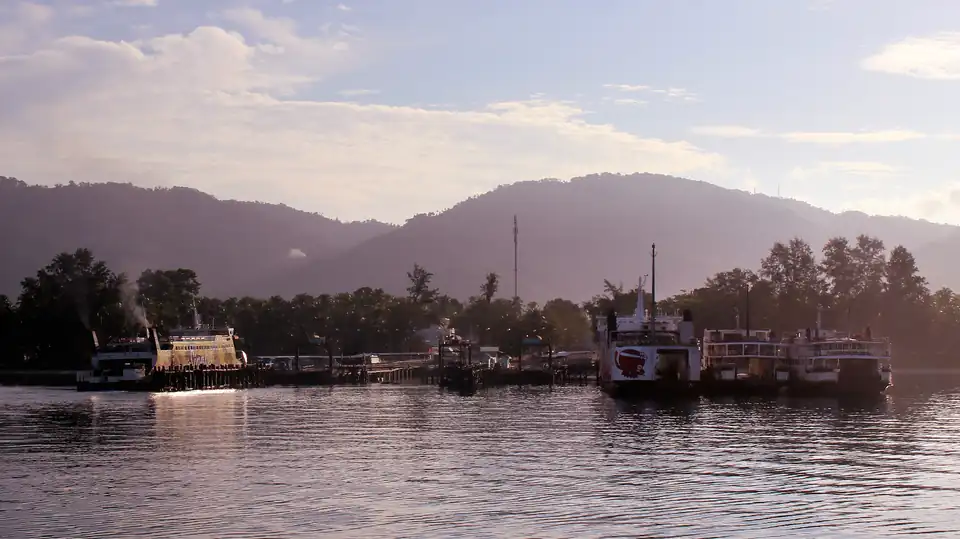
The west coast south of Nathon: almost no development, a very shallow shelf, and the calmest sea this site measures on Koh Samui. It is also where the car ferry from the mainland lands.
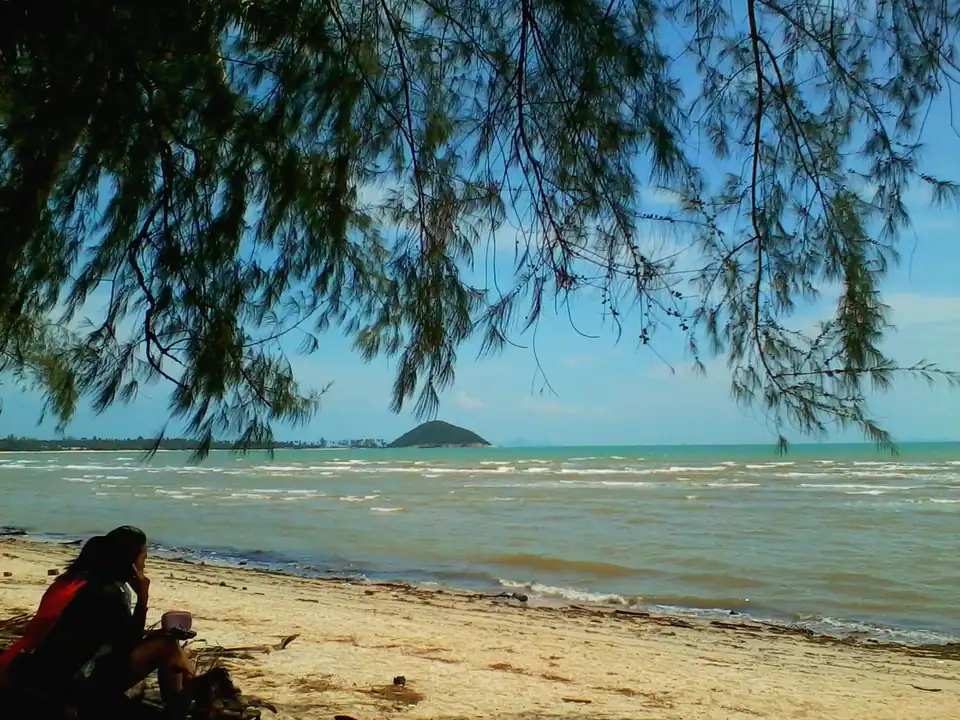
Lipa Noi is a few kilometres of Koh Samui’s west coast, south of Nathon, and it is the island’s quiet answer in a way none of the east-coast beaches can be. Almost nothing is built along it, the water is extremely shallow, and the sun sets over the channel in front of you.
It is also where the car ferry lands, which is the first thing most people who arrive here see of Samui and the last thing they expect from a beach this empty.
The calmer side of the island, and this one is measured
Nearly every wave comparison on Koh Samui is unreliable, because the island’s busiest beaches share five-kilometre marine cells and are given one series between them. This comparison is not one of those.
Lipa Noi sits in its own cell with Taling Ngam, so its figures describe the west coast rather than the northeast. It runs between 0.24 metres and 0.56, against 0.64 for the Chaweng group and 0.66 for Lamai. That is a real, measured gap across a cell boundary, not an artefact.
The reason is the northeast monsoon. It runs down the Gulf from November into January and the island stands between it and this coast, so what closes the east side barely reaches the west. If flat water in the dry season is the requirement, this is the side to be on.
- Rainfall, millimetres per month
- Phuket, for comparison
Driest is February at 41mm over 7 rain days, wettest is November at 313mm over 23 rain days. Against Phuket, Koh Samui is wetter in 4 months of the twelve, and the largest gap is in November.
The island-level pattern still holds here and is still counter-intuitive: the calmest month is October, which is Samui’s second-wettest, and June is where the rain and the sea are both near their best.
The tide, which is the honest catch
Lipa Noi shelves so gently that the sea withdraws a very long way. At low water this is a wide flat expanse of firm sand and shallow pools rather than a swimming beach; at high water it is warm, calm and easy.
That makes it excellent for small children and for walking, and poor for anyone who wants to swim properly whenever they feel like it. It is the same trait as Bophut and Maenam on the north coast, more pronounced.
The ferry pier
The Raja vehicle ferries from Don Sak on the mainland dock at Lipa Noi, while the passenger catamarans use Nathon to the north and Maenam on the north coast. If you are bringing a car, or taking the cheap slow route rather than flying, this beach is where Samui begins.
It is a working pier rather than a scenic one, and it is far enough from most of the sand that it does not intrude on it.
Where it is and how to get there
Address
Lipa Noi Beach, Lipa Noi, Ko Samui District, Surat Thani 84140, Thailand
ต.ลิปะน้อย อ.เกาะสมุย จ.สุราษฎร์ธานี 84140
9.4842° N, 99.9240° E
Where it is
On Koh Samui's west-facing Gulf shore, 17 km southwest of Samui airport and 6.0 km south of Nathon, in a straight line.
Getting there
35 min 32 km by road from Samui airport, with no traffic
Drive time and distance: OSRM over OpenStreetMap roads, to the road nearest the middle of the beach, free-flow, so a floor rather than a forecast. Address: official subdistrict boundaries (Royal Thai Survey Department, via OCHA) and Thailand Post.
Who it suits
Lipa Noi for a quiet week, for families with young children, for sunsets, and for anyone who has been to Samui before and found it loud. Not Lipa Noi for a first visit: there is no strip, nowhere to walk to, and the island’s restaurants and nightlife are forty minutes away on the other coast.
All the island’s beaches side by side are on Koh Samui’s beaches, and where to base yourself is on where to stay.
Lipa Noi Beach, Koh Samui FAQs
Is Lipa Noi a quiet beach?+
It is the quietest developed stretch on Koh Samui and the reason people search for it by name. A few kilometres of west-facing sand with a handful of places on it, almost no strip, and long empty runs between them. If quiet is the requirement rather than a preference, this is the answer on this island.
Is Lipa Noi good for swimming?+
It is calm and it is very shallow, which is the trade. The shelf runs out a long way, so at low tide you wade rather than swim and at high tide it is easy, warm and flat. It suits families and anyone who wants water without waves; it frustrates anyone who wants depth on demand.
Which is the calmest beach on Koh Samui?+
The west and northwest, not the northeast. Bang Por on the northwest corner measures calmest, peaking at 0.49 metres of mean daily-maximum wave height; Lipa Noi on the west coast peaks at 0.56, against 0.64 for Chaweng's stretch. Lipa Noi sits in its own marine cell with Taling Ngam, so that difference is measured rather than assumed.
Where does the car ferry to Koh Samui arrive?+
At Lipa Noi. The Raja vehicle ferry from Don Sak on the mainland lands here, while the passenger boats use Nathon a little to the north. If you are bringing a car or arriving by the cheap slow route, Lipa Noi is your first sight of the island.
Is Lipa Noi good for sunsets?+
It faces west across the channel to the mainland, so yes, and it is one of the few beaches on Samui where the sun goes down over water in front of you rather than behind a hill. That, and the flatness, are the two things this coast has that the east side does not.
Should you stay at Lipa Noi?+
For a quiet week with a car or a scooter, and for families with small children. Not for a first visit: there is no strip, no nightlife and very little to walk to, and Chaweng is forty minutes away on the other side of the island.