
Chiang Mai
Things to Do in Chiang Mai, and When Each One Works
Chiang Mai's list is short, good and heavily seasonal. What holds up, what the month decides, the two attractions we will not recommend without a caveat, and the day trips that are worth a whole day rather than half of one.
Chiang Mai is a small city with a short list of very good things in it, wrapped in a province with a long list of good things around it. Being clear about that division is most of planning a week here.
The city itself takes three days. What fills a week is the north: mountains, two towns worth a night each, and the fact that this is the easiest place in Thailand to do nothing in particular.
In the city
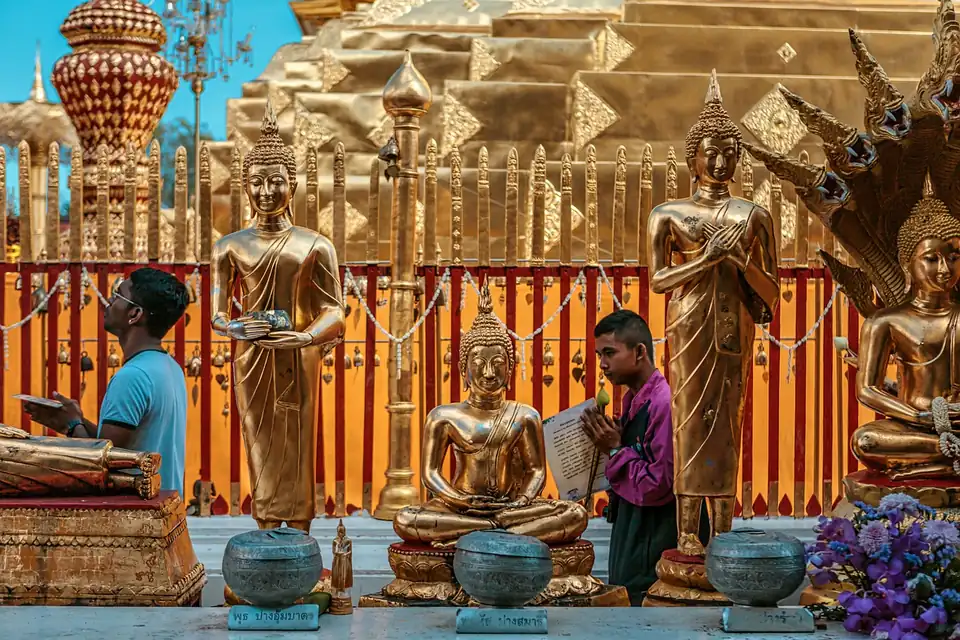
The old city temples. Four of them, on foot, in one morning, inside the moat. Wat Phra Singh for the murals in the small hall beside the main one, Wat Chedi Luang for the broken sixteenth-century chedi nobody has rebuilt, Wat Phan Tao for ten quiet minutes in a teak hall, and Wat Chiang Man for the elephant chedi. Our temples page explains what you are looking at, which is the difference between four temples and one temple seen four times.
A cooking class. The best-value half day in the city and the thing visitors most often name as their favourite. A good one starts in a market, walks you through what the ingredients actually are, and ends with you able to make three dishes again at home. Northern food is not the Thai food most people arrive knowing: khao soi, a curry noodle soup with crisp noodles on top, is the dish to learn and the dish to eat.
The markets. The Sunday walking street on Ratchadamnoen closes the main road through the old city and is the best of them by a distance. Saturday has its own on Wualai. The Night Bazaar runs every evening on the river side and is more commercial and less interesting. Warorot is the working market where the city actually shops, and it is open in the daytime.
Massage. Chiang Mai has both the tourist version and a serious teaching tradition. The schools offer treatments at a fraction of spa prices, and the women’s prison rehabilitation project is one of the better-known options in the old city.
Out of the city
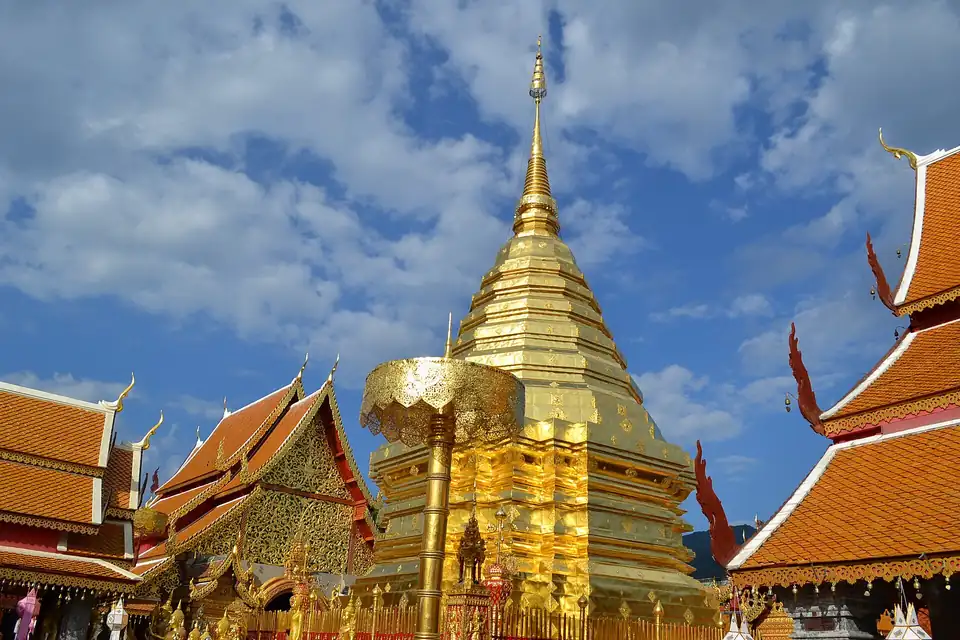
Doi Suthep is a half day and belongs on every first visit: a working pilgrimage temple at a thousand metres with a view back over the valley, forty minutes up by songthaew. Go early, before the buses.
Doi Inthanon is the highest point in Thailand, about two and a half hours away, and a full day. The summit itself is an anticlimax, a wooded hump with a sign; what makes the day are the twin royal pagodas below it, the Kew Mae Pan nature trail along a ridge, and the waterfalls on the way up. It is genuinely cold at the top, ten degrees below the city, and there is frost some winter mornings.
Chiang Rai, three hours north, is best known for the White Temple, Wat Rong Khun, which is a contemporary artwork rather than an old temple and is more interesting than that description suggests. It is sold as a day trip and it should not be: six hours in a van for two hours on the ground is a poor trade. Give it a night.
Pai is three hours northwest on Route 1095, which has 762 curves in it and is the reason half the people who go do not enjoy the journey. There are no flights, whatever a search engine tells you, and our route page explains why the listings exist anyway. Pai is a valley town that rewards two or three nights and punishes a day trip, and the one thing there worth timing to the hour is Pai Canyon at sunset.
What the month decides
More here than on the coast, and in the opposite direction from what people expect.
November to early February is the best of the year for all of it: dry, cool, clear, and the mountains actually visible. Loy Krathong and Yi Peng fall in November.
Late February to April is the burning season. The city is dry and hot and full of smoke from agricultural burning across the north, the views from Doi Suthep and Doi Inthanon can disappear entirely, and outdoor days are the ones that suffer. Songkran in mid-April is a genuine spectacle here and a reason to come anyway, but go in knowing what the air is doing. Our weather page covers this properly, including why we publish no air-quality figures of our own.
May to October is the wet season and it is the underrated half of the year. Rain comes in heavy bursts rather than all day, the smoke is gone, the countryside is green, the waterfalls are full and prices are at their lowest. Most of the city list is indoors anyway.
The two we will not recommend without saying something first
The elephant camps. Chiang Mai is the centre of elephant tourism in Thailand and a great many venues here use the word sanctuary, which is not a regulated term. Riding is out and most visitors now know that. Bathing with elephants is also out and considerably fewer do, because it is the activity that replaced riding in the marketing without solving the problem underneath it. Our guide to telling a sanctuary from a camp gives four questions to ask before booking, and the shortlist of the products that answer them in writing.
The tiger attraction. Chiang Mai has a venue where visitors are photographed touching large cats. Whatever the operator says about temperament and training, an adult tiger that reliably tolerates a queue of strangers all day is an animal whose behaviour has been managed, and the industry’s record on how is poor. We are not going to put it on a list of good days out.
How long the city holds
Three days covers the temples, a cooking class, a market and Doi Suthep without rushing. Five adds Doi Inthanon and a slow day. A week only works if you leave: Pai, Chiang Rai, or further into the hills.
Where to base yourself is on where to stay, and the routes north and back to Bangkok are on the route pages.
Things to Do in Chiang Mai, and When Each One Works FAQs
What are the best things to do in Chiang Mai?+
The old city temples on foot in a morning, a cooking class, Doi Suthep on the mountain, and a night market. Beyond the city, Doi Inthanon for the mountain and Pai or Chiang Rai as overnight trips rather than day trips. That is the honest list, and it is shorter than most.
How many days do you need in Chiang Mai?+
Three to four for the city itself, comfortably: temples, a cooking class, the markets and one day out. A week if you are going up to Pai or across to Chiang Rai, both of which deserve a night rather than a return journey in a day.
Is a Chiang Mai cooking class worth it?+
It is the single best-value half day in the city, and it is the thing most people say they enjoyed most. The good ones start at a market, explain what you are buying, and send you home able to reproduce three dishes. Northern Thai food is different from what most visitors know, which is half the point.
Should you visit an elephant camp in Chiang Mai?+
Only after asking four specific questions, and the word sanctuary will not answer them because it is not regulated. Riding is out and most people know it; bathing with elephants is also out and fewer do. Our guide sets out what separates a genuine operation from one that has changed its wording.
What is there to do in Chiang Mai when it rains?+
A great deal, which is why the wet season is underrated here. Cooking classes, massage schools, the temples, the museums around Three Kings Monument and the cafes Chiang Mai is genuinely good at are all indoors. The rain comes in bursts rather than all day.