
Chiang Mai
Chiang Mai's Temples: What to Look at and How to Read It
There are around three hundred temples in Chiang Mai and six of them will do. Which to walk between inside the old city, what makes northern architecture different from Bangkok's, and how to read what you are looking at once you are there.
Chiang Mai has around three hundred temples, which is a number that helps nobody. After the third one they run together, and most visitors come away with a phone full of gold and no idea what they were looking at.
So this page is short on lists and longer on how to read the thing in front of you. Four temples in the old city that you can walk between in a morning, one on a mountain that needs its own half day, and enough vocabulary that the fourth one is more interesting than the first rather than less.
Why northern temples look different
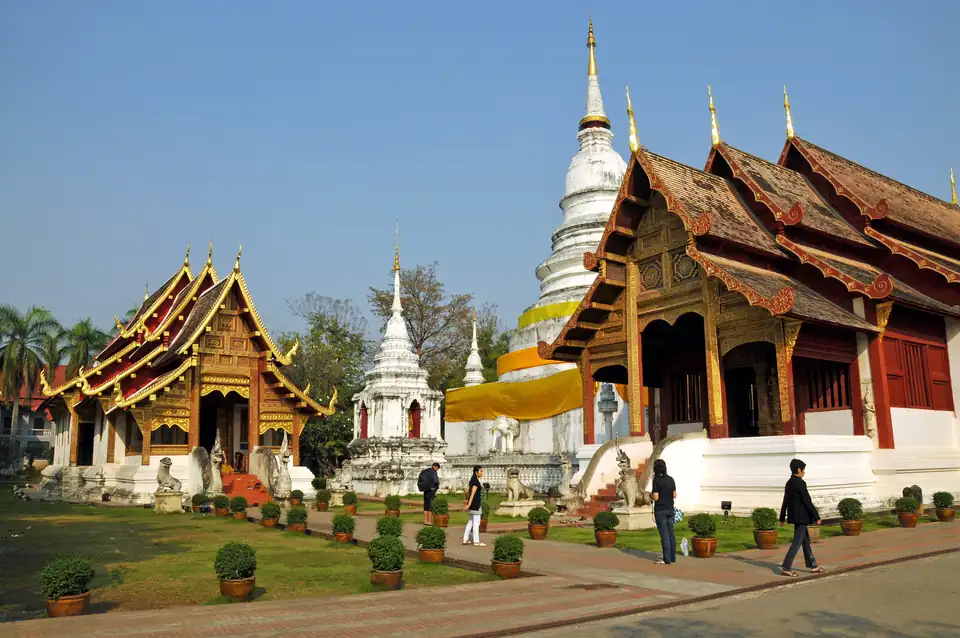
Chiang Mai was the capital of Lanna, an independent kingdom for most of six centuries before it became part of Siam, and its temples are not northern versions of Bangkok’s. They are a different tradition with Burmese and Shan influence in it.
Three things to look for, and once you have them you will see them everywhere:
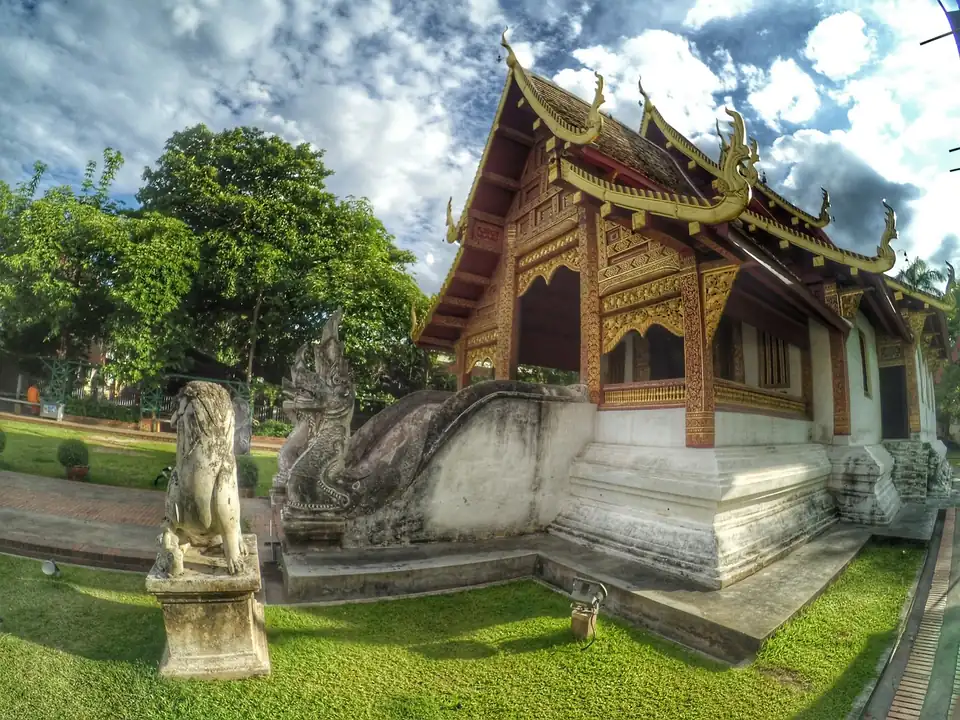
The roof comes down in tiers. A Lanna viharn has two or three overlapping roof planes stepping down and out, so the building reads as low and wide where a Bangkok wat reads as tall. In the older halls the eaves come close enough to the ground to touch.
It is made of wood. Teak posts, teak panels, and carving rather than moulded plaster. Wat Phan Tao is the clearest example: a whole hall of teak panels, once a royal residence, and dark inside in a way no southern temple is.
The naga runs down the stairs. The balustrade of a Lanna temple is a serpent, head at the bottom with its mouth open, body running up to the door. At Doi Suthep the same creature runs the entire length of a three-hundred step staircase. Beside it you will usually find a singha, a stone lion, one at each side.
The old city, in one morning
Wat Phra Singh is the one to start with, at the western end of Ratchadamnoen. The main hall is large and busy; the reason to come is the small building to its left, Viharn Lai Kham, which is low, dark, teak-pillared and holds the best Lanna murals anywhere. They show ordinary life in the nineteenth-century north rather than scripture, and you can stand in front of them for half an hour.
Wat Chedi Luang, five minutes east, is the ruin. Its chedi was the tallest structure in the kingdom until an earthquake took the top off in the sixteenth century, and it has deliberately never been rebuilt. What remains is enormous, brick, and far more affecting than a restored one would be. The Emerald Buddha, now in Bangkok, was kept here.
Wat Phan Tao is next door and takes ten minutes. One teak hall, formerly a royal residence, dark and quiet and usually nearly empty because it is beside something famous.
Wat Chiang Man, in the northeast corner, is the oldest in the city, founded when Chiang Mai itself was founded in 1296. It has a chedi carried on the backs of stone elephants, which is a Lanna form you will not see in the south.
All four are within fifteen minutes’ walk of each other inside the moat. Go in that order and the last one is the most interesting, which is the opposite of what usually happens.
Doi Suthep
Wat Phra That Doi Suthep sits at about a thousand metres on the mountain west of the city, roughly forty minutes up by songthaew or car. It is a genuine pilgrimage site, not a monument: people come here to make merit, and on Buddhist holy days the terrace is full of Thai families rather than tourists.
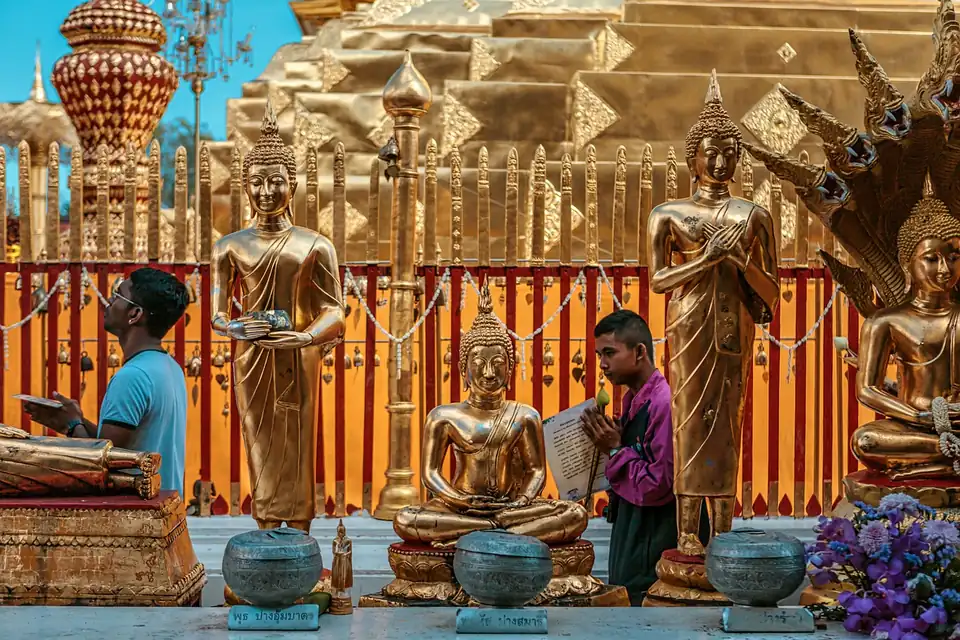
The approach is the three-hundred-step naga staircase, or a funicular for anyone who would rather not. The chedi at the top is plated in gold, and around it runs a terrace of Buddha images in different postures, each with a small label.
Those labels are worth two minutes. Pang samathi is meditation, hands in the lap. Pang um bat is the alms bowl, held at the waist. Pang ram phueng, both palms raised, is calming the ocean. Once you can name four postures, every Buddha image in Thailand becomes a sentence rather than a decoration, and that is a better souvenir than a photograph.
Go early. The tour buses arrive mid-morning, and the view back over the valley is the other half of the visit. In the burning season, roughly late February to April, there may be no view at all; our weather page explains why the driest months on the chart are the ones to avoid.
Etiquette, briefly and seriously
Shoulders and knees covered. This applies to everyone and it is not negotiable at the working temples. Wraps are available at the busy ones; arriving dressed is better.
Shoes off before entering any hall, and at some temples before the steps.
Feet do not point at the Buddha. Sit with your legs folded back behind you rather than crossed in front. It is the single most common thing visitors get wrong and Thais notice it.
Women do not touch monks or hand anything directly to one. If you need to pass something, put it down.
Ask before photographing a person. Photographing the buildings is fine everywhere; photographing someone praying is a different act. The monk chats offered at several wats are a genuine invitation to talk, and they are one of the better hours available in this city.
What we would skip
The temples are free or ask a small donation, so the cost of a mistake is low, but time is not. If you have one morning, four in the old city plus Doi Suthep on another day is the whole answer, and the remaining two hundred and ninety-five are for a second visit.
Where to base yourself for that walk is on our where to stay page, and the rest of the city is on the Chiang Mai guide.
Chiang Mai's Temples: What to Look at and How to Read It FAQs
How many temples should you visit in Chiang Mai?+
Four or five, and one of them on a mountain. There are around three hundred wats in and around the city and they blur together fast. A morning walking between Wat Phra Singh, Wat Chedi Luang and Wat Phan Tao inside the old city, and a separate half day for Doi Suthep, covers everything a first visit needs.
What is the most important temple in Chiang Mai?+
Wat Phra That Doi Suthep, on the mountain above the city, which is a pilgrimage site rather than a sight. Inside the old city it is Wat Phra Singh, which holds the Phra Singh Buddha and the finest Lanna murals in the country, in the small teak-pillared hall to the left of the main viharn.
What is different about northern Thai temples?+
Lanna architecture is lower, darker and more wooden than anything in Bangkok. Roofs come in overlapping tiers that sweep almost to the ground, halls are built of teak rather than painted concrete, and there is far more Burmese and Shan influence in the carving. Once you have seen three, a Bangkok wat looks like a different religion's building.
What should you wear to a temple in Chiang Mai?+
Shoulders and knees covered, for everyone. Shoes come off before you enter any hall, and at some you leave them at the foot of the steps. Wraps are sold or lent at the busier wats, but arriving already dressed for it is easier and reads better.
Is Doi Suthep worth it?+
Yes, and go early. It is a working pilgrimage temple rather than a museum, the terrace has a real view back over the valley on a clear day, and the crowds arrive with the tour buses mid-morning. In the burning season, roughly late February to April, the view may not be there at all.