
Chiang Mai
Chiang Mai Weather, Month by Month
Chiang Mai is the one place in Thailand where the month decides how warm it is rather than how wet. It is also the one place where the driest months on the chart are the months to avoid, and the reason is smoke rather than rain.
Every other weather page on this site tells you to ignore temperature, because on the Thai coast it does not move: Phuket varies by under three degrees between day and night and barely more across the year. Chiang Mai is where that advice stops applying.
This is an inland valley at three hundred metres, and it has a real cool season, a real hot season and a daily range of over nine degrees. It is also the one destination in the country where the rainfall chart, read on its own, will send you in the wrong month.
The year, measured
- Daily low to daily high, 16C to 36C across the year
- Rainfall, millimetres per month
Driest is February at 9mm over 1 rain day, wettest is August at 276mm over 26 rain days. Hottest is April, averaging 35.5C by day, and coolest is January, which drops to 16.3C at night. That night figure is the one nobody packs for.
The trap in the chart
Look at February, March and April on the panel: 9mm, 13mm and 37mm, across one, two and five rain days. On rainfall alone those are the best months of the Chiang Mai year by a wide margin, better than anything the coast offers at any time.
They are also the burning season, and it is the single biggest reason people come away from Chiang Mai disappointed. From roughly late February through April, agricultural burning across northern Thailand and over the borders in Myanmar and Laos fills the valley with smoke. The mountains that make the city beautiful also trap it. In bad years Chiang Mai appears at the top of world air-quality rankings, the views from Doi Suthep disappear entirely, and people with asthma have a genuinely unpleasant time.
We do not measure air quality and this page carries no figures for it. Every other number on this site comes from a series we can point at and defend; we have no such series for smoke, and inventing an impression of one would be worse than saying nothing. What we can tell you is the shape of the problem and when it happens. For an actual reading, check a live air-quality source in the weeks before you travel, and treat March bookings as conditional.
The cool season nobody packs for
The second surprise is the other way round. Chiang Mai in December and January is cool: daily highs of 27.1C and 27.9C, and nightly lows of 16.5C and 16.3C. That eleven-degree swing is not something the Thai coast does, and a traveller arriving from a week in Krabi with nothing but shorts will be uncomfortable after dark, particularly on a scooter or up a mountain.
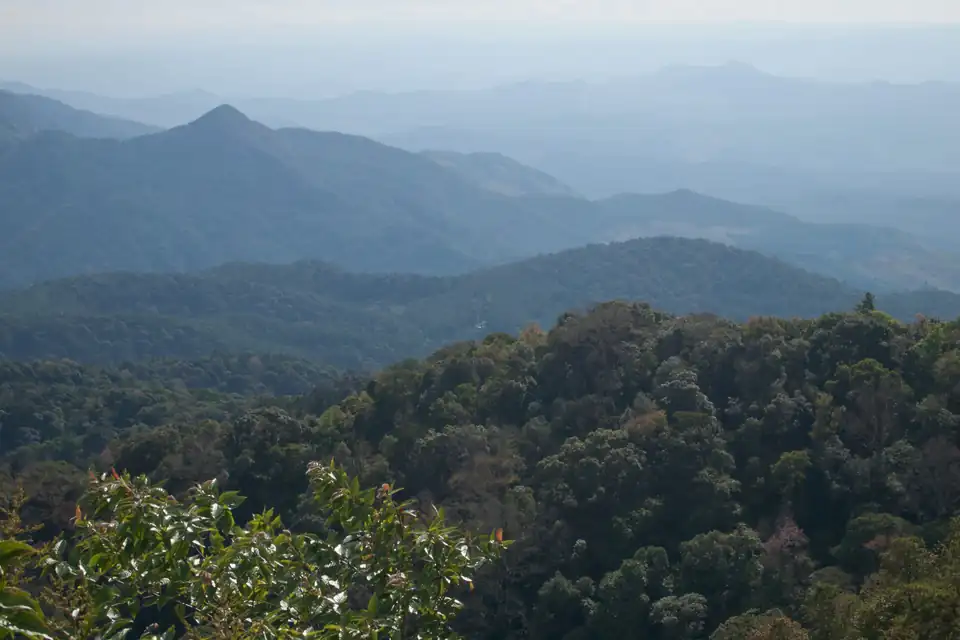
Doi Inthanon, the highest point in Thailand, is a further ten degrees colder than the city at the summit and occasionally sees frost. Day trips leave early. Take a layer.
Month by month
November to early February is the best of the year and it is not close: dry, cool, clear, and before the smoke. November is 32mm, December 12mm, January 11mm. This is high season, prices reflect it, and the Loy Krathong and Yi Peng festivals fall in November.
Late February to April is dry, hot and smoky. April is the hottest month of the year at 35.5C by day, and Songkran on the 13th is a genuine spectacle in Chiang Mai specifically. If you are coming for Songkran, come for Songkran and accept the air; if you are coming for the mountains and the views, do not come now.
May and June are the break. Rain arrives at 135mm and 145mm, the smoke clears, the countryside greens and prices fall. These are underrated months: wetter than the winter, far more comfortable than March, and much cheaper than either.
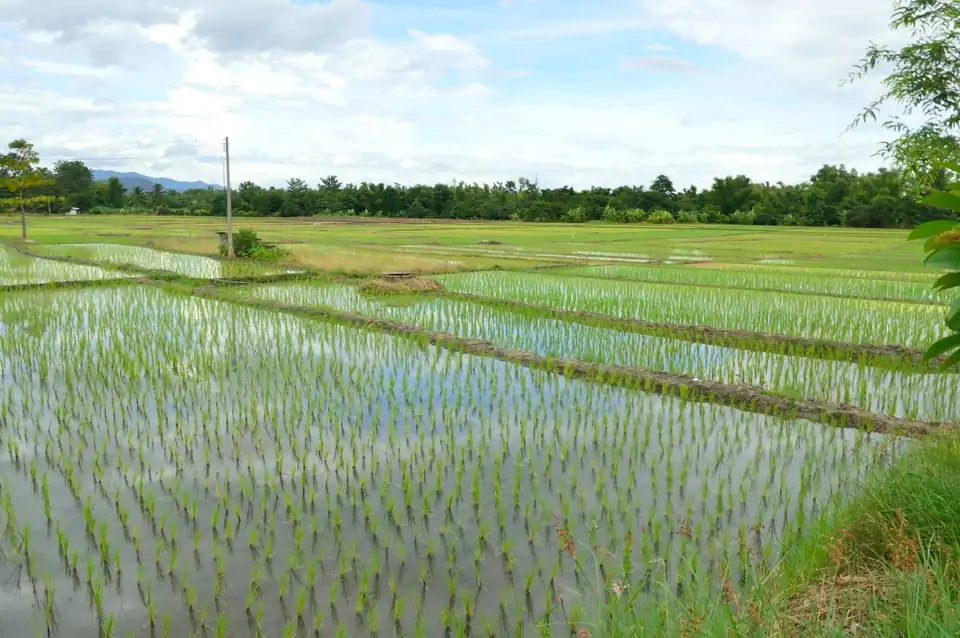
July to September is the wet season proper, 221mm, 276mm and 269mm, peaking in August at 26 rain days. It rains in heavy bursts rather than all day. The waterfalls are at their best, the rice terraces are green, and the city is at its emptiest.
October is the recovery at 132mm and is often better than its reputation, particularly the second half.
How this compares with the coast
Chiang Mai and the beaches are not alternatives to each other in the way most itineraries assume. In August, when the Andaman coast is taking 248mm and its west-coast sea is above a metre, Chiang Mai takes 276mm and has no sea at all to be rough. In March, when Chiang Mai is at its smokiest, the Andaman is dry and calm and at its best.
That is a useful pairing rather than a clash: the two halves of a Thai fortnight are usually good in the same months, November to February, and the awkward months for each are different. Our month-by-month guide lays both coasts out beside each other, and our fortnight guide works through the routings.
What this page does not tell you
Air quality, as above, because we do not measure it. And nothing about how any individual year will behave: this is thirty years of reanalysis averaged by calendar month, which describes the shape of a normal year and not the one you are about to have. A dry season can start late and a burning season can be mild or severe depending on rainfall, enforcement and wind. Use it to choose a month, not to plan a day.
Chiang Mai Weather, Month by Month FAQs
What is the best time to visit Chiang Mai?+
November to early February. Those months are dry, between 9mm and 32mm, and they are the only stretch of the year that is comfortably cool: November nights average 19C and January nights 16C. They also come before the burning season, which is the reason not to simply extend the window into March.
When is the burning season in Chiang Mai?+
Roughly late February through April, with March usually the worst. Agricultural burning across the north and over the borders fills the valley with smoke, and Chiang Mai regularly appears near the top of world air-quality rankings during it. We do not measure air quality and publish no figures for it; check a live source before booking those months.
Is Chiang Mai cold in winter?+
Cool rather than cold, and it genuinely surprises people. January averages 16.3C at night against a daily high of 27.9C, a range of over eleven degrees. Nowhere on the Thai coast does that: Phuket varies by under three degrees between day and night. Bring something with sleeves for the evenings.
When is the rainy season in Chiang Mai?+
May to October, peaking in August at 276mm across 26 rain days. September is close behind. It is a real wet season but a short-burst one, and the countryside is at its greenest, the waterfalls at their fullest and the prices at their lowest.
Is March a good time to visit Chiang Mai?+
On the rainfall chart it looks excellent: 13mm across two rain days. In practice it is the month we would most avoid, because it is the peak of the burning season. This is the clearest case on this site of a chart that gives exactly the wrong answer.