
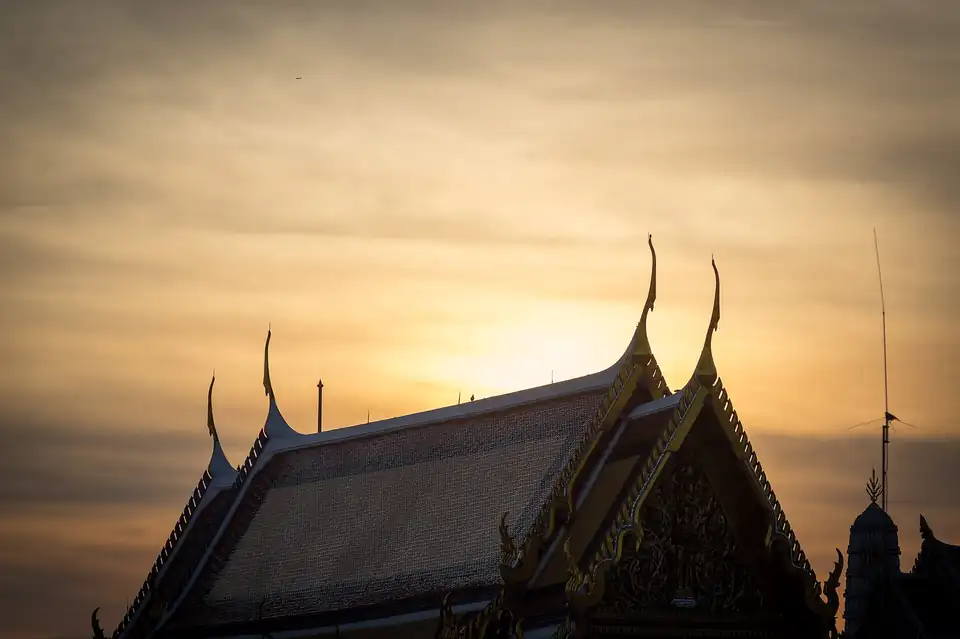
Bangkok
Best Things to Do in Bangkok
The best things to do in Bangkok make more sense by area than by rank. Group the river temples into one morning, keep Chinatown for the evening, and treat anything across town as its own half-day rather than spending the trip in traffic.
Bangkok packs more into a few square kilometres than most capitals manage in ten times the space, and then spreads the rest of itself over forty more. That is the whole planning problem. The Grand Palace and Wat Pho are 360 metres apart; Chatuchak is eight and a half kilometres north of them, on roads that are slow for most of the day. Trying to fit both into one afternoon is the most common mistake made here.
So this page is arranged by where things are rather than by rank. The priorities below favour experiences that are distinctive to Bangkok and practical to combine with what is next to them; they are not ordered by ticket price or by what a tour operator pays.
The best things to do in Bangkok on a first trip
Four decisions, not a list of twenty.
Everything else on this page is a variation on those four. If you have three days, the three-day itinerary puts them in order.
Old City and river: Bangkok’s essential sights
Rattanakosin is the island the city was founded on, and the three sights most first trips are built around sit within a kilometre of each other on and across it. This is the one part of Bangkok where walking between major sights actually works.
The Grand Palace and Wat Phra Kaew
The walled complex Rama I began in 1782, and the home of the Emerald Buddha. It is the most formal thing you will do in Bangkok and the most crowded, which is why it works best early. There is a dress code and it is enforced at the gate. The Grand Palace guide has what to wear, how long to allow and how to arrive.
Wat Pho
Three hundred and sixty metres from the palace gates, and the better temple of the two if you care more about the buildings than the ceremony. The reclining Buddha is 46 metres long with mother-of-pearl soles carrying 108 auspicious symbols, and the compound is still a working school of traditional Thai medicine and massage. The Wat Pho guide.
Wat Arun
Across the water on the Thonburi bank, a 70-metre prang encrusted with broken porcelain. It is the one that photographs best and the one people most often see only from a boat. The cross-river ferry from Tha Tien pier, below Wat Pho, is the reason it belongs in the same half-day rather than a separate trip. The Wat Arun guide.
Ride the Chao Phraya
The river is not scenery here, it is the road. The Chao Phraya Express Boat runs a fixed set of piers on a public timetable, a separate tourist boat loops between the main sightseeing piers, and the cross-river ferries cost a fraction of either. Tha Tien serves Wat Pho and the Wat Arun ferry; Tha Chang is closer to the palace. Taking a boat between two sights you were going to see anyway is the cheapest experience on this page. How the boats work.
The one combination that works
Grand Palace, then Wat Pho, then the ferry across to Wat Arun. The palace first because it is the busiest and the least shaded, Wat Pho next because it is a walk, and Wat Arun last because the crossing is a break and the light is better later. The full three-day order.
The BTS does not reach the Old City at all. The MRT Blue Line clips its southern edge at Sanam Chai, about ten to fifteen minutes’ walk from both the palace and Wat Pho, and the river boats do the rest.
Chinatown and Yaowarat
Chinatown is a different district depending on when you walk into it. By day it is gold shops, herbal halls and the market lanes of Sampeng, a working commercial quarter that has been there for generations. After dark Yaowarat Road becomes one of the best street-food streets in Asia, thick with charcoal smoke under the neon.
Wat Traimit
The cultural anchor at the eastern end, and worth the twenty minutes it takes. The Buddha inside is five tonnes of solid gold, plastered over for most of the last century and found by accident when the plaster cracked during a move. The Wat Traimit guide.
Yaowarat after dark
Go in the evening if you go once. The MRT extension put a station at Wat Mangkon directly on Yaowarat Road, which turned Chinatown from a taxi trip into a train stop and is the single biggest practical change here in years. The Chinatown guide, and the Bangkok food guide for what to actually eat when you get there.
Markets, museums and modern Bangkok
Chatuchak Weekend Market
Fifteen thousand stalls in numbered sections, and the reason to check your dates before you plan anything around it: the full market is a weekend one. Parts of the site trade midweek, but if your stay does not include a Saturday or Sunday, take it off the list rather than making a special trip. It is also eight and a half kilometres from the Old City, at the northern end of the BTS Sukhumvit line at Mo Chit, so it is a half-day of its own. The Chatuchak guide.
Jim Thompson House
Six antique teak houses assembled on a canal near National Stadium, the Southeast Asian art collection inside them, and the American silk trader who put both together and then walked into the Malaysian jungle in 1967 and never came out. It is the best indoor hour in central Bangkok and the obvious answer to a hot afternoon or a wet one. The Jim Thompson House guide.
The modern city
Bangkok is not only temples, and a first trip that treats it that way misses what the city is now. The mall belt around Siam is where the two BTS lines cross and is worth an hour in the middle of a hot day for the food courts alone. The riverside has its own shopping and its own view back at the Old City. And the skyline is genuinely worth looking at from height once, whether from a rooftop bar or an observation deck; we do not name a specific venue here because opening arrangements and prices change and we do not maintain them.
Things to do in Bangkok at night
The temples close in the late afternoon, so a Bangkok evening is about streets rather than sights.
- Yaowarat is the low-friction answer and the best one. Eat standing up.
- A skyline view, once, to understand the scale of the place. Rooftop bars have dress codes and observation decks have tickets; check the current arrangement for whichever you pick.
- Muay Thai is Thailand’s defining spectator sport and Bangkok is where to see it. Cards and venues change from week to week, so check what is actually on for your dates rather than turning up.
- Khao San Road, honestly: four hundred metres that became Southeast Asia’s most famous backpacker street by accident. Worth walking down once. It is not a summary of Bangkok nightlife and it is not for everybody.
Choose what to do in Bangkok by interest
| If you want | Prioritise |
|---|---|
| Temples and history | Grand Palace, Wat Pho, Wat Arun |
| Street food | Yaowarat, in the evening |
| Markets | Chatuchak, if your dates include a weekend |
| The river | Express boat and the Wat Arun crossing |
| Museums and design | Jim Thompson House |
| A night out | Yaowarat, a skyline view, Khao San depending on your taste |
| A break from the heat | Siam malls and food courts, or a traditional massage |
| The modern city | Siam, the riverside malls, a view from height |
Good Bangkok activities for a rainy afternoon
September is the wettest month of the Bangkok year at 263mm across 26 days with rain, and October is not far behind. That does not make the city a write-off, because a lot of what you came for is under cover: the Jim Thompson House, the mall and food-court belt around Siam, a traditional Thai massage, and Yaowarat, where the eating happens under awnings anyway. What does not work in heavy rain is a temple day, because most of the walking between them is outdoors. Thailand month by month.
What not to combine in the same half-day
Bangkok punishes zig-zagging more than most cities, and the distances are the reason.
These go together. Grand Palace, Wat Pho and Wat Arun, which are within a kilometre and a ferry. Wat Traimit, Yaowarat and dinner, which are a walk apart at the Chinatown end. Jim Thompson House and Siam, which are on the same side of town.
These do not. The Old City and Chatuchak in one afternoon, which is eight and a half kilometres each way. The Old City and Sukhumvit, seven kilometres apart with no direct rail between them. And any plan that involves crossing the city for a single attraction and then crossing back.
Two or three major stops in the same part of Bangkok is usually a better day than five spread across it.
All Bangkok attractions
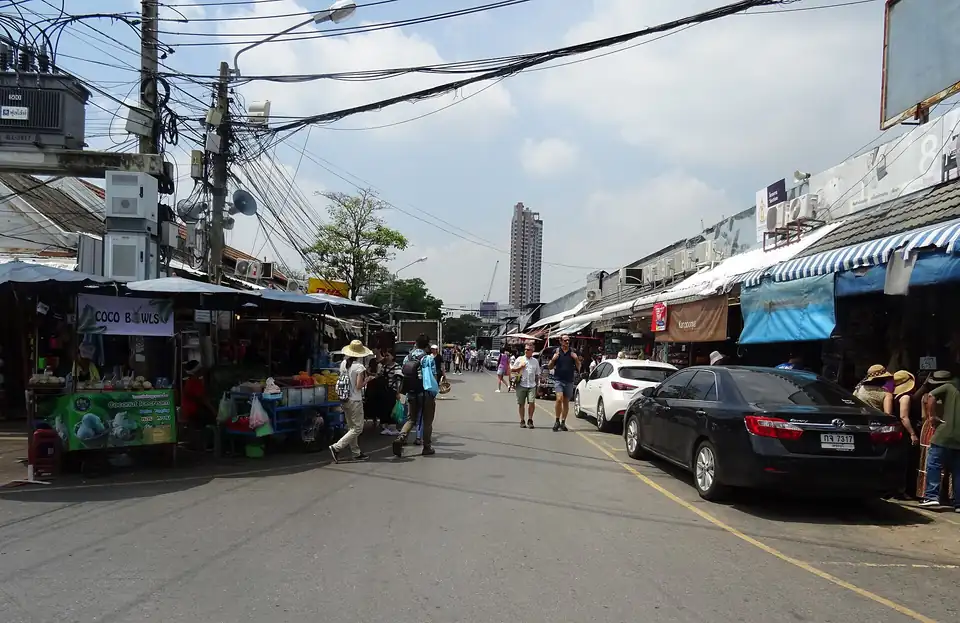 Chatuchak Weekend MarketFifteen thousand stalls in numbered sections, open mainly at weekends.
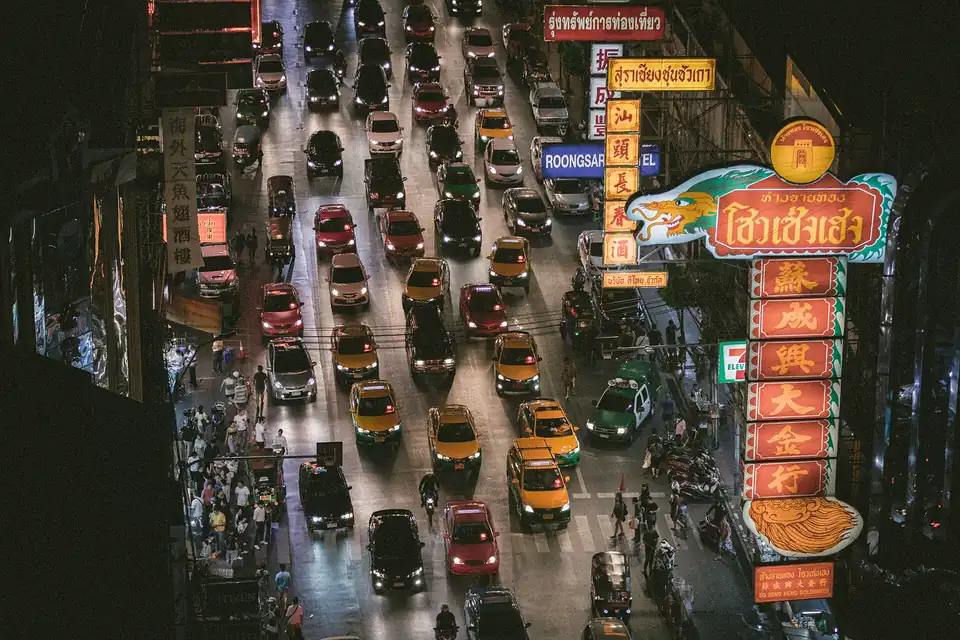 Chinatown & YaowaratGold shops and herbal halls by day, street-food stalls after dark.
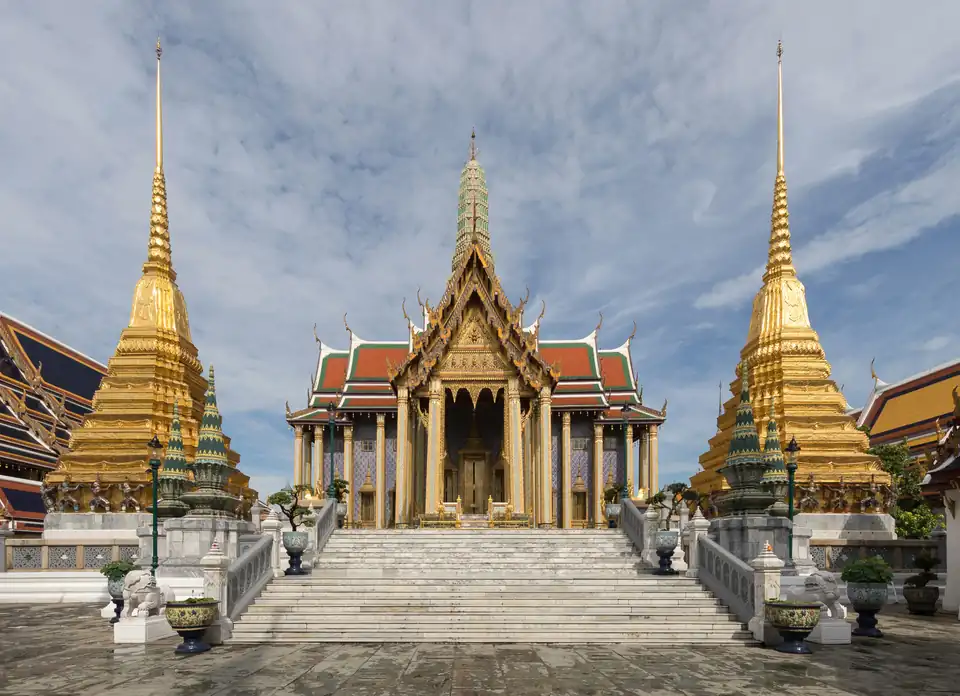 The Grand PalaceThe walled complex Rama I built in 1782 and the home of the Emerald Buddha.
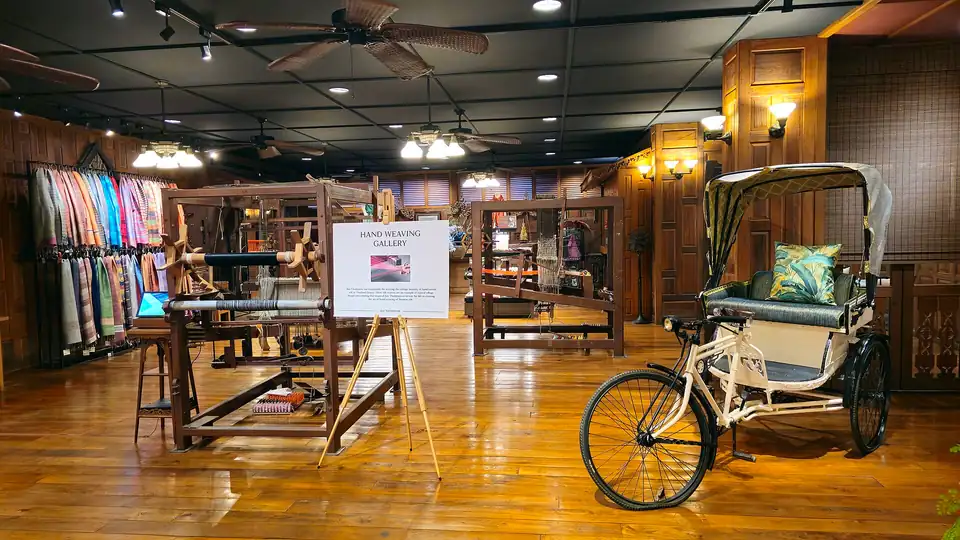 Jim Thompson HouseSix antique teak houses on a canal, the Southeast Asian art collection inside them, and the American silk trader who assembled both and then vanished in Malaysia in 1967.
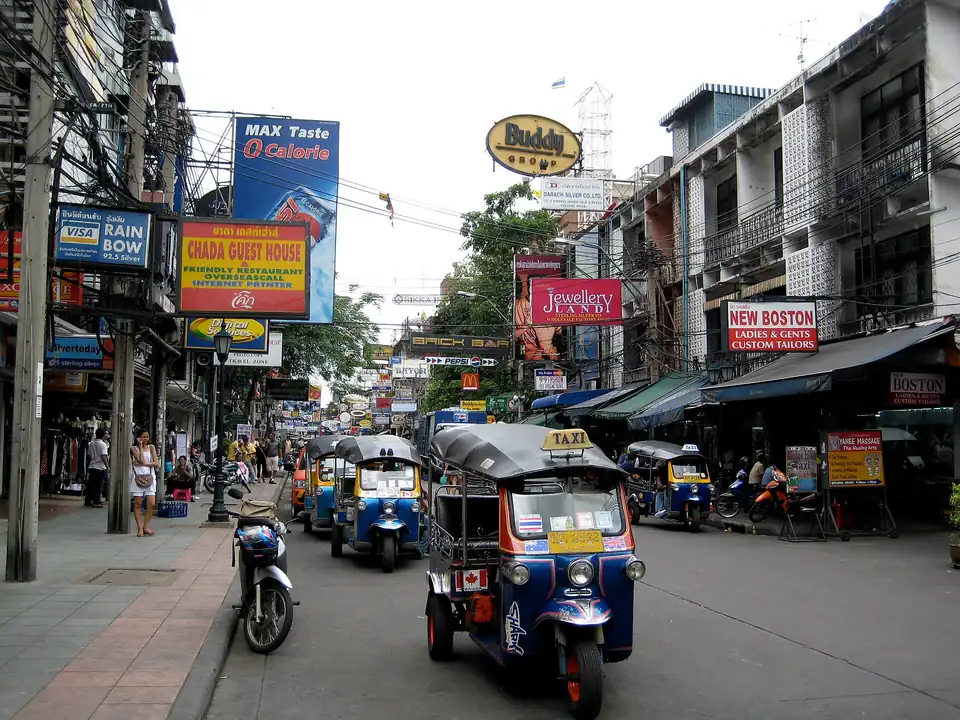 Khao San RoadFour hundred metres of guesthouses, bars and travel agents that became Southeast Asia's most famous backpacker street by accident.
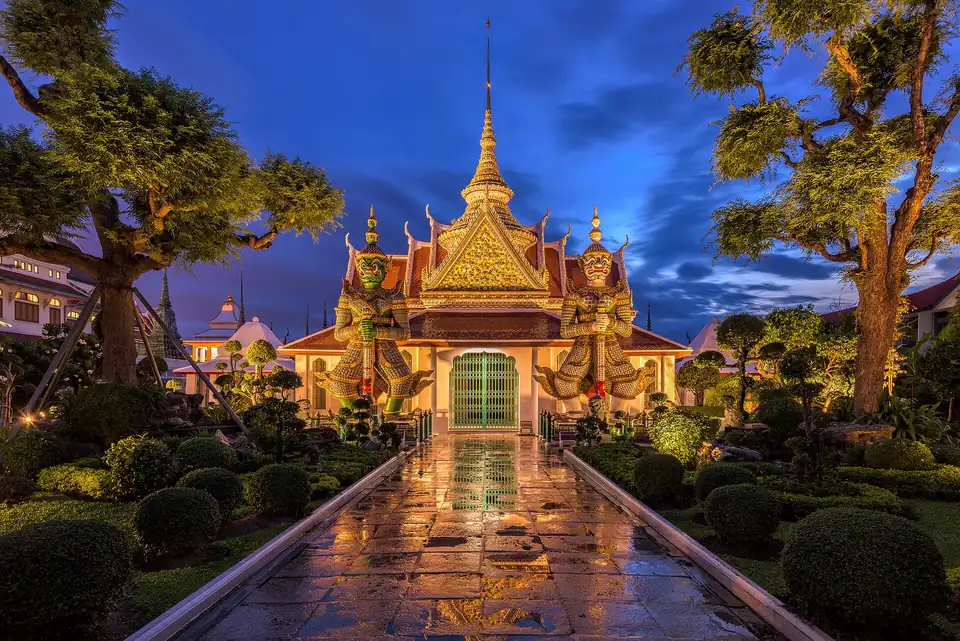 Wat ArunThe Temple of Dawn, a 70-metre prang of porcelain on the Thonburi bank, and the hours when the light actually does what the name promises.
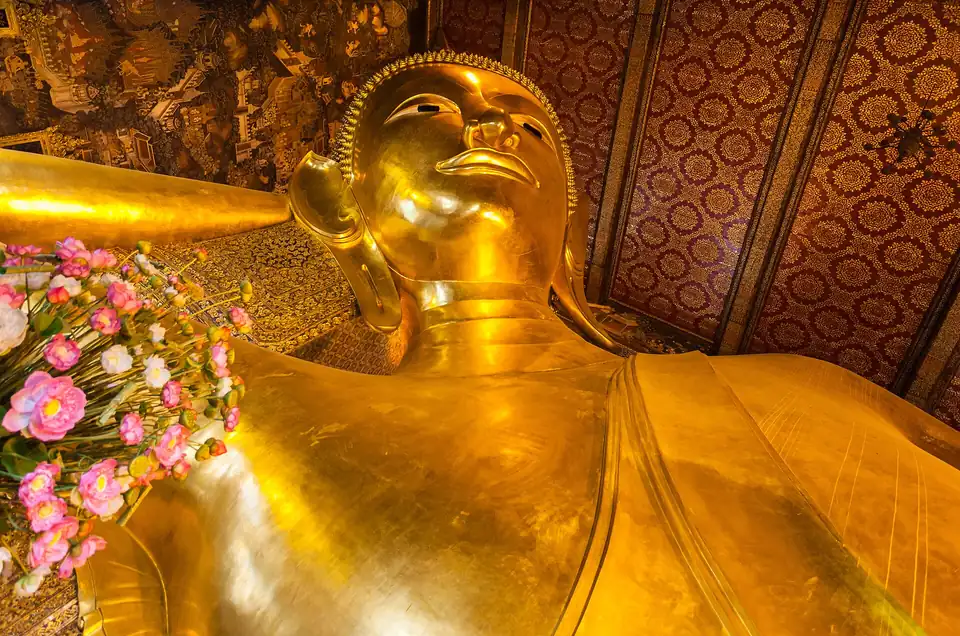 Wat PhoThailand's largest reclining Buddha, 46 metres of it with mother-of-pearl soles, in a temple older than Bangkok that still teaches the country's traditional massage.
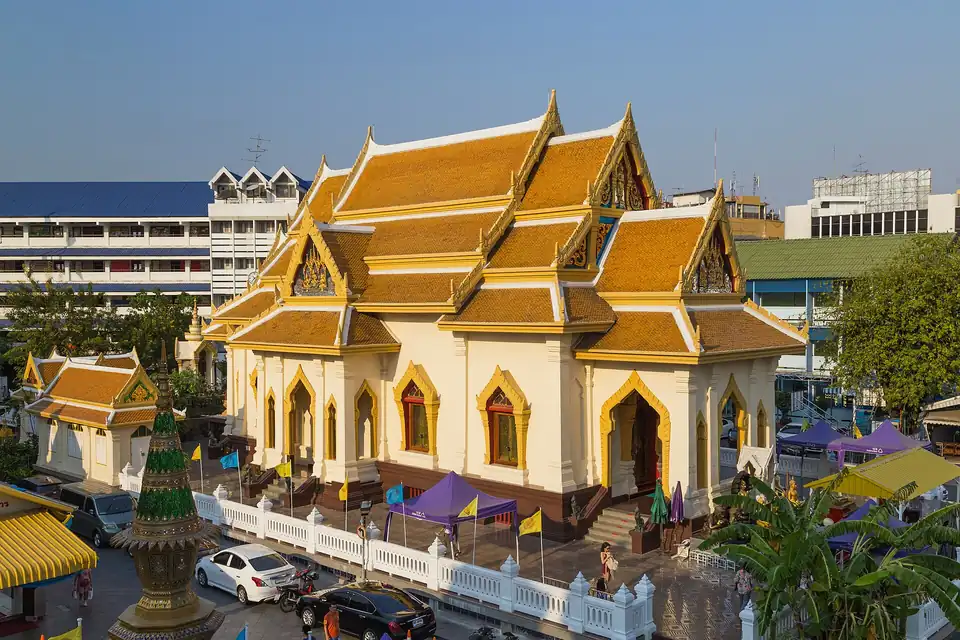 Wat TraimitA five-tonne Buddha cast in solid gold, hidden under plaster for most of the last century and found by accident.
Bangkok sights map
What is near what, and what is across town. The three river temples sit within a kilometre of each other; Chatuchak is off the top of the frame.
Want to leave the city for a day?
Ayutthaya, the floating markets and Kanchanaburi are separate planning decisions rather than Bangkok sights, because each one consumes most of a day once the transport is counted. Keep them off a first-day list and compare them properly. The best day trips from Bangkok.
Plan the rest of your Bangkok stay
- The three-day itinerary, for these sights in order.
- Where to stay, and what each area costs you in transport.
- Getting around, for the BTS, the MRT and the boats.
- Where to eat, beyond the Chinatown headline.
- Day trips, when the city has had enough of you.
- The Bangkok guide, for when to come and how long to give it.
Popular Bangkok tours and experiences
 Free cancellation
Bangkok Canal Tour: 2-Hour Longtail Boat Ride
 Free cancellation
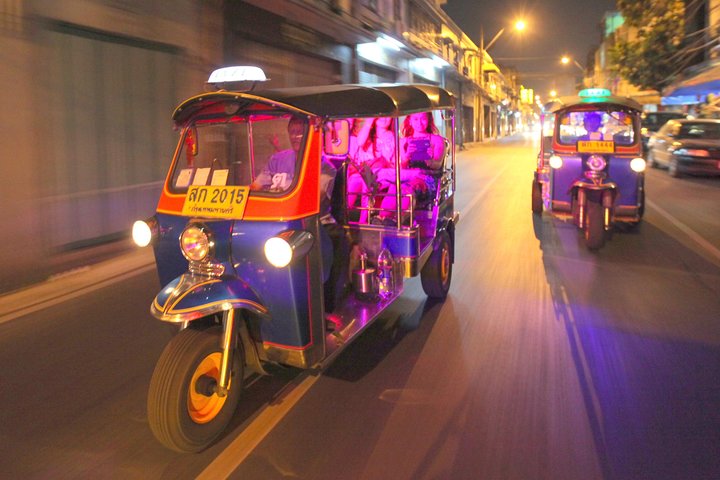
Bangkok by Night: Temples, Markets and Food Tuk-Tuk Tour
 Free cancellation
Bangkok Backstreets Food Tour with 15+ Tastings
 Free cancellation
Grand Palace & Temples of Bangkok with experienced guide
 Free cancellation
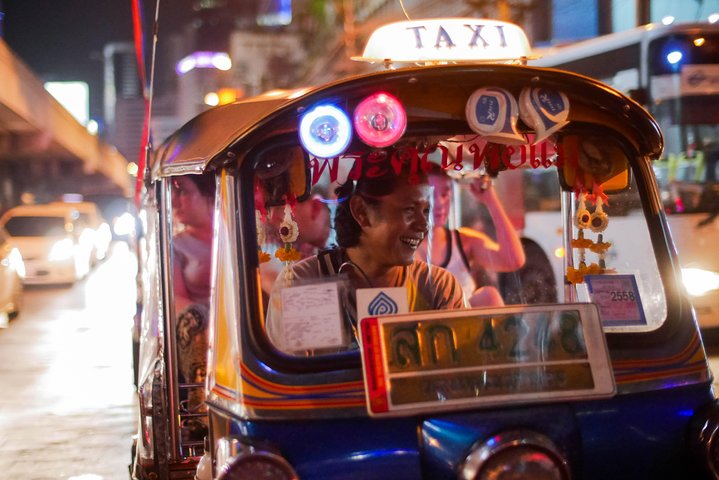
Bangkok Midnight Food Tuk Tuk Tour
 Free cancellation
Hidden Bangkok Longtail Boat Tour to Big Buddha&Canal Life 2hrs
Things to do in Bangkok: common questions
What are the must-do things in Bangkok for a first visit?+
The Old City temple cluster, which is the Grand Palace, Wat Pho and Wat Arun across the river; one evening in Chinatown; and one thing that is not a temple, whether that is Chatuchak on a weekend, the Jim Thompson House or an hour on a river boat. Four choices rather than fifteen.
How many attractions can you realistically see in one day?+
Two or three major stops in the same part of the city. The Grand Palace, Wat Pho and Wat Arun work together because they are within a kilometre of each other; adding Chatuchak to that day means eight and a half kilometres across Bangkok and back.
What are the best things to do in Bangkok at night?+
Yaowarat in Chinatown, which is a different street after dark from the one you walk through in the afternoon. A skyline view is the other obvious option, and Khao San Road if that is your kind of evening. Temples close in the late afternoon, so the evening is for streets rather than sights.
What should I do in Bangkok if it rains?+
The Jim Thompson House, which is a museum visit under cover, and the mall and food-court belt around Siam. September is the wettest month of the Bangkok year at 263mm across 26 days with rain, so an indoor afternoon is worth having in mind rather than planned around.
Is Chatuchak Market open every day?+
The full market is a weekend one. Parts of the site keep going midweek, but if your stay does not include a Saturday or a Sunday, do not build the trip around it. Our Chatuchak guide has the detail.
Can I visit the Grand Palace, Wat Pho and Wat Arun together?+
Yes, and it is the single best-planned half-day in Bangkok. Wat Pho is 360 metres from the Grand Palace and Wat Arun is a cross-river ferry from the pier below it, so the three are a walk and a boat ride rather than three separate trips.
Is Chinatown worth visiting during the day or at night?+
Both, for different reasons. By day Yaowarat is gold shops, herbal halls and the market lanes of Sampeng; after dark it is one of the best street-food streets in Asia. If you only go once, go in the evening.
Should I book Bangkok attractions in advance?+
Timed experiences and guided tours often benefit from booking; neighbourhoods, markets and street food do not need it at all. For a specific temple or museum, check its current ticketing rules rather than assuming, because they change.