
Bangkok
Chinatown & Yaowarat
Gold shops and herbal halls by day, street-food stalls after dark. How Yaowarat works, when to go and what to eat when you get there.
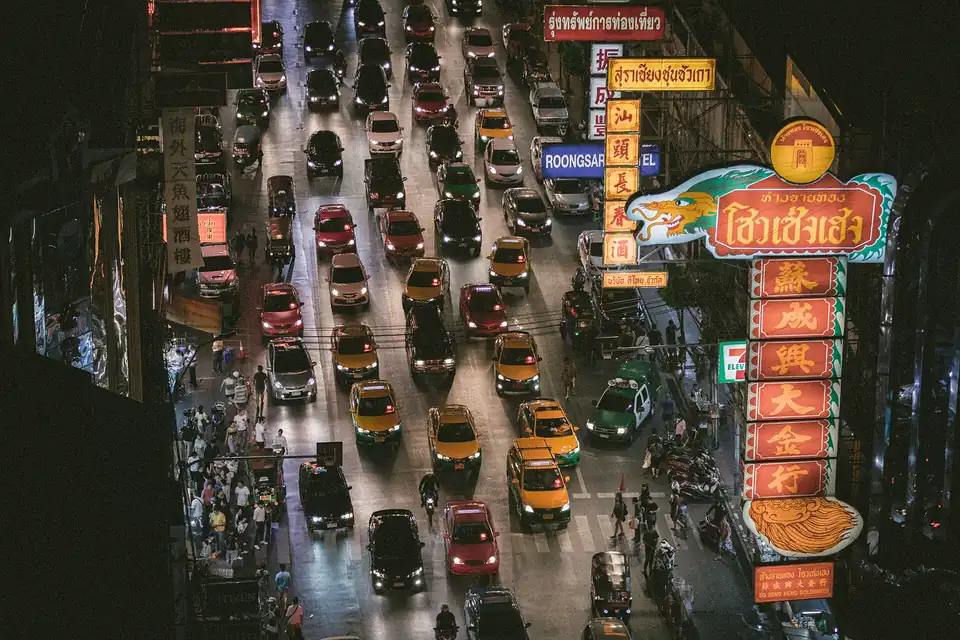
Yaowarat Road is the spine of Bangkok’s Chinatown, one of the largest and oldest Chinese settlements outside China, built up by migrants who arrived from the late eighteenth century onward. By day it is gold shops, herbal medicine halls and the shoulder-to-shoulder stalls of Sampeng Lane; after dark the same street becomes one of Bangkok’s great food destinations, with grills, woks and steamer baskets lining the kerb from early evening until well past midnight.
A district built by migration
Chinese traders had settled along this stretch of the Chao Phraya since before Bangkok was even the capital, but the community here took its current shape after 1782, when King Rama I moved the Chinese merchants already living on the site of the future Grand Palace downriver to make way for the new royal city. They resettled around what is now Yaowarat and Sampeng, and the district has been continuously Chinese ever since, deepened by further waves of migration from southern China through the nineteenth and early twentieth centuries. The result is a Chinatown with genuine depth: temples, clan associations, shophouses and trades that have stayed in the same families for generations, not a district reinvented for visitors.
By day: gold, medicine and Sampeng Lane
Daytime Yaowarat is a working street. Gold shops line the main road in dense clusters, their windows stacked with the high-karat jewellery that is both an investment and a wedding tradition in Thai-Chinese families. Traditional herbal medicine halls, some of them generations old, sell dried roots, ginseng and remedies out of wooden apothecary drawers. Behind the main road, Sampeng Lane runs parallel as a narrow covered market, so tight in places that two people can barely pass, selling everything from fabric and toys to fake flowers and cheap accessories at wholesale prices. It is one of the few parts of central Bangkok that has changed remarkably little in feel, even as the buildings around it have modernised.
By night: the food street
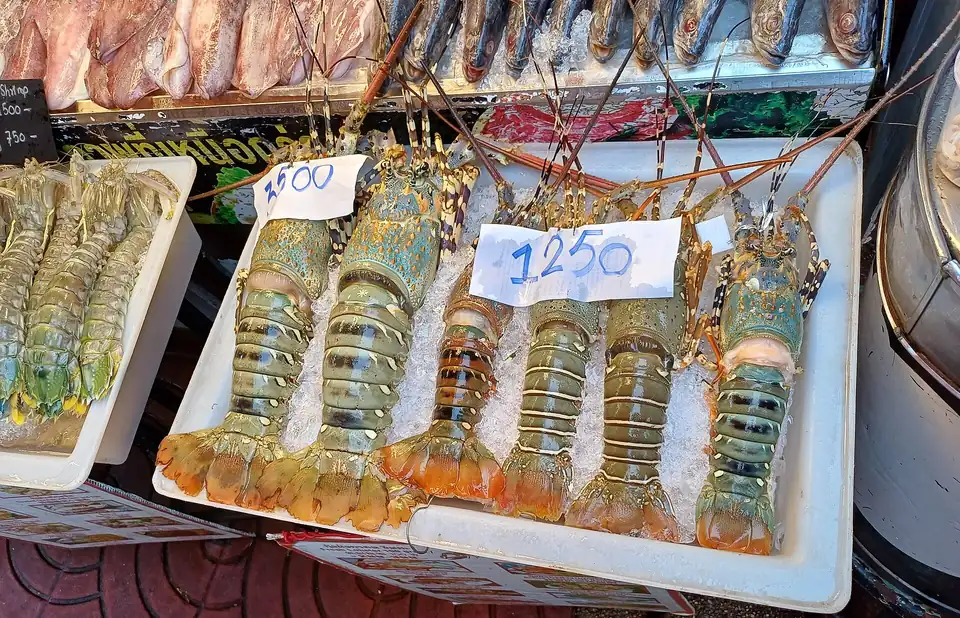
The transformation after dark is what draws most visitors. Tables and folding stools spread out along the pavement, kerbside woks throw flame into the air, and vendors work seafood grills, dim sum steamers, bird’s-nest dessert stalls and noodle carts within a few steps of each other. Specialities cluster by corner and by family stall rather than by any obvious plan, which is part of the appeal: the best approach is to walk the length of the road once, see what draws a crowd, then double back for it. Come hungry and come patient, since the busiest stalls have queues and the street itself gets genuinely crowded on weekend nights.
Wat Traimit and the edge of Chinatown
At the eastern end of Yaowarat, where the district meets Hua Lamphong, sits Wat Traimit, which holds a solid gold Buddha image that is one of the largest of its kind. It is an easy add-on to a Chinatown walk, whether you go before the food stalls open or use it as a starting point before working your way west along Yaowarat as the evening builds. The contrast is part of the charm: a quiet, formal temple within a few minutes’ walk of the loudest, busiest street in the district. Chinatown also sits within reach of Bangkok’s old city sights and the backpacker strip of Khao San Road, so it fits naturally into a wider day of walking rather than standing alone.
Visiting practicalities
Yaowarat is dense, hot and loud, and that is largely the point, but it goes better with a little planning. Pavements narrow to nothing in places once stalls set up, so expect to walk in the road alongside slow-moving traffic and to give way constantly. Wear light, comfortable clothes and shoes you don’t mind getting a bit greasy underfoot. If you plan to step into Wat Traimit or any of the district’s temples, cover shoulders and knees as you would at any Thai temple. Cash is still the easiest way to pay at most stalls, and it helps to carry small notes, since vendors moving fast during the dinner rush don’t always have change ready.
Practical tip
Skip dinner beforehand and arrive properly hungry. Order small portions from several stalls rather than filling up at the first one you like, since half the fun of Yaowarat is grazing your way down the street.
Tours and tickets
Guided evening food walks through Chinatown are widely sold and can be useful if you would rather have a local navigate the stalls and order dishes for you than work it out on your own.
Planning your Bangkok food and sightseeing
Chinatown pairs naturally with a wider look at where to eat in the city, and it is one stop among many on a fuller Bangkok itinerary.
Tours & tickets near Chinatown & Yaowarat
 Free cancellation
Bangkok Canal Tour: 2-Hour Longtail Boat Ride
 Free cancellation
Half-Day Floating Market and Railway Market Tour from Bangkok
 Free cancellation
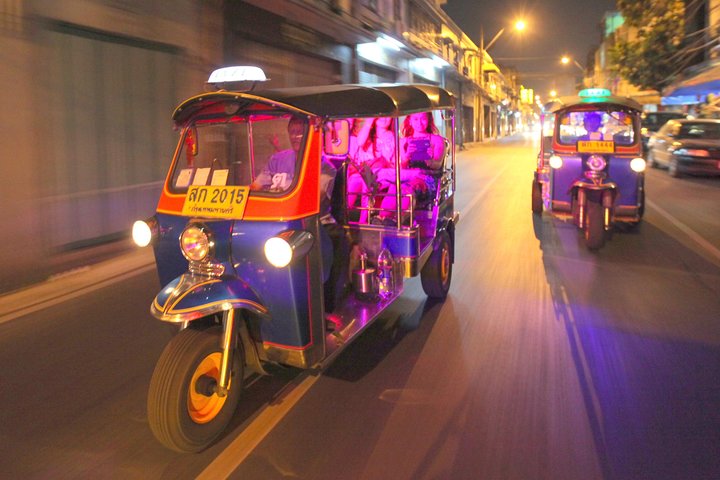
Bangkok by Night: Temples, Markets and Food Tuk-Tuk Tour
 Free cancellation
Bangkok Backstreets Food Tour with 15+ Tastings
 Free cancellation
UNESCO's Ayutthaya Historical Park: Full-Day Tour from Bangkok
 Free cancellation
Grand Palace & Temples of Bangkok with experienced guide
Chinatown & Yaowarat FAQs
What is the best time to visit Yaowarat?+
Early evening onward is best for the food scene, once stalls have set up and the day's heat has eased. Come earlier in the afternoon if you want to see the gold shops and Sampeng Lane without the evening crowds.
How do you get to Chinatown from central Bangkok?+
The MRT Blue Line's Wat Mangkon station puts you directly on Yaowarat Road, which has made the district far easier to reach without a taxi. A river taxi to Ratchawong pier is another option if you are coming from along the Chao Phraya.
Is Yaowarat only about street food?+
No, though the food is what draws most first-time visitors after dark. By day it is a working district of gold shops, herbal medicine halls and the market lanes of Sampeng, with a Chinese-Thai community that has lived there for generations. See the wider Bangkok food guide for how it fits into the city's eating scene beyond Chinatown.
Is Wat Traimit worth visiting alongside Chinatown?+
Yes. It sits at the eastern edge of Yaowarat, close enough to combine easily with a Chinatown walk, and gives a quieter, more formal contrast to the street's evening energy.