
Bangkok
Wat Pho
Thailand's largest reclining Buddha, 46 metres of it with mother-of-pearl soles, in a temple older than Bangkok that still teaches the country's traditional massage.
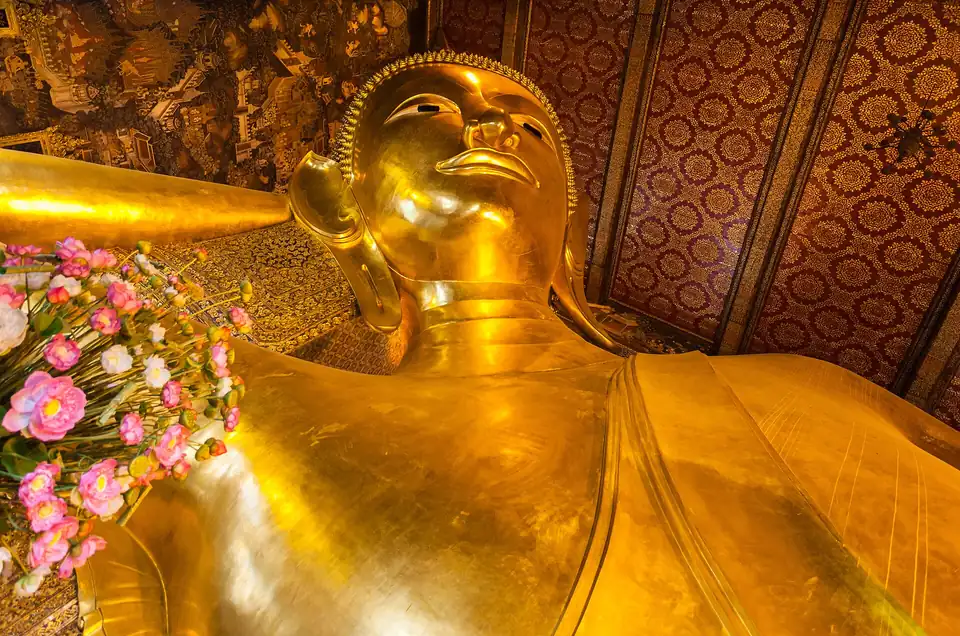
Wat Pho, formally Wat Phra Chetuphon, is the temple just south of the Grand Palace that holds Thailand’s largest reclining Buddha, a gilded figure about 46 metres long with soles inlaid in mother-of-pearl. It is older than Bangkok itself, and it is still the country’s most respected home of traditional Thai massage, with a working school on site rather than a museum plaque about one.
A temple older than the capital
Wat Pho was already standing when Bangkok did not yet exist as a capital. It began as a modest monastery, Wat Photharam, dating back to the Ayutthaya period. When Rama I moved the seat of power across the river and founded Bangkok in 1782, he had the old temple rebuilt on a much grander scale, with work starting in 1788. The complex was renamed Wat Phra Chetuphon Vimolmangklararm in 1801, though almost everyone, Thai and foreign visitors alike, still calls it Wat Pho.
The reclining Buddha that most people come to see is not part of that first rebuild. It was added later, commissioned under Rama III in the 1830s, at the western end of the grounds in its own tall vihara. Rama III is also the reason Wat Pho carries so much more than one statue: he had the walls, pillars and pavilions inscribed with texts and diagrams on medicine, massage, history and poetry, turning the temple into a kind of open-air reference library for the public. Those marble inscriptions, more than 1,400 of them, were entered onto UNESCO’s Memory of the World register in 2008.
The reclining Buddha and what else to see
The Buddha itself fills its hall almost completely, so the usual approach is to walk the length of it rather than stand back and take it in from one spot. The curled hair, the serene face and the long line of the body are gilded in gold leaf; the soles of the feet, each over 3 metres tall, carry 108 auspicious symbols worked in mother-of-pearl. A row of bronze bowls runs along one side of the hall, and dropping a coin in each as you pass, a small act that supports the temple’s upkeep, is one of the few genuinely interactive moments in Bangkok’s major temples.
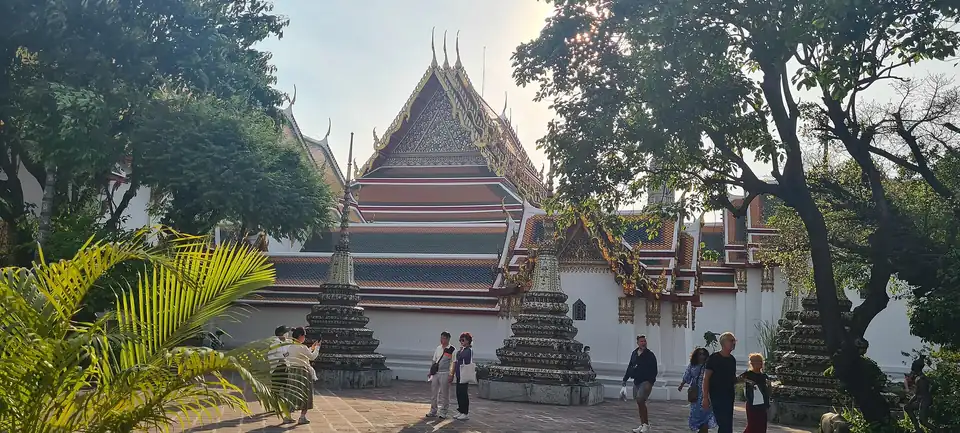
Beyond the reclining Buddha hall, Wat Pho’s grounds hold more than a thousand Buddha images gathered from ruined and abandoned temples around the country, many of them lining the galleries of the main ubosot (ordination hall). Four large chedis near the main hall are dedicated to the first four Chakri kings, and around ninety smaller chedis, tiled in coloured ceramic, are scattered through the courtyards. It rewards slow walking rather than a straight line to the main attraction; the stone giants at the gates, the bell-shaped stupas and the quiet cloisters are as much a part of the site as the Buddha itself.
Visiting etiquette and dress code
Wat Pho is an active place of worship as well as a landmark, and the dress code is enforced. Shoulders and knees need to be covered; sarongs are usually available to borrow or rent at the entrance for anyone in shorts or a sleeveless top, but bringing your own layer saves the queue. Shoes come off before entering the halls, so slip-on footwear is worth the small convenience. Inside, keep voices low, do not point your feet at any Buddha image, and ask before photographing the monks or the massage students at work.
The massage school is not a gimmick
The Wat Pho Thai Traditional Medicine and Massage School, founded in 1955, sits within the temple compound and still trains and certifies practitioners. Traditional Thai massage was recognised by UNESCO as intangible cultural heritage in 2019, and getting a foot or full-body massage from the school here, rather than a walk-in shop elsewhere in the city, is a reasonable way to spend the tired last half hour of a temple visit.
Getting there and pairing it with nearby sights
Tha Tien pier is the natural landing point, whether arriving by Chao Phraya Express Boat or on foot from the Grand Palace, which sits just a few minutes’ walk north. From the same pier, a short cross-river ferry reaches Wat Arun, so the three sights work naturally as one river-side morning: palace first while it is coolest, Wat Pho next, then across the water for Wat Arun in better afternoon light. Taxis and the MRT to Sanam Chai station are the fallback if the river is too crowded or the heat too much.
Planning the rest of your Bangkok temple run
See how Wat Pho fits alongside the Grand Palace, Wat Arun and the city’s other landmarks.
Tours & tickets near Wat Pho
 Free cancellation
Bangkok Canal Tour: 2-Hour Longtail Boat Ride
 Free cancellation
Half-Day Floating Market and Railway Market Tour from Bangkok
 Free cancellation
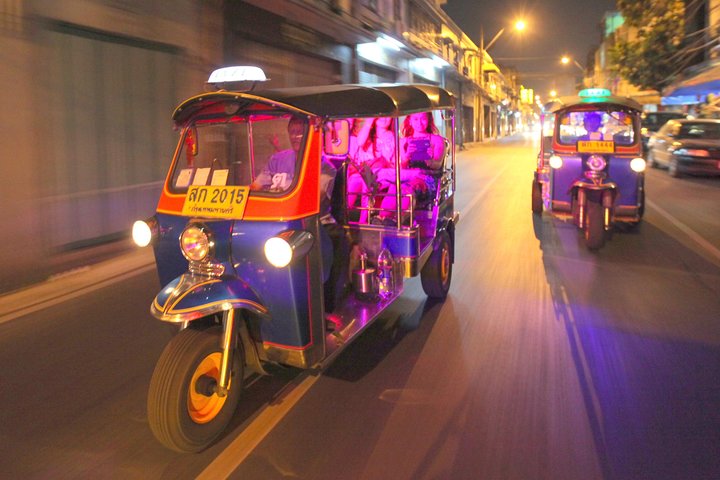
Bangkok by Night: Temples, Markets and Food Tuk-Tuk Tour
 Free cancellation
Bangkok Backstreets Food Tour with 15+ Tastings
 Free cancellation
UNESCO's Ayutthaya Historical Park: Full-Day Tour from Bangkok
 Free cancellation
Grand Palace & Temples of Bangkok with experienced guide
Wat Pho FAQs
How long is the reclining Buddha at Wat Pho?+
The gilded reclining Buddha is about 46 metres long, filling most of its hall, with feet inlaid in mother-of-pearl showing 108 auspicious symbols.
Is Wat Pho or the Grand Palace better to visit first?+
Most visitors do the Grand Palace first since it opens early and gets busy fastest, then walk the short distance to Wat Pho once the palace crowds thin out.
Can you get a massage at Wat Pho?+
Yes. The temple's own Thai Traditional Medicine and Massage School, dating to 1955, gives foot and full-body massages on site and is widely regarded as one of the more authentic places in Bangkok to try one.
What should I wear to Wat Pho?+
Cover shoulders and knees. Sarongs are usually available to borrow near the entrance for anyone not dressed appropriately, and shoes must come off before entering the main halls.