
Region
Thailand's Andaman Coast Travel Guide
Explore Thailand's Andaman Coast, from Phuket and Krabi to Khao Lak and the islands. Compare bases, seasons, beaches, island-hopping and trip planning.
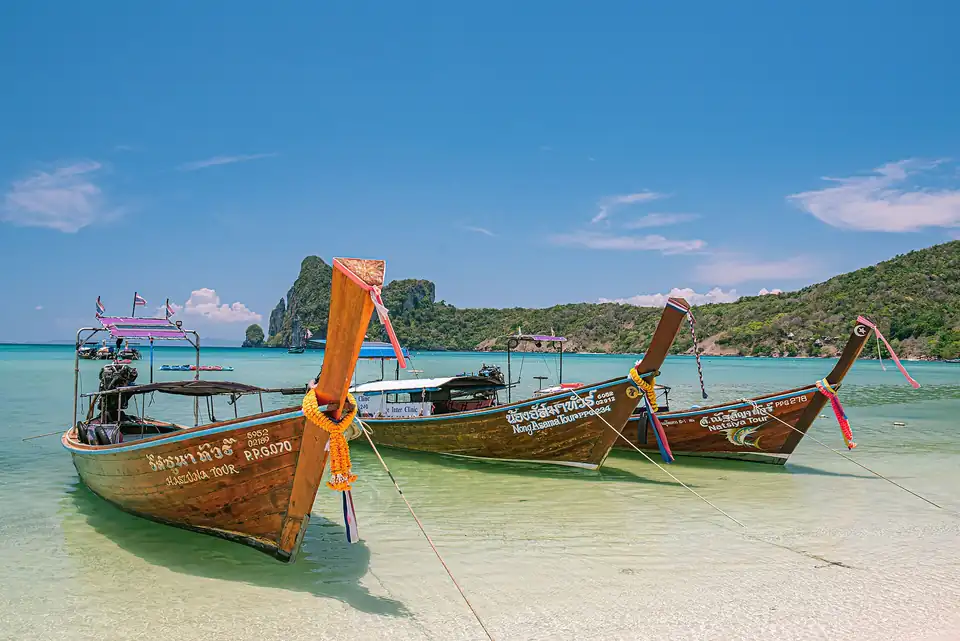
Thailand’s Andaman Coast is the country’s west-facing beach region, running from Phang Nga down through Phuket and Krabi and out to islands such as Phi Phi, Koh Lanta and the Similans. It is the side of Thailand known for limestone cliffs rising straight out of shallow green water, for longtail boats and for the country’s best diving.
Phuket is the easiest all-round base and has the airport with the most flights. Krabi is the scenic alternative, with the calmest water measured on this coast. Khao Lak is quieter than either and is where you stay if the Similan Islands are part of the plan. The coast is at its most reliable for beaches and boats in the dry months, and the southwest monsoon changes the sea more than it changes the rainfall.
The Andaman Coast at a glance
- Best for: limestone scenery, island hopping, diving and the widest choice of beach resorts in Thailand.
- Main gateways: Phuket (HKT) and Krabi (KBV).
- Main bases: Phuket, Krabi and Khao Lak.
- Driest months: December to March at Phuket and Krabi, measured as the months under 150mm with fifteen rain days or fewer.
- Trip length: one base for a short beach stay, two or more for a coast trip.
Where to go on Thailand’s Andaman Coast
The coast works best when you choose a base for the kind of trip you want and then use boats or short transfers for the islands around it. Phuket, Krabi and Khao Lak serve very different travellers. Phi Phi, Railay and the Similans are better understood as island or excursion choices than as interchangeable places to stay.
-
 Phuket Best for: beaches and island day trips Phuket is Thailand's largest island and the easiest way onto the Andaman coast. Dry season December to March
 -
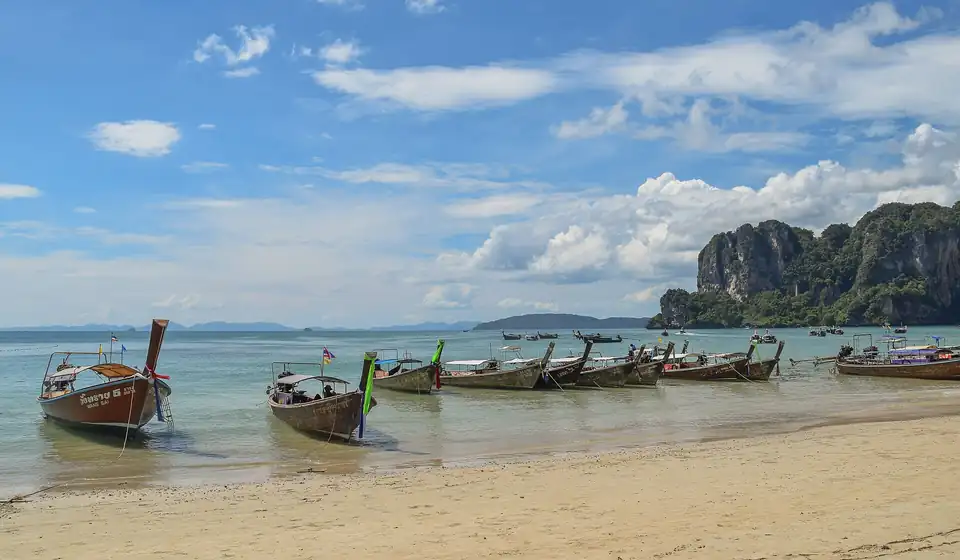 Krabi Best for: limestone scenery and island days Krabi is the Andaman coast at its most dramatic: limestone karsts rising straight from the sea, the car-free beaches of Railay reached only by longtail boat, and easy hops to Phi Phi, the Hong Islands and hot springs inland. Dry season December to March
 -
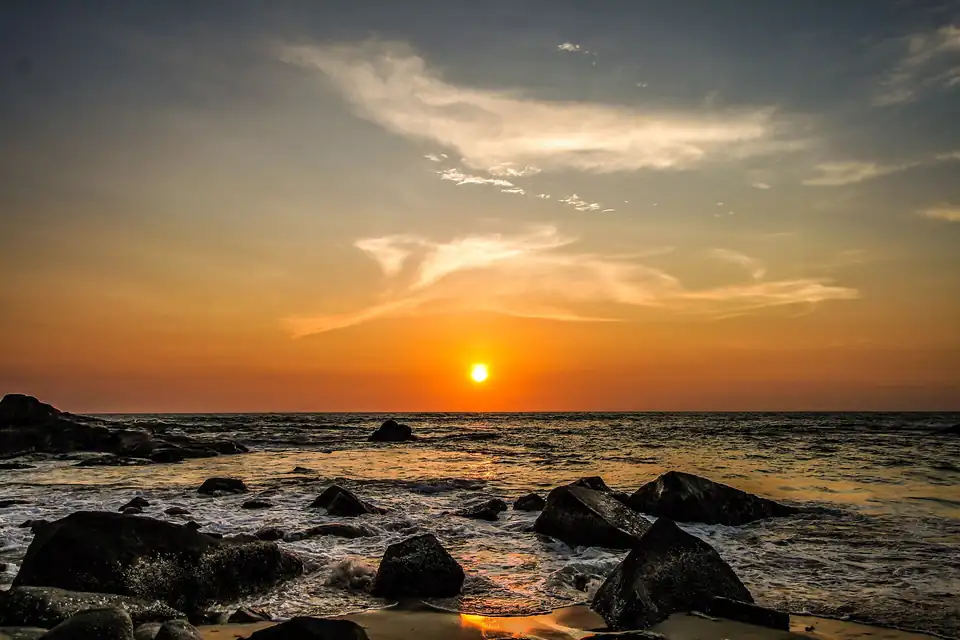 Khao Lak Best for: quiet beaches and the similans Khao Lak is thirty kilometres of Andaman coast an hour north of Phuket airport, with none of Phuket's volume and most of its weather. Dry season December to March
 -
 The Similan Islands Best for: diving, mid-october to mid-may The Similans are nine granite islands sixty kilometres off the Andaman coast and the best diving in Thailand. Dry season December to March
 -
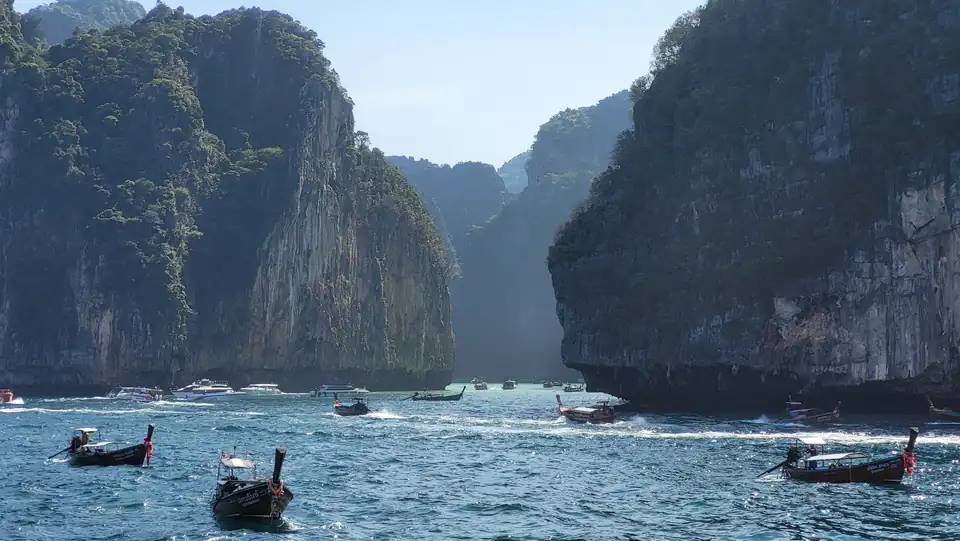 Koh Phi Phi Best for: the scenery, if you can take the crowds Phi Phi is two islands: a party village on an isthmus between two bays, and an uninhabited limestone sister next door holding Maya Bay. Dry season December to March
 -
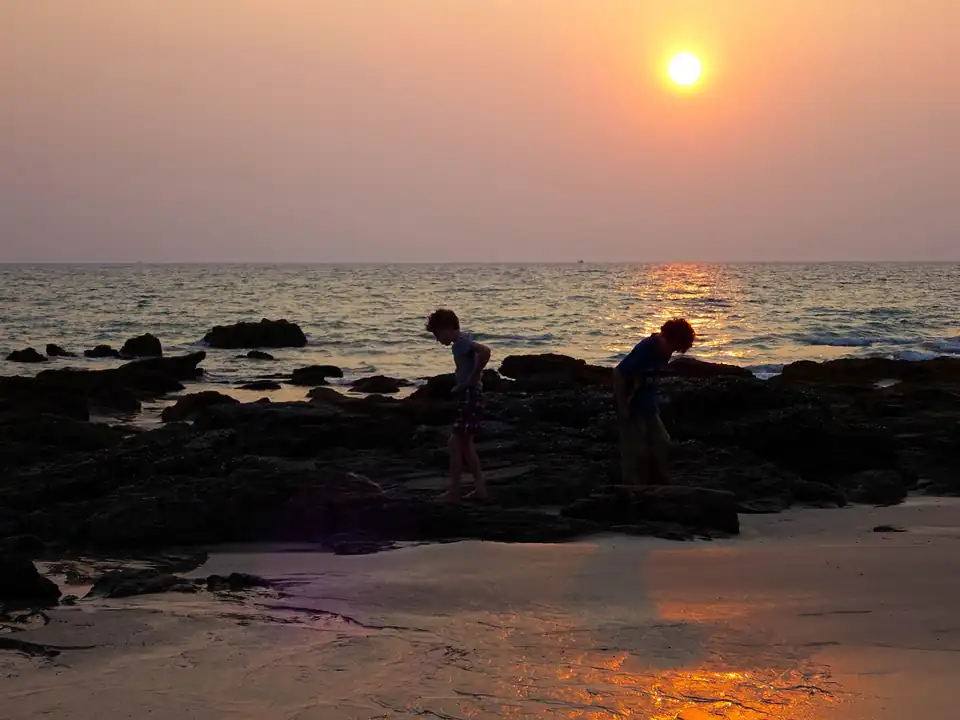 Koh Lanta Best for: a quiet andaman week with a scooter Lanta is long, flat and quiet: twenty-seven kilometres of island with a road down the spine, beaches all along the west side and mangrove down the east. Dry season December to March
 -
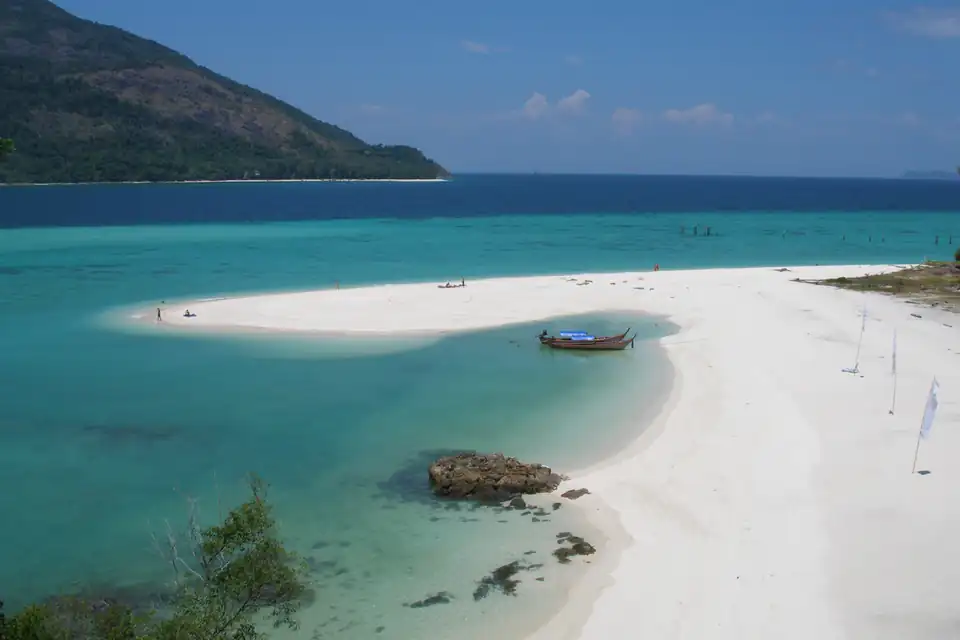 Koh Lipe Best for: clear water, at the end of a long journey Lipe is two kilometres of island at the bottom of Thailand, inside the Tarutao marine park and closer to Malaysia than to Krabi. Dry season January to March
The islands you will hear about but cannot book a hub page for
Koh Phi Phi sits between Phuket and Krabi and is reachable from both, about two hours by ferry from Rassada Pier and an hour and a half from Klong Jilad. It photographs better than it lives: Tonsai is loud and young, and the quiet parts are a boat ride from everything. Maya Bay reopened under strict limits on numbers and mooring and closes for part of each year.
Koh Lanta is the slower southern extension, a long thin island with a road down its spine and beaches that get quieter the further south you go. It suits multi-night stays rather than sightseeing, and it is a better second week than a day trip.
Phang Nga Bay is the karst seascape between Phuket and the mainland, and it is the landscape most people come to this coast for. It is a full day by boat from either Phuket or Krabi, and the sea-kayak trips into the caves reach places the larger boats cannot.
Railay is administratively part of Krabi and practically an island: it is cut off from the mainland by limestone and reached only by longtail. It has no road, a short list of restaurants and one of the best-known climbing walls in the world.
Phuket, Krabi or Khao Lak: which base is right for you?
All three are on the same coast and keep the same season. What separates them is how developed they are, how far you have to travel to reach open water, and what happens in the evening.
| Phuket | Krabi | Khao Lak | |
|---|---|---|---|
| Best for | Variety and convenience | Scenery and boat trips | Quiet beaches and diving |
| Airport | Phuket (HKT) | Krabi (KBV) | Usually via Phuket (HKT) |
| Nightlife | The strongest in southern Thailand | Low-key, concentrated in Ao Nang | Very limited |
| Island access | Excellent, from Rassada and Chalong | Excellent, shortest ferry to Phi Phi | Best for the Similans |
| Wave height, measured | Patong 0.47m to 1.30m | Ao Nang 0.18m to 0.43m | Nang Thong 0.29m to 0.93m |
| Walkable evenings | Depends entirely on the beach | Ao Nang works end to end | Resort-dependent |
| Overall feel | Developed and varied | Scenic and lower-key | Quiet and resort-focused |
The wave figures are the row worth reading twice. Krabi’s bays sit inside Phang Nga bay with Phuket island itself between them and the open Andaman, so the Ao Nang cell in its roughest month, 0.43m, is still below Patong in its calmest, 0.47m. The comparison is with the main resort beaches: Phuket’s sheltered northern ones, Bang Tao and Mai Khao, come down to 0.39m and 0.37m in the dry months and only part company with Krabi in the monsoon. If swimmable water in July matters more than restaurants, that is the decision made.
Read the Phuket travel guide, the Krabi travel guide or the Khao Lak guide for the detail behind each. Where to stay is covered on the destination pages: Phuket area by area and Krabi area by area.
Best time to visit the Andaman Coast
This site measures rainfall from thirty years of reanalysis data at each place’s own coordinates, and wave height from four years of marine data at each beach. Both say the same thing about this coast, and the second matters more than most guides admit.
December to March is the dry season, defined as the months under 150mm with fifteen rain days or fewer. February is the driest month of the year at every point on the coast: 32mm at Phuket across six rain days, 53mm at Krabi. The sea is at its calmest, the boats run, and this is also the busiest and most expensive stretch of the year.
April and November are the transition months. April is the hottest month of the year and the month the Andaman turns: Phuket goes from 93mm in March to 152mm. The sea, oddly, is still at its calmest of the whole year in April. November runs the other way and improves through the month, and its second half is often the first good fortnight of the season at low-season prices.
May to October is the southwest monsoon. Phuket takes between 223mm and 315mm in every one of those months, and Khao Lak more still. But the rainfall is not what closes the coast. Wave heights on Phuket’s west coast go from under half a metre to over 1.3, boat trips are cancelled, and the red flags on the west-facing beaches mark rip currents that are strong enough to be fatal. Krabi’s sheltered bays are the exception and stay swimmable throughout.
Marine national park access is seasonal too. The Similan Islands close for roughly half the year, opening around the middle of October and closing around the middle of May, and the Khao Lak dive industry closes with them.
The Gulf coast on the other side of the peninsula runs on a different calendar entirely, which is the subject of the last section on this page. For the month-by-month detail, see the Thai seasons, and for this coast specifically, Phuket weather month by month.
Andaman Coast map
The coast runs down the west side of the peninsula. Khao Lak and the Similans are north of Phuket, Krabi is across the bay to the east, and the islands sit between and below them.
Island hopping on the Andaman Coast
Phuket and Krabi are the two gateways, and almost every island route starts at one of them. Phi Phi sits between the two and is served from both. Koh Lanta is the southern extension from Krabi. Khao Lak is a separate branch of the coast that exists, for most visitors, because of the Similans.
Three route shapes cover most trips.
The first-timer: Phuket to Phi Phi, then Phi Phi to Krabi. It puts the famous island in the middle, gives you both mainland bases, and every leg is a scheduled ferry rather than a charter.
The quieter one: Phuket to Khao Lak, then back south and across to Krabi. This is the version for people who want the Similans and do not want Patong, and the Khao Lak leg is a road transfer rather than a boat.
The slow southern one: Krabi, then Koh Lanta, using Lanta as a base for the islands south of it. In the dry season the ferry runs; the rest of the year it is the road.
Two things constrain all of them. Island ferries mostly stop in the early afternoon, so a flight landing at four means an unplanned night on the mainland. And in the monsoon the boats are the first thing to go, which is why a plan built on three island transfers is more weather-sensitive than one built on a single base.
Every route on this coast, with times, frequencies and fares: routes and transfers.
How long to spend on the Andaman Coast
Three to five days is one base and one or two day trips. Phuket or Krabi, a boat day into Phang Nga Bay or out to Phi Phi, and the rest on the sand. Do not try to add a second base to this.
Seven to ten days is two bases, or one base plus an island. Phuket and Krabi, or Krabi and Koh Lanta, or Khao Lak and the Similans with a few days on either side.
A fortnight is enough for a slower coast itinerary with three stops and no night spent packing. It is also enough to absorb one weather day, which on this coast is worth planning for rather than hoping about.
More stops do not reliably make a better trip here. Every island transfer takes part of a day once you count the pier, the crossing and the check-in at the other end, and each one is another chance for the weather to change the plan.
Getting to and around the Andaman Coast
Fly into Phuket (HKT) for Phuket itself and for Khao Lak. It is the busiest airport in southern Thailand, it takes about ninety minutes from Bangkok, and the airport is at the northern end of the island, which is the Khao Lak end. Bangkok to Phuket, and from Britain there is now a seasonal nonstop: UK to Phuket.
Fly into Krabi (KBV) for Ao Nang, Railay and Koh Lanta. It is about twenty minutes from Ao Nang, which is closer than Phuket’s airport is to most of Phuket, and people book Phuket out of habit and then spend three hours on a road they did not need. Bangkok to Krabi.
Ferries and speedboats connect the islands to both gateways, and the season affects them: sailings thin out in the southwest monsoon and some routes stop entirely. Ferries are slower, steadier and cheaper; speedboats halve the time and are unpleasant in a swell.
Road transfers work for everything on the mainland. Phuket is joined to it by a bridge, so Phuket to Khao Lak and Phuket to Krabi are both drives, and the road runs all year while the boats do not.
Flying into one gateway and out of the other removes a backtrack. Phuket in and Krabi out, or the reverse, costs nothing extra on most fares and saves a day.
For how transport works across the country rather than this coast, see getting around Thailand.
Andaman Coast or Gulf Coast?
This is the decision that comes before choosing a beach, and the honest version of it is about the calendar rather than the scenery.
| Andaman Coast | Gulf Coast | |
|---|---|---|
| Main destinations | Phuket, Krabi, Khao Lak, Phi Phi, Koh Lanta | Koh Samui, Koh Phangan, Koh Tao |
| Landscape | Limestone karsts and west-facing beaches | Rounded granite islands and sheltered bays |
| Driest run, measured | December to March | January to April |
| Wettest month | October | November |
| Main gateways | Phuket (HKT), Krabi (KBV) | Samui (USM), or Surat Thani and a boat |
| Best for | Scenery, island hopping, diving, the widest resort choice | A northern-summer beach trip, and learning to dive |
The two coasts are dry together in January, February and March, and in no other month. That is the whole planning rule. If your dates fall between May and September, the Gulf is not a compromise: neither coast is dry then, but Koh Samui takes 90mm in July against Phuket’s 223mm, and the Gulf’s sea is calmer than the Andaman’s is in any month of its year. If your dates fall in November, the reverse applies, and the Gulf is the wettest place in the country while the Andaman is improving.
Compare all Thailand’s islands, or take it month by month on the seasons guide.
Popular Andaman Coast tours and day trips
 Free cancellation
️ Phuket Private Instagram Tour: All-Inclusive
 Free cancellation
Phang Nga Bay Canoeing & James Bond Island Tour from Phuket
 Free cancellation
Deep Mangrove and Canyon Kayak Tour in Krabi
 Free cancellation
Phuket City Tour - Old Town, Local Food, Temple & Viewpoint
 Free cancellation
Phuket Thai Cooking Class with Market Tour Option
 Free cancellation
One Day Tour Khao Sok Cheow Lan Lake from Krabi
Andaman Coast FAQs
What is the Andaman Coast of Thailand?+
It is Thailand's west-facing coast, on the Andaman Sea rather than the Gulf of Thailand. It runs from Ranong in the north down through Phang Nga, Phuket and Krabi to Trang and Satun, and it includes the offshore islands: Phi Phi, Koh Lanta, the Similans and Koh Lipe among them. It is the side of the country known for limestone karsts rising out of shallow water.
When is the best time to visit Thailand's Andaman Coast?+
December to March, measured as the months at Phuket and Krabi that stay under 150mm of rain and under sixteen days with rain in them. February is the driest month of the year on this coast. What matters as much as the rainfall is the sea: the southwest monsoon from about May to October drives wave heights on Phuket's west coast from under half a metre to over 1.3, which is what closes beaches and cancels boats.
Is Phuket or Krabi better?+
Phuket for convenience, variety and nightlife, and because it has the airport with the most flights. Krabi for limestone scenery, longtail boats and calmer water: measured across four years, the Krabi bays never exceed about 0.43 metres of wave height in any month, while Phuket's west coast reaches 1.34. Neither is better in the abstract; they suit different trips.
Is Khao Lak part of the Andaman Coast?+
Yes. Khao Lak is on the Phang Nga coast about eighty kilometres north of Phuket airport, which makes it a straightforward transfer rather than a separate journey. It is quieter than Phuket, its beaches are calmer, and it is the mainland base for the Similan Islands.
Can you island-hop between Phuket and Krabi?+
Yes, and there are two ways. The ferry crosses the bay in about an hour and a half to two hours, landing at Ao Nam Mao or East Railay; the road takes two and a half to three hours and runs all year. Sailings thin out in the southwest monsoon while the road does not.
How many days do you need on the Andaman Coast?+
Three to five days covers one base and a day trip or two. Seven to ten lets you use two bases, or one base plus an island stay. A fortnight is enough for a slower coast itinerary without changing hotel every other night. The constraint is not distance, it is that every island transfer costs part of a day.
What is the difference between Thailand's Andaman and Gulf coasts?+
Mostly the calendar. The Andaman is dry from December to March and takes its heaviest rain in September and October; the Gulf's driest run is January to April and it is at its wettest in November. What matters for a summer trip is that the Gulf takes roughly a third of the Andaman's rain from June to September even though neither is dry then. The two are dry together in January, February and March and in no other month.
Is the Andaman Coast good during the rainy season?+
It is travellable and it is cheap, and it is not a washout: even in the wettest month the rain arrives mostly as heavy afternoon downpours rather than continuous grey. What genuinely changes is the sea. Boat trips are cancelled, exposed west-coast beaches fly red flags, and rip currents in those months are strong enough to be fatal. If the flag is red, do not go in, however calm it looks from the sand.