
Chiang Rai
The White, Blue and Black: Chiang Rai's Three in One Day
Wat Rong Khun, Wat Rong Suea Ten and Baan Dam are the reason most people come to Chiang Rai, and only one of the three is a temple in the ordinary sense. What each actually is, the order to do them in, and the hour that decides the photograph.
Chiang Rai’s three headline sights are a white temple, a blue temple and a black house, and the neatness of that is a little misleading. They were built within a few decades of each other by two artists who knew one another, and only one of them is a functioning temple in the ordinary sense.
They are also close enough together to do in a day, which is what nearly everybody does. This page is about what each one actually is, and the order that makes the day work.
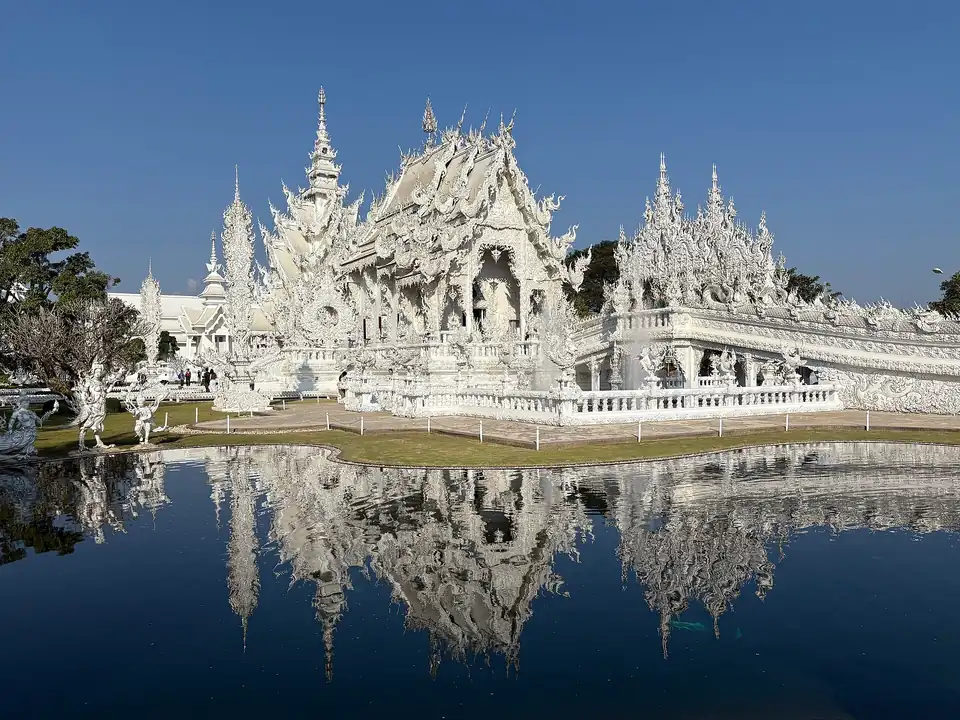
Wat Rong Khun, the White Temple
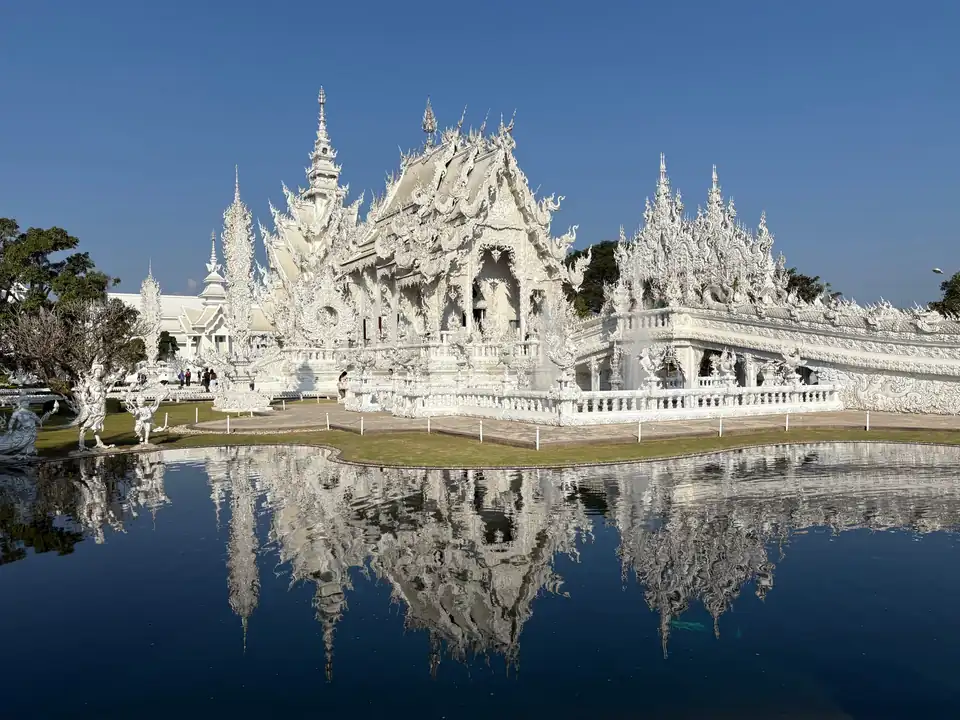
Thirteen kilometres south of town, and not an ancient temple. Chalermchai Kositpipat, a Chiang Rai artist, began building it in 1997 on the site of a decaying older wat, and he pays for it himself: he has repeatedly refused large donations that would come with conditions attached, on the grounds that it is his work rather than a commission. It is still unfinished, and the plan is that it stays that way for decades after his death.
All of it is white, set with fragments of mirrored glass so that it catches the light in a way photographs never quite convey. You approach across a bridge over a field of hundreds of reaching hands, which is the point of the thing: the crossing is out of the cycle of desire and the hands are what you are leaving. The murals inside are contemporary and jarring on purpose.
Go early. By about ten the coach groups arrive and the reflection in the pool, which is the photograph everybody wants, wants still water and low sun. Shoulders and knees covered; it is a working temple whatever else it is.
Wat Rong Suea Ten, the Blue Temple
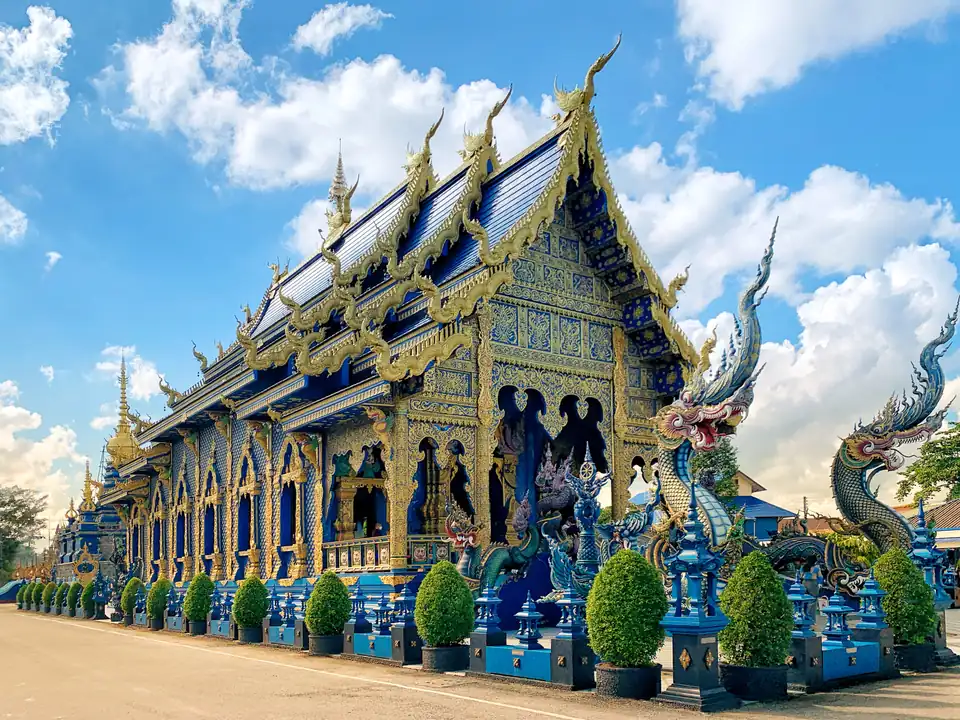
On the northern edge of town and much newer: completed in 2016, by a former student of Chalermchai Kositpipat, on the site of an abandoned temple. The name means the temple of the dancing tiger, after the animals said to have crossed the river here.
The exterior is cobalt and gold with naga guardians at the steps, and the interior is the reason to come: a deep blue hall with a large white seated Buddha at the end of it and painting over every surface. It photographs better inside than the White Temple does, which is not a competition anyone intended and is what most visitors end up saying.
It takes half an hour. It is free, unlike the other two, and it is in town rather than out of it.
Baan Dam, the Black House
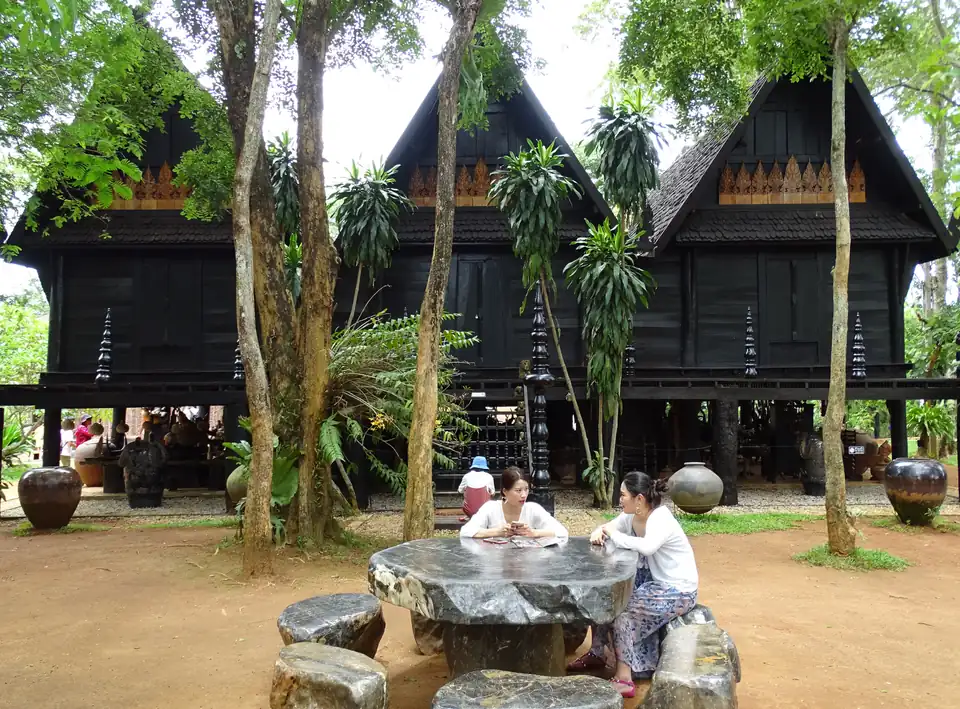
Thirteen kilometres north, and not a temple at all. Baan Dam is the compound of Thawan Duchanee, who died in 2014: about forty black buildings in a wooded park, several in Lanna temple form, holding his collection of animal bones, hides, horns, shells and furniture made from them.
It is deliberately the counterweight to Wat Rong Khun. Chalermchai built white and Thawan built black; they knew each other, and the pairing is intentional. Some visitors find it magnificent and some find it macabre, and both reactions are the intended range. It takes an hour.
A caution worth stating plainly: a good deal of what is displayed is animal remains, including large mammals, and a few of the pieces are difficult to look at. If that is not for you, this is the one of the three to skip.
The order that works
White first, at opening. It is the busiest, the most weather-dependent and the furthest from town, and it is the only one where arriving two hours later meaningfully worsens the visit.
Blue mid-morning. It is in town, it is quick and it is free, so it slots between the two long stops without needing planning.
Black House after lunch. It is north, it is under trees, and it works in the middle of the day when the light is wrong for the other two.
The whole loop is about twenty-five kilometres of driving and five to six hours with stops. A hired driver for a half or full day is the usual arrangement and is cheaper than the tours sold out of Chiang Mai.
Doing it from Chiang Mai
It is sold as a day trip and we would not do it that way. Chiang Mai to Chiang Rai is about three hours each way, so a day trip is six hours in a vehicle for four on the ground, and it puts you at the White Temple at exactly the hour the coaches arrive.
Give Chiang Rai a night instead. You see the three properly, and the Golden Triangle and the Mekong are an hour beyond them, which no day trip can reach. The route page has the timings, and the Chiang Rai guide covers the rest of the province.
If you would rather be driven
A half-day driver arranged in Chiang Rai is the usual and cheapest way to do the loop, and any guesthouse will book one. If you want it packaged instead, one thing is worth knowing before you search.
We screened the twenty temple tours Viator sells for this search and nineteen of them start in Chiang Mai, not here. Several carry “Chiang Rai” in the title and a Chiang Mai meeting point in the small print: two of them meet at the same office on a Chiang Mai street, and another lists pickup “from anywhere in Chiang Mai Old Town”. That is the day trip this page argues against, sold back to you under the destination’s name.
One of the twenty is confirmed to begin in Chiang Rai, from the bus terminal, run by a Chiang Rai operator. It is below. We are paid if you book through it, which is exactly why the rule is written here rather than left to our judgement, and why the other nineteen are not on this page.

Checked on 29 August 2026 against the operator’s own published start point. One product we could not place either way, because its start is given as an opaque map reference rather than an address, is excluded rather than assumed.
Practical notes
The White Temple and Baan Dam both charge admission and the Blue Temple does not. We publish no figures for the first two: entrance fees at Thai attractions change without notice and a stale number is worse than none, but expect a modest amount at each.
Dress for a temple at Wat Rong Khun and at the Blue Temple: shoulders and knees covered, shoes off inside the halls. Baan Dam is a museum and the rules are a museum’s.
All three are outdoor-facing, and the northern burning season from roughly late February to April puts haze over everything and takes the mountains out of the background. Our Chiang Mai weather page explains what that season does; Chiang Rai sits in the same air.
The White, Blue and Black: Chiang Rai's Three in One Day FAQs
Can you see the White, Blue and Black in one day?+
Comfortably, and it is how almost everyone does it. The three sit within about twenty kilometres of each other around Chiang Rai and a car or a hired driver covers them in five or six hours including stops. The order that works is White first thing, Blue mid-morning, Black House after lunch.
What time should you go to the White Temple?+
As close to opening as you can manage. By about ten it fills with coach groups, and the reflection in the pool that everybody photographs needs still water and low sun. Arriving at nine instead of eleven changes the visit more than anything else you can control.
Is the White Temple an ancient temple?+
No, and it is the most common misunderstanding about it. Wat Rong Khun is a contemporary artwork in the shape of a temple: the artist Chalermchai Kositpipat began it in 1997 on the site of a decaying older wat, funds it himself rather than taking state or private money, and it is still unfinished by design.
Is the Black House a temple?+
Not at all. Baan Dam is the compound of the late artist Thawan Duchanee, about forty black buildings holding his collection of bones, hides, horns and furniture. It is deliberately the counterweight to the White Temple, and the two are best understood as a pair.
Do you need a car for the Chiang Rai temples?+
Or a hired driver, yes. The three are spread around the town rather than walkable from it: the White Temple is thirteen kilometres south, the Blue Temple is on the north edge of town and Baan Dam is about thirteen kilometres north. A half-day driver is the usual arrangement.
Are the Chiang Rai temples worth a day trip from Chiang Mai?+
They are worth seeing and a day trip is a poor way to do it: three hours in a van each way for a few hours on the ground. Give Chiang Rai a night. The province has the Golden Triangle and the Mekong an hour beyond the temples, and neither fits into a return journey in a day.