
Pattaya
Pattaya's Beaches: Three of Them, and Only One Has the Reputation
Four years of marine data put Pattaya's three beaches within two centimetres of each other in the roughest month of the year. The sea does not decide this one. What does, and which of the three you actually want.
Pattaya has three beaches spread over about eight kilometres of coast, and they are three genuinely different holidays. That is the useful thing to know before booking, because the city is almost always sold as one place, and the difference between waking up at Naklua and waking up on Beach Road is larger than the difference between most Thai islands.
What does not separate them is the water, and we can show that rather than assert it.
The sea refuses to choose for you
- Pattaya Beach, Jomtien and Wong Amat
- Kata, Phuket, for scale
- The figure under each month is the gap between the highest and lowest of the three.
There are three bars in every column. In 5 months of the twelve you cannot see them, because the three beaches carry the same number to the second decimal, and the widest they ever get is 2 centimetres, in November and December. This is what a decision the measurements cannot make looks like, and the honest thing to do with it is say so rather than rank three beaches by a difference the width of a paperback.
What the numbers do settle is the coast. The roughest month here is July at 0.59m, which is about a third below Kata's average across the whole year of 0.86m. And the calmest month is October at 0.20m, which is also Pattaya's second wettest month at 229mm. The flattest sea of the year arrives with the rain, not with the sunshine.
What the measurements can and cannot separate
Two of the three, Pattaya Beach and Wong Amat, sit inside a single five-kilometre cell of the marine model, so their figures are not two measurements that agree. They are one measurement printed twice. On its own that proves nothing, and any page presenting it as agreement would be misleading you.
Jomtien is the interesting one. It sits in its own cell, six kilometres south, and it still lands within a centimetre or two of the other two in every month of the year. That is what makes this a finding rather than a rounding artefact: two independent cells covering the same stretch of the upper Gulf say the same thing.
What the model cannot see is the shoreline itself, and the shoreline is where the differences are. It does not know that the middle of Pattaya Bay carries boat traffic, that Jomtien’s sand runs several kilometres without a break, or that Wong Amat is a run of small coves rather than one beach. Those are the things worth choosing on, and none of them are in a wave figure.
Pattaya Beach
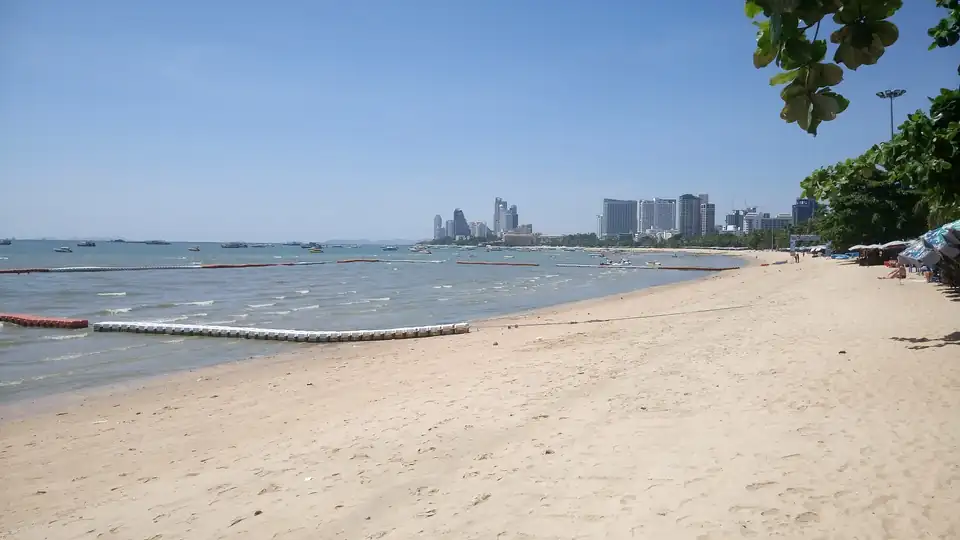
The four-kilometre curve the city is named after. Beach Road runs the length of it, the promenade sits between the two, and everything in central Pattaya is within walking distance of some part of it. That is the argument for staying here and it is the whole argument: you will not need a taxi for dinner, for a bar, for a mall or for a pharmacy.
It is also the busiest of the three by a distance. The sand is narrow at the northern end and wider in the middle, the beach chairs are dense in season, and there is boat traffic just outside the swimming line all day. Nobody comes to Pattaya Beach for solitude and it does not pretend to offer any.
The reputation lives at the southern end of this beach, where Beach Road meets Walking Street and Bali Hai pier. That matters practically rather than morally: a hotel at the north end and a hotel at the south end of the same beach are a twenty-minute walk and a completely different evening apart. What is actually down there is on its own page.
Best for a first visit, short stays, anyone without transport, anyone who wants the city as well as the sea. Not for a quiet week.
Well-rated stays in Pattaya Beach

Jomtien
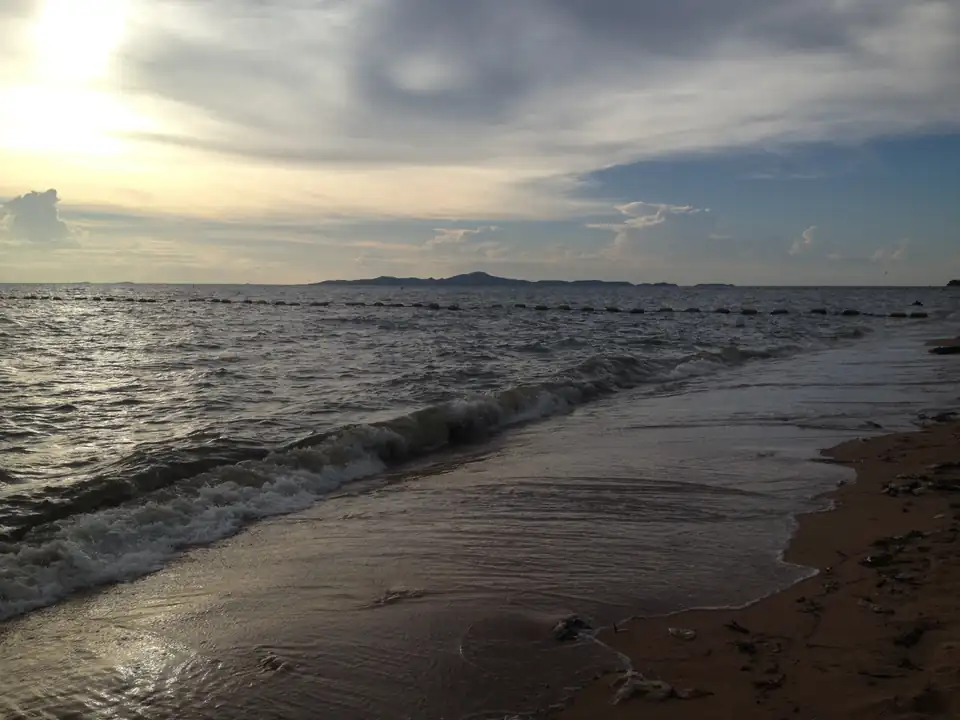
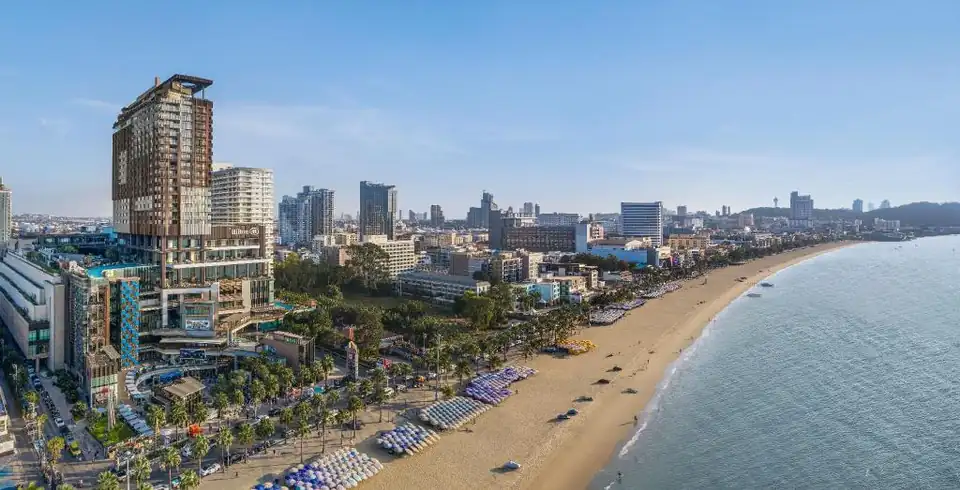
Over the headland to the south, and far enough away that calling it part of Pattaya is a technicality. Jomtien is longer, wider and flatter than Pattaya Beach, the buildings behind it are lower, and the crowd is families and long-stay residents rather than short-break visitors.
The sand runs several kilometres without a break, which is the practical difference from the middle of the bay: you can walk here for an hour in one direction. There is a road of restaurants immediately behind it, so this is not a beach that requires a taxi for dinner either, though the choice is narrower and quieter than in the centre.
It also has the best sunsets of the three, for the simple reason that it faces west with nothing between it and the horizon except Koh Larn, which sits on it as a low line of hills.
Best for families, longer stays, anyone who wants space and does not want the centre. Not for anyone whose plan is to walk into town.
Well-rated stays in Jomtien
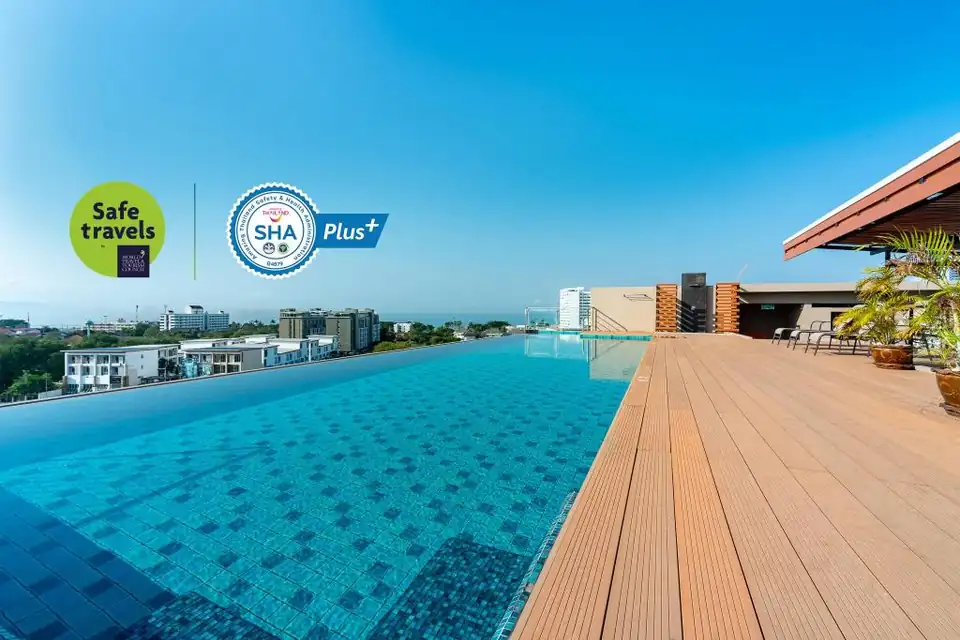
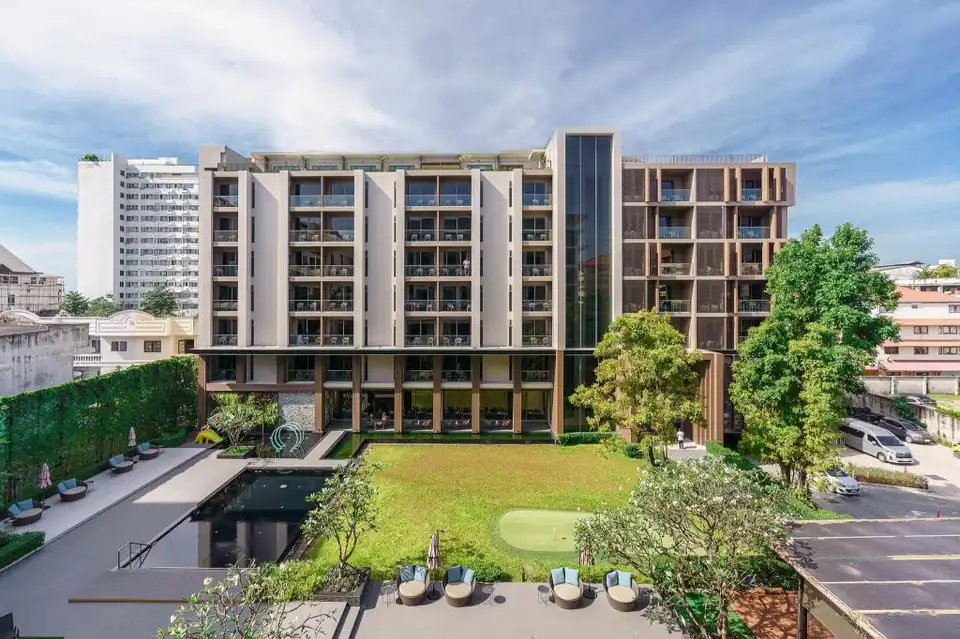
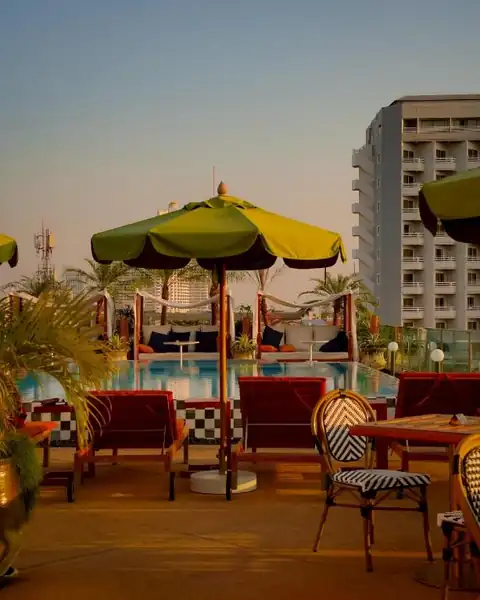
Wong Amat and Naklua
The quietest of the three, and the one where the same hotel names come up again from people who have been more than once. Wong Amat is short, and it is really a run of small coves rather than a single beach, with the larger resorts occupying their own frontages between them.
Naklua behind it is the oldest part of Pattaya and still has a working fishing pier and a market that is not for visitors. It is about ten minutes from the centre and feels considerably further, which is exactly what people who choose it are buying.
The Sanctuary of Truth sits on this stretch of coast, a little further north, which makes this the one beach here with a genuine sight within reach on foot. The guide covers what it is.
Best for couples, repeat visits, quiet, resort holidays. Not for a first visit on a budget, and not for anyone who wants to walk to a choice of dinner.
Well-rated stays in Wong Amat

Koh Larn, and the honest weakness
Sea state is not Pattaya’s problem. Water clarity is, and pretending otherwise would be silly: the middle of Pattaya Bay is a working anchorage, and on a busy weekend it looks like one.
The answer is seven kilometres offshore. Koh Larn is a small island with several beaches, reached from Bali Hai pier at the southern end of Pattaya Beach in about 45 minutes to an hour by scheduled ferry, or 15 to 20 minutes by speedboat, and it has the clear water the mainland does not. The near beaches take the day-trip crowds and the far side does not. The island has its own page.
It is very busy at weekends, when Bangkok arrives, in exactly the way Koh Samet is. A weekday changes it more than anything else you can control.
How this coast reads against Phuket
Plenty of people choosing Pattaya are really choosing between Pattaya and Phuket, so it is worth putting the two side by side in numbers rather than in atmosphere.
Phuket wins the photograph. Clear water, headlands, offshore islands and beaches that look like the pictures. Nothing in Pattaya competes with Kata or Kamala on scenery and this page is not going to claim otherwise.
Pattaya wins the forecast, twice over. It takes 1,381mm of rain a year against Phuket’s 2,251, which makes it the driest beach destination on this site and Phuket one of the wettest. And its sea is calmer in every month: 0.59 metres at its July worst against 1.34 off Kata, which is the difference between swimming and watching. Phuket’s red flags close beaches for days at a time in the monsoon. That is not a thing that happens here.
It is also two hours from Bangkok by road rather than a flight, which is worth real money on a short trip. The route, with the timings.
Every area above lists the best-rated properties closest to it, ranked on Agoda’s guest score weighted by how many reviews stand behind it, so a high score across a handful of stays does not outrank a slightly lower one across thousands. We have not stayed in them: the ranking is Agoda’s data, not our verdict. Scores and review counts read on 2026-09-03.
Choosing, in one paragraph
If it is your first visit and you have three nights, stay on Pattaya Beach, in the northern half of it, and walk everywhere. If you have a family or a week, stay at Jomtien and accept the taxi. If you have been before, or you want the holiday to happen inside the hotel, stay at Wong Amat. Do not spend an evening researching which has the better water, because the answer is that they do not differ by enough to see, and the twenty minutes is better spent on which part of the city you want outside the door.
The city itself, the weather and the rest of what is here are on the Pattaya guide, and where these three sit against every beach in the country is on the beaches page.
Pattaya's Beaches: Three of Them, and Only One Has the Reputation FAQs
Which is the best beach in Pattaya?+
Wong Amat at Naklua for quiet, Jomtien for space and families, Pattaya Beach for walking to everything. The measured sea is effectively the same at all three, between 0.20 and 0.59 metres across the year, so this is a decision about the town behind the sand rather than about the water.
Is Pattaya Beach nice?+
It is a working city beach: a four-kilometre curve of sand with a promenade, a busy road and boat traffic just offshore. It is pleasant to walk and to sit on, it is not the clear water people picture from photographs of the Andaman, and the swimming zone is marked off from the boats with floats.
Is Jomtien better than Pattaya Beach?+
Different rather than better, and better for most families. Jomtien is six kilometres south over a headland, wider, longer, lower-rise, and it faces the sunset. Pattaya Beach puts everything within walking distance, including the parts of the city some visitors would rather be further from.
Can you swim at Pattaya beaches?+
Yes, inside the marked swimming zones, and the sea is calm by Thai standards all year: 0.20 metres in October and 0.59 at its worst in July, against 1.34 off Kata on Phuket in the same month. Water clarity is the honest weakness here rather than the sea state.
Where is the clear water near Pattaya?+
Offshore, at Koh Larn, about seven kilometres out and reached from Bali Hai pier in about 45 minutes to an hour by scheduled ferry, or 15 to 20 minutes by speedboat. That is the answer to the one real objection to a Pattaya beach holiday, and it is why the island is on almost every itinerary here.
Which Pattaya beach is quietest?+
Wong Amat, on the northern side at Naklua. It is a short beach rather than a long one, the hotels along it are set in their own grounds, and it is far enough from the centre to feel unrelated to it while being about ten minutes from it.
Is Pattaya beach better than Phuket?+
Not for clear water or scenery, and it is a calmer and much drier coast. Pattaya's roughest month averages 0.59 metres of wave height against Kata's 1.34, and it takes 1,381mm of rain a year against Phuket's 2,251. Phuket wins the photograph and Pattaya wins the forecast.