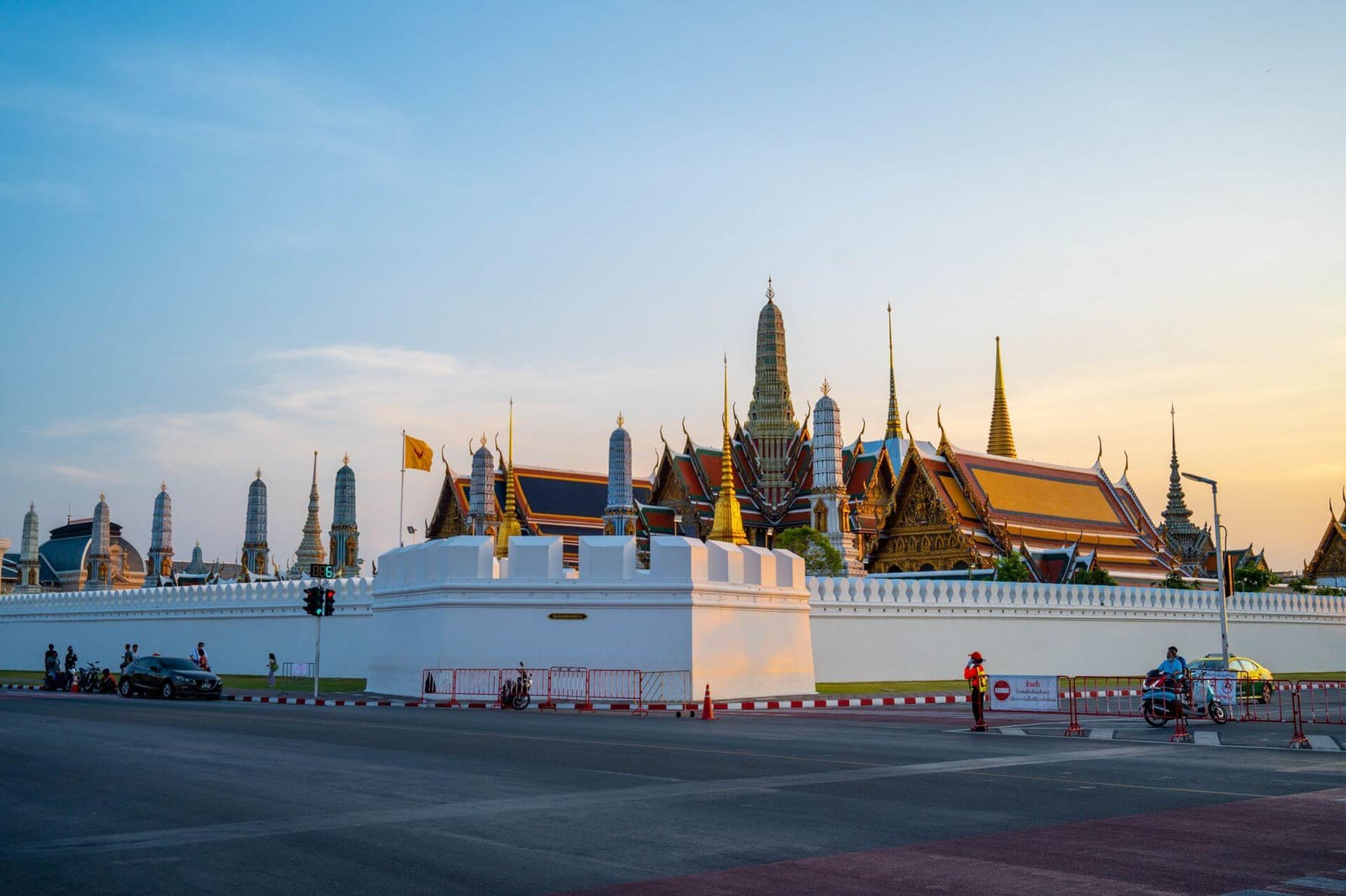

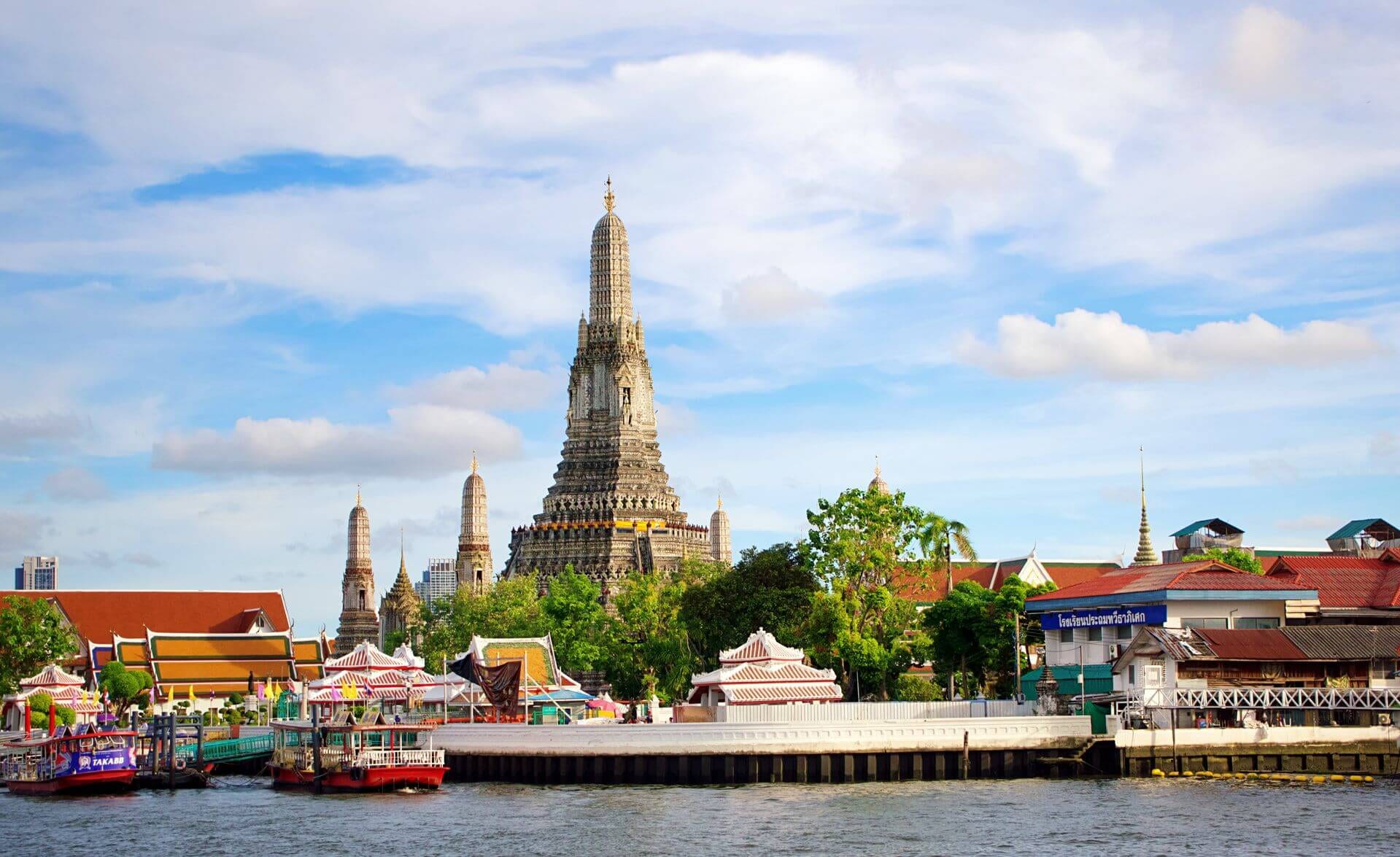
Wat Arun Ratchawararam stands on the Thonburi bank of the Chao Phraya, its central prang rising close to 70 metres over the river. Locals and guidebooks both call it the Temple of Dawn, and the name suits it: the tower is at its most striking in the low, slanting light of early morning or at sunset, when the setting sun catches the coloured porcelain set into its surface. It is one of the most recognisable landmarks on the river, and one of the easiest to combine with a morning spent at the Grand Palace and Wat Pho on the opposite bank.
Why it is called the Temple of Dawn
Wat Arun takes its name from Aruna, the Hindu god of dawn, and the association has stuck even though the temple’s most photogenic moments are arguably at the other end of the day. The site has held a temple since the Ayutthaya period, but it rose to prominence after 1767, when King Taksin made Thonburi his capital and is said to have arrived at the riverside shrine at first light after the fall of Ayutthaya. The distinctive prang that dominates the site today was built up over the following decades, reaching its current form under King Rama II and Rama III in the early nineteenth century.
The prang and its porcelain skin
The central prang is the reason people cross the river. Unlike the gold and coloured tile finishes typical of Bangkok’s other major temples, Wat Arun is clad in fragments of Chinese porcelain and seashell, pressed into the plaster in floral patterns. Ceramic ballast from trading ships is often cited as the original source of the material, repurposed rather than imported specifically for the temple. Look closely and the decoration resolves into thousands of individual shards, each one catching light differently depending on the hour.
Steep steps climb partway up the prang, and the effort is worth it: from partway up you get a wide view back across the Chao Phraya to the Grand Palace and Wat Pho, with the everyday river traffic of long-tail boats and ferries passing below. The steps are narrow and genuinely steep, closer to a ladder than a staircase in places, so take them slowly and hold the rail.
What else to see on site
Beyond the main prang, the temple grounds hold four smaller satellite prangs at the corners of the base, an ordination hall with Buddha images, and demon guardian statues at the entrances that were added by Chinese artisans in the nineteenth century. The riverside terrace in front of the temple is a good spot to sit for a few minutes once you have climbed down, particularly toward evening when boats and the fading light make the whole scene worth lingering over.
Visiting practicalities
Wat Arun is an active temple, not a museum, so the usual modest dress rules apply: shoulders and knees covered for both men and women, and shoes off before entering any of the buildings that require it. Sarongs are sometimes available to borrow near the entrance if you turn up under-dressed, but it is easier to plan ahead. The steps up the prang can queue up during the middle of the day, and the stone gets hot underfoot in direct sun, so mornings are the more comfortable option if you want to climb them without rushing.
Getting there is part of the experience. The short cross-river ferry from Tha Tien pier, right by Wat Pho, costs very little and takes only a few minutes, making it easy to see Wat Arun in the same outing as Wat Pho and the Grand Palace. Most visitors do the three in sequence: palace and Wat Pho in the morning, then across the river to Wat Arun before the light softens.
Practical tip
Go up the prang before you get too tired from the rest of the day. The steps are steep and narrow, and they are far more pleasant to climb early, when the stone is cool and the crowds haven’t built up.
Tours and tickets
Riverboat tours and half-day temple itineraries that include Wat Arun are widely sold, often bundled with the Grand Palace and Wat Pho or with an evening river cruise that passes the illuminated prang.
Tours & tickets near Wat Arun
 Free cancellation
 Free cancellation
 Free cancellation
 Free cancellation
 Free cancellation
 Free cancellation
Live availability and prices from Viator. We may earn a commission, at no extra cost to you.
Wat Arun: common questions
Why is Wat Arun called the Temple of Dawn?
It is named after Aruna, the Hindu god of dawn, and the association is tied to the story of King Taksin arriving at the site at first light after the fall of Ayutthaya. Ironically, the temple is now most often photographed at sunset, when it is lit against the darkening sky.
How do you get to Wat Arun?
The usual route is the small cross-river ferry from Tha Tien pier, near Wat Pho, which takes only a few minutes. It pairs naturally with a visit to the Grand Palace and Wat Pho on the same day.
Can you climb the prang at Wat Arun?
Yes, steps lead partway up the central prang and reward the climb with river views back toward the Grand Palace. The steps are steep and narrow, so go carefully, especially in flip-flops or in the rain.
What should I wear to visit Wat Arun?
Modest dress is required, as at any active Thai temple: shoulders and knees covered, and shoes removed before entering the buildings that call for it.
Planning a Bangkok temple day
Wat Arun sits naturally alongside the Grand Palace and Wat Pho on the opposite bank. See the full list of things to do in the city to build out your itinerary.