
Bangkok is really several different cities stitched together, and where you sleep shapes the whole trip more than in most destinations. The Old City gives you temples on the doorstep and a slower, older Bangkok; Sukhumvit gives you the BTS Skytrain, malls and a hotel for every budget; the riverside and Chinatown give you Chao Phraya views and some of the best street food in the country. There is no single “best” area, only a trade-off between atmosphere, transport, and how much time you are willing to spend in traffic getting to what you actually came to see. That last point matters more than it sounds: Bangkok’s roads jam badly at peak times, so a hotel a short walk from a BTS or MRT station is often worth more than one that looks closer on a map.
| Looking for… | Best area |
|---|---|
| A first visit built around sightseeing | Old City (Rattanakosin) |
| Nightlife, rooftop bars and restaurants | Sukhumvit (Thonglor, Ekkamai, Nana, Asok) |
| Budget guesthouses and hostels | Old City, or hotels a little back from Sukhumvit’s main strip |
| A room with a river view | Riverside hotels between the Old City and Chinatown |
| The easiest transport links | Sukhumvit, on the BTS Sukhumvit Line |
Old City (Rattanakosin)
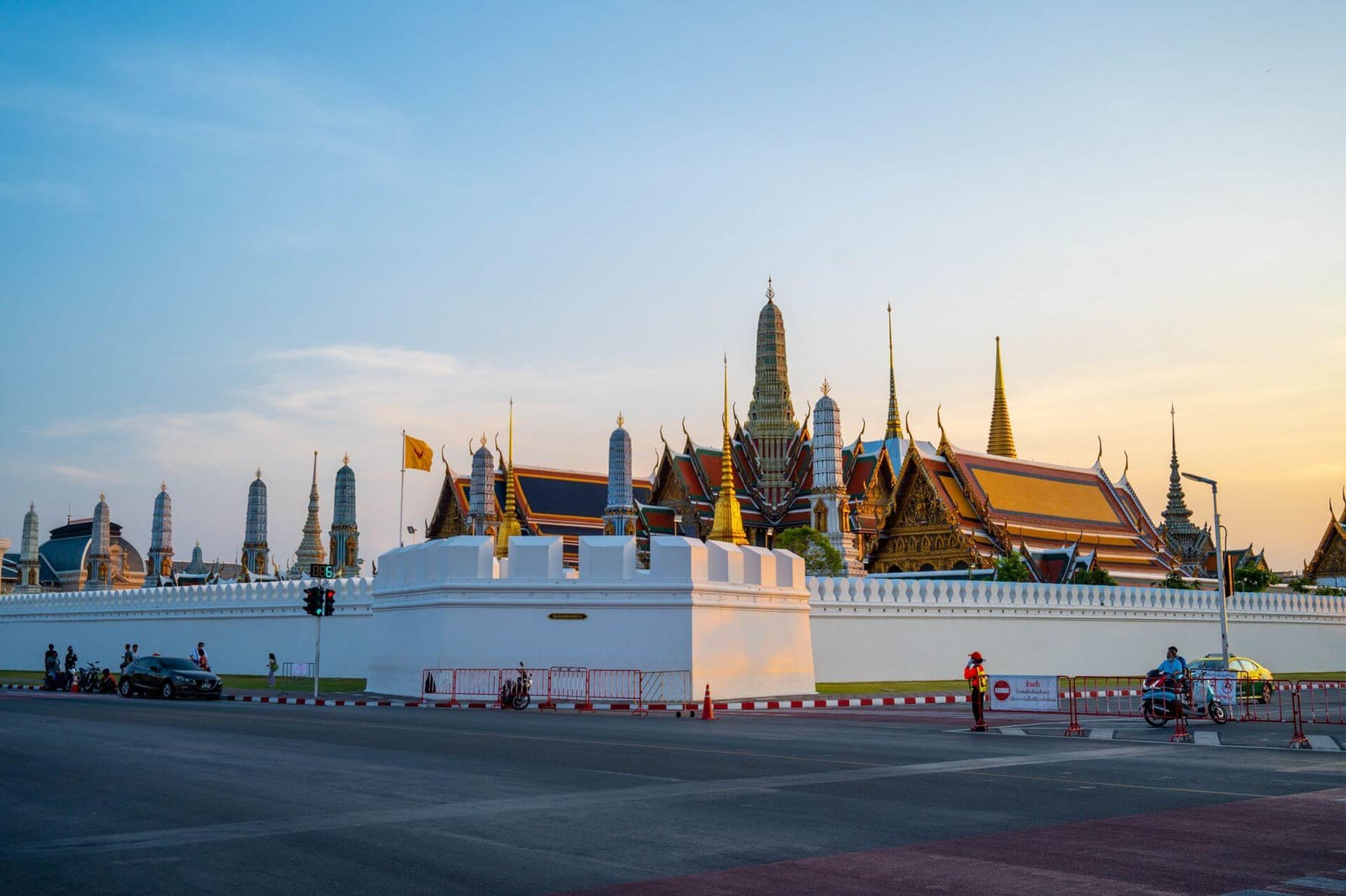
Rattanakosin is where Bangkok began, and staying here puts the Grand Palace, Wat Pho and the wider network of temples and canals within walking distance rather than a taxi ride. The area is low-rise, quieter after dark than Sukhumvit, and dominated by guesthouses and small boutique hotels rather than international chains, which suits travellers who want atmosphere over amenities. Khao San Road, one of the region’s best-known backpacker strips, sits at the edge of the district, so a base here also puts you close to that scene without needing to sleep in the middle of it.
The trade-off is transport. Neither the BTS Skytrain nor the MRT reaches the Old City, so getting anywhere outside it means a taxi, a ride-hail app, or the Chao Phraya Express Boat to piers such as Tha Tien or Phra Athit. For a trip built mainly around temples, museums and a slower pace, that is rarely a problem; for day trips that bounce between Sukhumvit malls and Old City sights, it adds up in time and fares.
Who this area suits
First-time visitors focused on the Grand Palace, Wat Pho and Wat Arun, and anyone who wants an evening at Khao San Road within easy reach, will get the most out of staying in the Old City.
Search Old City hotels on Booking.com →
Sukhumvit
Sukhumvit Road is the spine of modern Bangkok and the easiest area to base yourself in, purely on transport. The BTS Sukhumvit Line runs its full length, with stations at Nana, Asok, Phrom Phong, Thonglor and Ekkamai, so almost anywhere along it puts you a short ride from the rest of the rail network. Hotels line the road and its side streets (known as sois) at every budget, from simple guesthouses to five-star towers, alongside shopping malls, restaurants covering most cuisines, and the rooftop bars the area is known for.
Sukhumvit is also where Bangkok’s nightlife is most concentrated outside Khao San Road, with Thonglor and Ekkamai leaning toward stylish bars and clubs, and Nana and lower Sukhumvit running louder and more mixed. None of it is within walking distance of the Old City temples, so a Sukhumvit base means factoring a boat or a longer taxi ride into any day spent at the Grand Palace or Wat Pho, best planned alongside a look at getting around Bangkok.
Who this area suits
Repeat visitors, business travellers, and anyone who wants easy rail access, shopping and nightlife more than a historic setting will get the most out of Sukhumvit.
Search Sukhumvit hotels on Booking.com →
Riverside & Chinatown
The stretch of the Chao Phraya between the Old City and Chinatown holds some of Bangkok’s grandest hotels, several with their own boat piers, spas and pools looking out over the water. A riverside stay trades walking-distance convenience for a view and a sense of occasion, plus easy river-boat access up to the Old City temples or down toward the modern city. It tends to suit a splurge night, a honeymoon, or simply travellers who would rather spend an evening on a terrace over the water than in a mall.
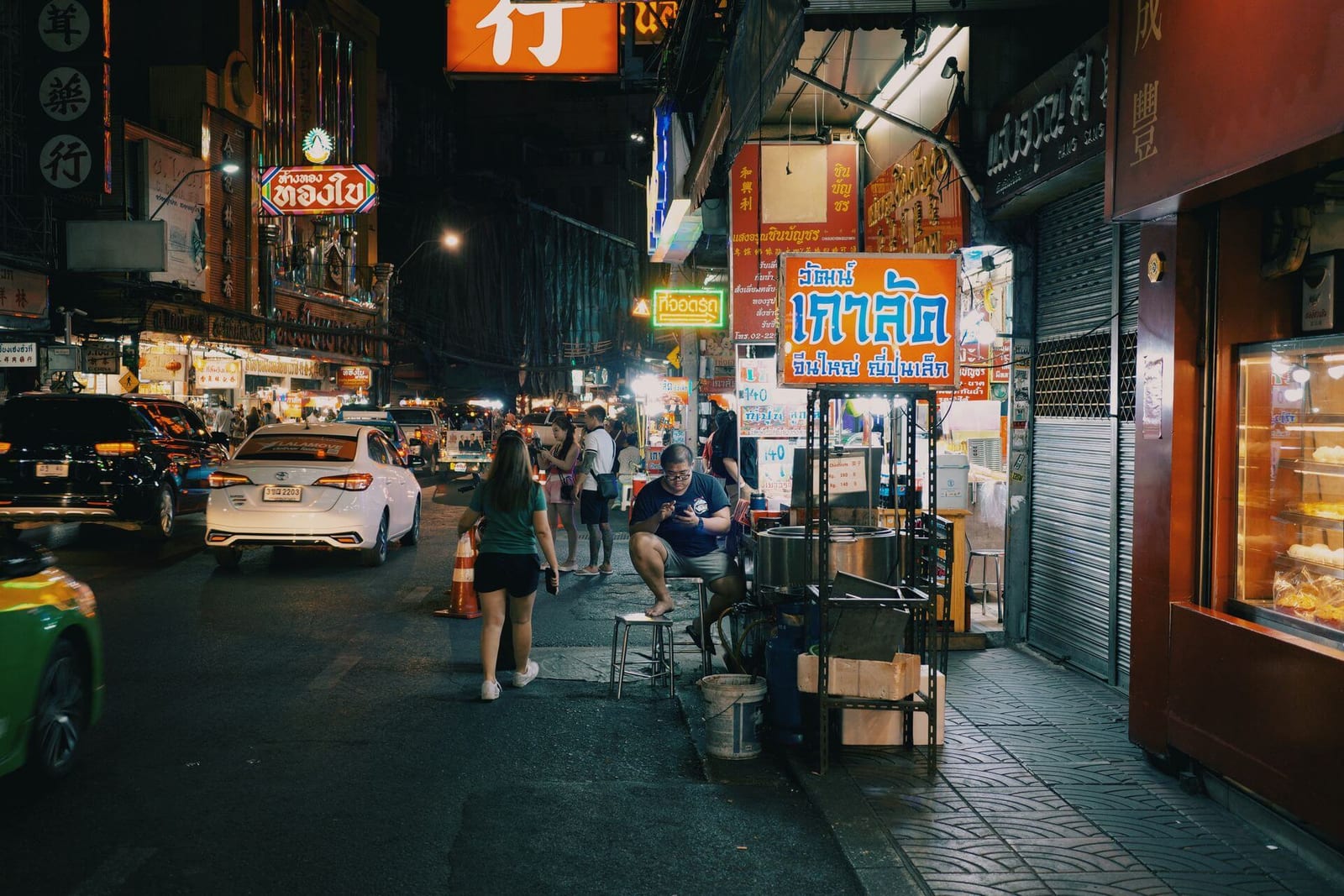
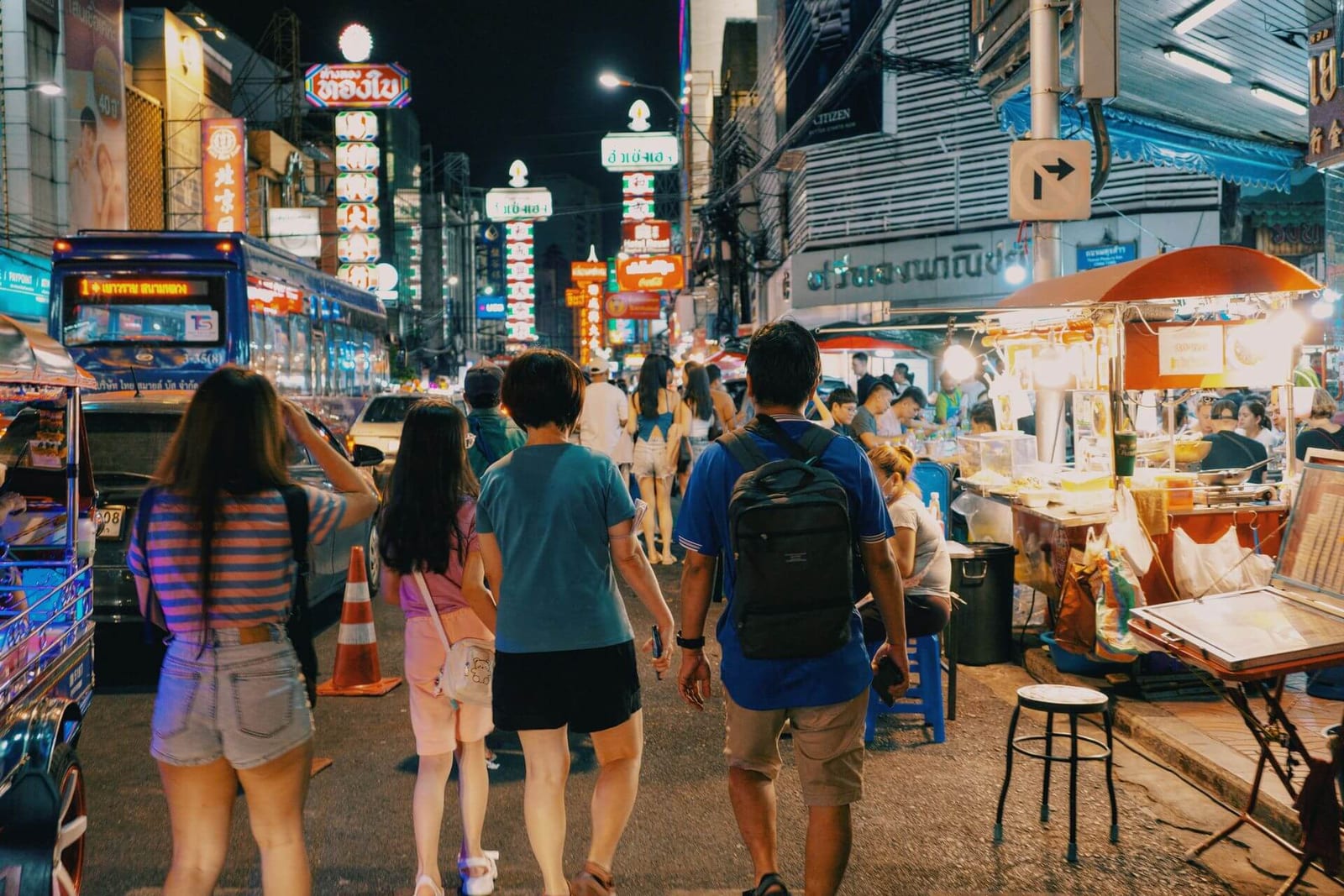
Next door, Yaowarat Road and the wider Chinatown and Yaowarat district offer a different kind of stay: dense, characterful streets, gold shops and herbal medicine halls by day, and one of the city’s best food scenes after dark. Hotels here run smaller and more varied than the riverside giants, and the MRT’s Wat Mangkon station gives Chinatown its own direct rail link, unlike most of the Old City.
Who this area suits
Travellers after a scenic, atmospheric stay, whether a riverside splurge or a characterful Chinatown base with genuine street food on the doorstep, rather than the most convenient or the cheapest option.
Search Chinatown & riverside hotels on Booking.com →
Where to stay in Bangkok: common questions
Which area should first-time visitors choose?
Most first-timers do well in either the Old City, for walking distance to the Grand Palace and Wat Pho, or Sukhumvit, for the easiest transport and the widest range of hotels. If sightseeing is the priority, lean toward the Old City; if convenience and nightlife matter more, lean toward Sukhumvit.
Is it worth paying more to stay near a BTS or MRT station?
Often, yes. Bangkok’s road traffic can turn a short distance on the map into a long, unpredictable taxi ride, especially at rush hour, so a station within walking distance can save real time across a multi-day stay. The Old City and most riverside hotels sit outside the rail network and lean on taxis, ride-hail apps and river boats instead, which still works well but takes more planning.
Can I stay in the Old City and still reach Sukhumvit easily?
Yes, by taxi, ride-hail app, or a combination of river boat and BTS, though it takes longer than staying on the rail network itself. It suits a trip weighted toward temples and canals with occasional evenings in Sukhumvit, rather than one split evenly between the two.
Is Chinatown too noisy or chaotic to sleep in?
The main stretch of Yaowarat Road is loud and crowded into the late evening, but the surrounding side streets and hotels are generally calmer, and most visitors find the trade-off worthwhile for the food and atmosphere. If quiet matters most, a riverside hotel a short walk or boat ride from Chinatown gives you the district without sleeping in the middle of it.
Plan the rest of your stay
Once you have picked an area, line it up against what you actually want to see and do around Bangkok.
For more on connecting these areas once you have booked, see getting around Bangkok, or head back to the Bangkok hub for the full planning picture.