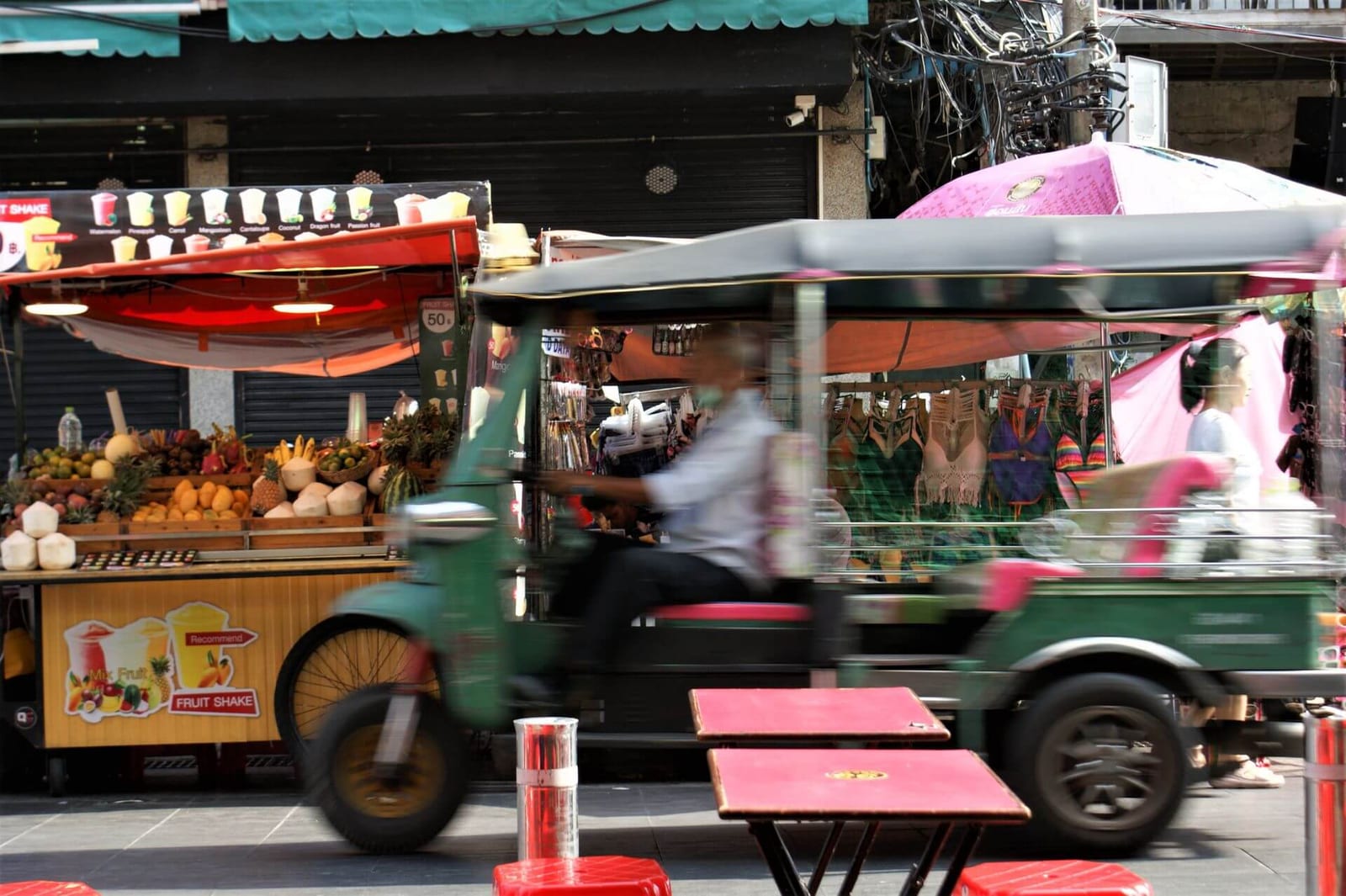

Bangkok is one of the world’s great eating cities, and the reason has less to do with any single restaurant than with the sheer density and skill of its street food. A stretch of pavement can turn out noodle soup, grilled skewers and a curry stall within the same twenty metres, each one run by a cook who has made the same two or three dishes for years. Restaurants exist and some are excellent, but the street, the market and the food court are where Bangkok actually eats, and where a visitor gets closest to how the city really tastes.
Dishes to try
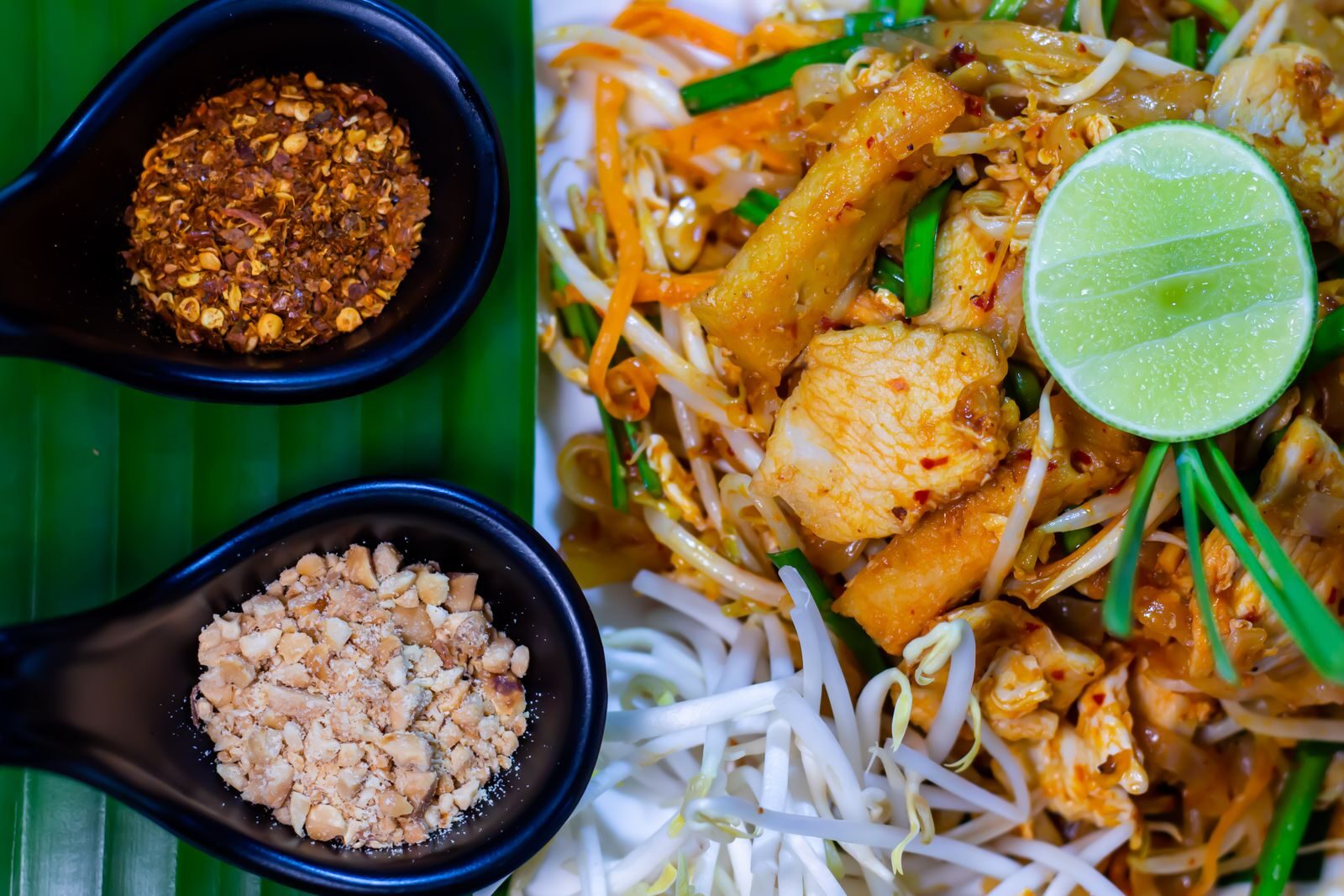
These are the dishes worth actively seeking out, from the everyday to the ones built for a special order at a stall that specialises in nothing else.
Pad thai
Stir-fried rice noodles with egg, tofu, dried shrimp and usually fresh shrimp or chicken, tossed with tamarind, fish sauce and palm sugar, then served with crushed peanuts, lime and bean sprouts on the side. It became Thailand’s best-known dish abroad partly through a mid-twentieth-century government campaign to promote rice noodles over imported rice, and it is worth trying, but it is less central to everyday Thai eating than its global reputation suggests.
Pad krapow (stir-fried holy basil)
Minced pork, chicken or beef stir-fried hard and fast with garlic, chilli and holy basil, spooned over rice and almost always topped with a fried egg, kai dao. This is the dish Thais order when nothing else comes to mind, sold at simple rice-and-curry shops in every district, and it is a fair test of how a cook handles heat and basil in a few minutes flat.
Boat noodles
Kuay teow reua, a dark, intensely flavoured noodle soup with pork or beef and blood, built on spices rather than just stock. It takes its name from vendors who once sold it from boats along Bangkok’s canals, serving small bowls so customers could order several rounds without capsizing the boat. Stalls on land kept the habit, so ordering four or five small bowls is normal, not greedy.
Som tam (green papaya salad)
Shredded unripe papaya pounded in a mortar with chilli, lime, fish sauce and palm sugar, often with dried shrimp, peanuts, tomato or salted crab depending on the stall. It travelled to Bangkok from the Isan region in the northeast and is now sold everywhere, sharp, hot and genuinely refreshing in the heat.
Tom yum goong
A hot and sour prawn soup built on lemongrass, galangal, kaffir lime leaf and chilli, finished with lime juice for the sour edge. Versions vary from a clear broth to a richer one thickened with chilli paste and evaporated milk (tom yum nam khon); both are legitimate, and a good bowl should hit sour and spicy at the same time, not one after the other.
Khao man gai
Poached or steamed chicken served over rice cooked in the chicken’s own fat and stock, with a ginger and chilli dipping sauce on the side. It descends from Hainanese chicken rice, brought by Chinese migrants, and specialist stalls that do khao man gai and little else tend to be the most reliable, since the rice and the chicken are the whole dish.
Mango sticky rice
Khao niew mamuang: sweet sticky rice steamed with coconut milk and salt, served alongside ripe mango and often a drizzle of coconut cream on top. Quality tracks the mango, so it is at its best when mangoes are properly in season rather than out of it.
A Chinatown pick: grilled seafood and dim sum
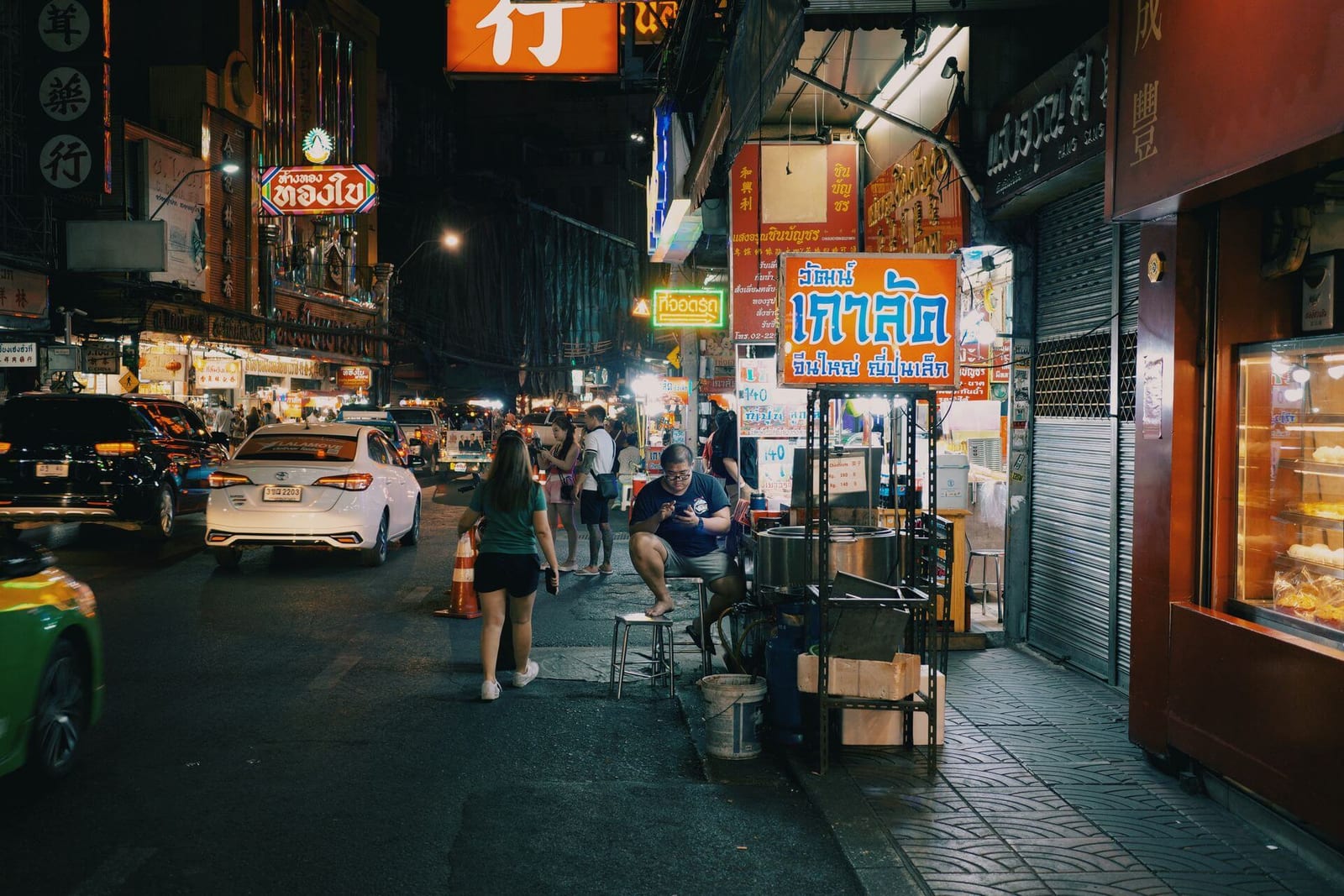
Yaowarat Road in Chinatown turns into a food street after dark, with kerbside grills, dim sum steamers and noodle carts working within a few steps of each other. Grilled prawns and squid straight off the charcoal, and steamed dim sum from carts that have specialised in it for years, are the two things worth prioritising if the street is crowded and time is short.
Where to eat
Yaowarat and Chinatown after dark
Yaowarat Road is Bangkok’s single most concentrated food street, especially from early evening onward once the day’s heat has eased and the stalls set up in force. It rewards walking the full length once to see what draws a crowd, then doubling back for it rather than committing to the first stall you pass. The MRT Blue Line to Wat Mangkon station puts you directly on the street; see getting around Bangkok for how the wider transit system connects to it.
Markets and food courts
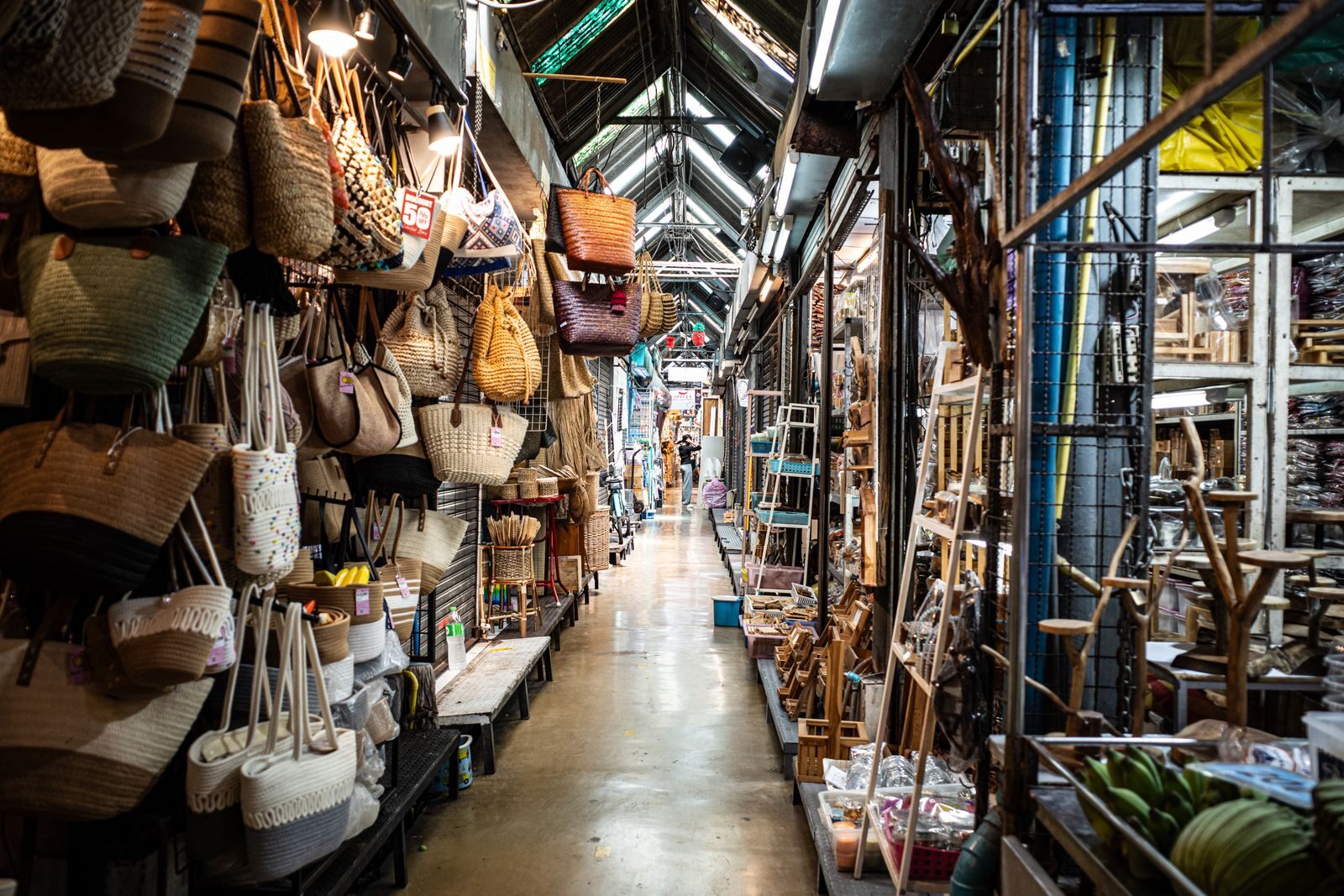
Local fresh markets scattered through every district are where residents actually shop and snack, with cooked-food sections alongside produce stalls. For a gentler introduction, shopping mall food courts are a genuinely useful option rather than a compromise: air-conditioned, with English-language menus and stalls covering noodles, curries, grilled meats and desserts side by side. Most work on a stored-value card system: you buy or top up a card at a counter on entry, tap it at whichever stalls you choose, and cash out any unused balance before you leave. It is a low-friction way to sample several dishes in one sitting without juggling small change at every stall.
Riverside and the Old City
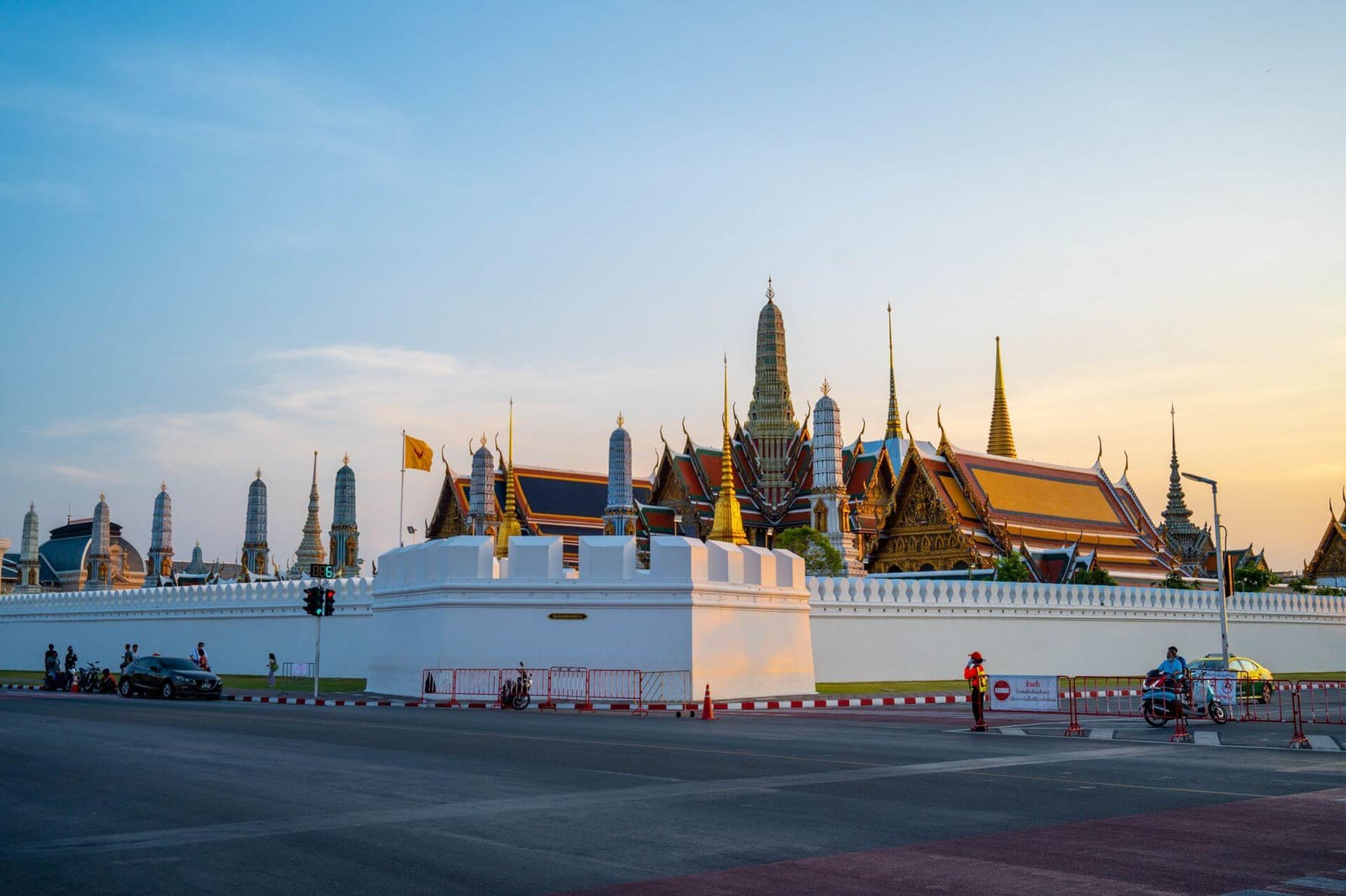
The area around the Grand Palace, Wat Pho and the Chao Phraya riverside mixes old shophouse cafes and simple noodle shops with restaurants that take advantage of the river view, particularly toward sunset. It tends to be calmer than the big night markets and Chinatown, useful if you want to eat somewhere quieter after a day of temple visits.
Practical tip
Learn two words before you order: “phet” (spicy) and “mai phet” (not spicy). Saying “phet noi” asks for a little spice rather than none. Vendors generally take the request seriously, and it is far easier to ask upfront than to negotiate with a mouthful of chilli.
Eating well and safely
The single most useful habit is to favour stalls with a visible queue and high turnover. Food that is cooked to order in front of you and moving fast through a busy stall has less time to sit around than food held warm at a quiet one, and a queue of locals at lunchtime is a better signal than any guidebook star rating. Watching your dish being cooked, rather than pointing at something already plated and waiting, is standard practice and not considered rude.
Vegetarian and vegan eating is more workable than first-time visitors often expect, but it takes a little vocabulary. “Jay” (เจ) refers to a strict vegetarian style of Thai cooking that also avoids garlic and strong-flavoured vegetables, and stalls or restaurants serving it usually mark themselves with a yellow sign or flag. Away from jay stalls, fish sauce and shrimp paste turn up in a lot of default dishes, so it is worth asking specifically rather than assuming a vegetable dish is meat-free.
Bangkok food tours & cooking classes
 Free cancellation
 Free cancellation
 Free cancellation
 Free cancellation
 Free cancellation
 Free cancellation
Live availability and prices from Viator. We may earn a commission, at no extra cost to you.
Bangkok food: common questions
Is street food in Bangkok safe to eat?
Generally yes, and it is one of the best parts of visiting. The main safeguard is choosing busy stalls with a fast-moving queue and food cooked in front of you, rather than dishes that have been sitting out. Bottled water is easy to find everywhere if you want to avoid tap water.
What is the one dish I should try first?
Pad krapow (stir-fried holy basil with rice and a fried egg) is the most representative everyday dish and a fair introduction to how Thai cooks balance chilli, garlic and basil. If you would rather start with something familiar-sounding, pad thai is an easy, widely available first stop, though it is not what most locals eat day to day.
Are there vegetarian options?
Yes. Look for stalls and restaurants marked with a yellow “jay” sign for strict vegetarian Thai food, and at ordinary restaurants ask for dishes without fish sauce or shrimp paste, since both appear by default in many recipes that otherwise look vegetable-based.
Where should I eat on my first night?
A mall food court is a low-pressure way to sample several dishes with English menus while you get your bearings, especially if you have just landed. Once you are ready for something livelier, Yaowarat Road in Chinatown or the stalls around Khao San Road both make for an easy, walkable first proper night of eating.
Build out your Bangkok trip
Eating well is one layer of a longer visit. Pair a food-focused evening with the city’s temples, markets and river sights for a fuller picture of Bangkok.