
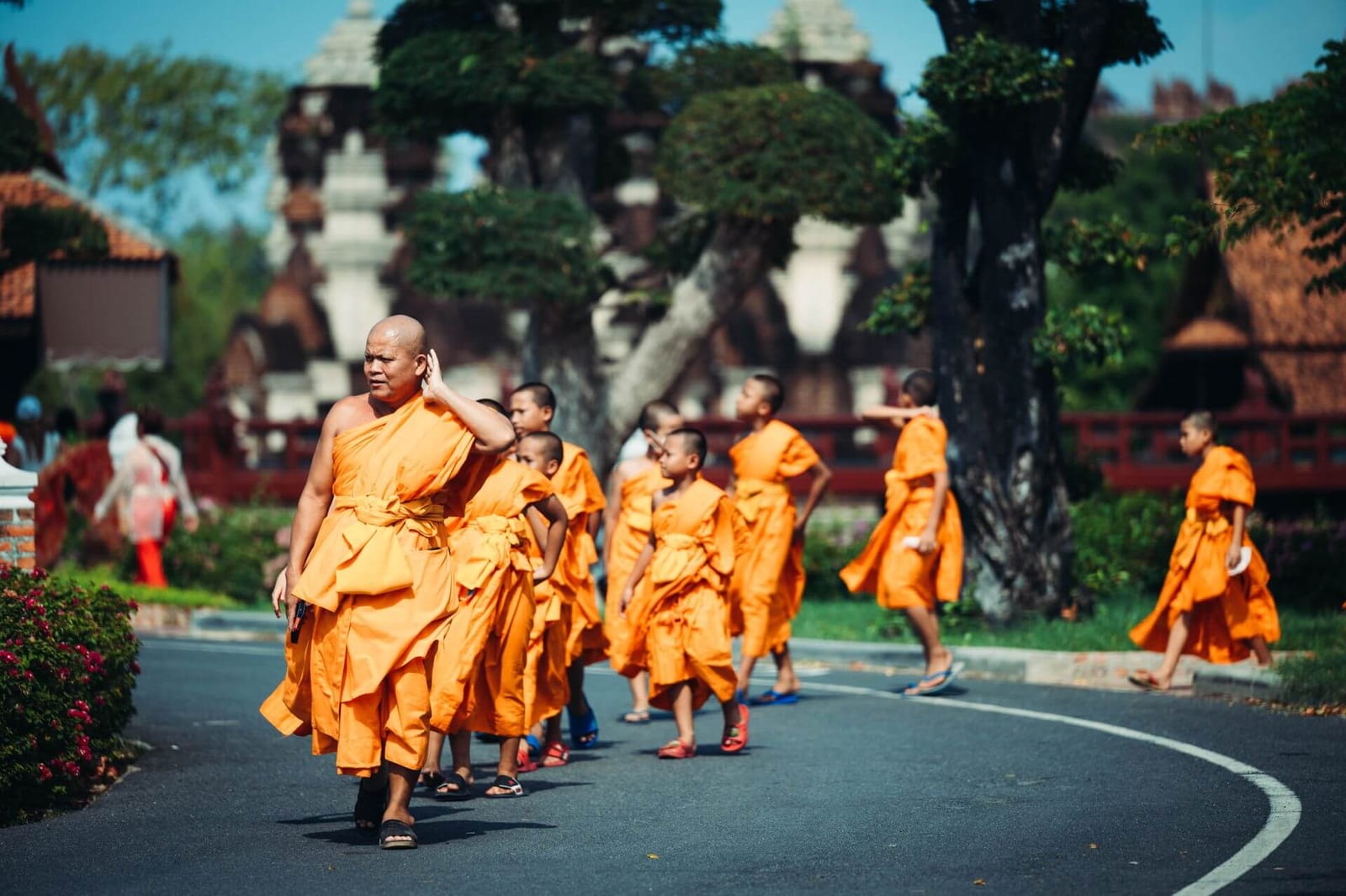
Thailand’s temples are not museums. They are working places of worship, tended by monks and visited every day by Thais who come to make merit, and a little care on your part goes a long way. None of the rules below are complicated, and locals are forgiving of an honest mistake, but getting them right shows respect and spares you an awkward moment at the door.
Temple etiquette at a glance
- Dress: shoulders and knees covered, nothing see-through. Carry a scarf or sarong.
- Shoes: off before you enter any ordination hall or shrine building.
- Feet: never point them at a Buddha image or a person. Tuck them behind you when sitting.
- Monks: treat with respect. Women do not touch a monk or hand anything to him directly.
What to wear
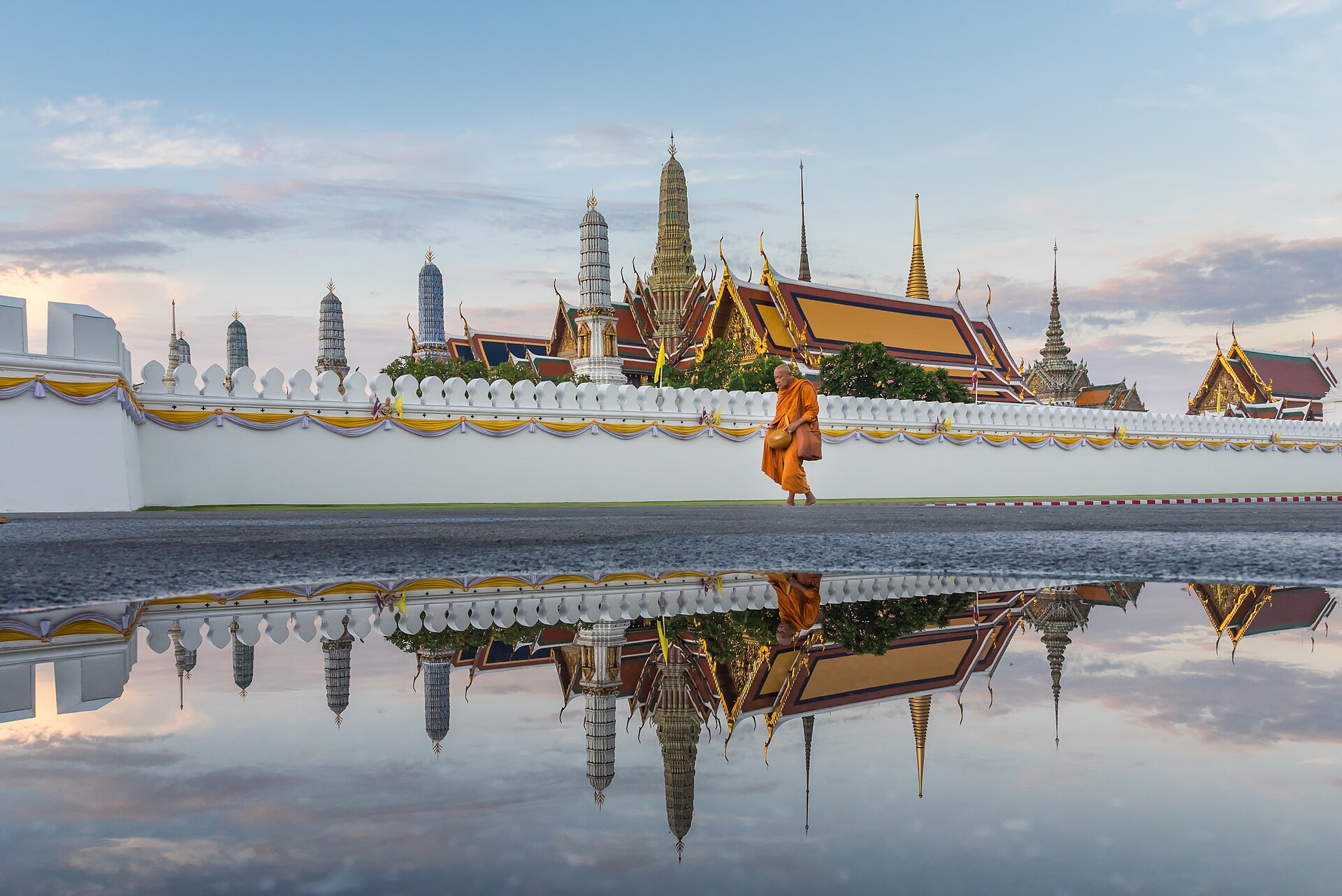
The single rule that catches most visitors out is dress. Both shoulders and knees should be covered, and thin or see-through fabric does not count. This is enforced strictly at the big royal temples, above all the Grand Palace and Wat Phra Kaew in Bangkok, where you will be turned away or sent to hire a cover-up if you arrive in shorts or a vest. Smaller neighbourhood temples are more relaxed, but the same standard is always the safe choice. The easy fix is to carry a light scarf or a sarong in your bag; it doubles as sun cover and weighs nothing.
Shoes, hats and how you carry yourself
Remove your shoes before stepping into any ordination hall or shrine room. You will see a rack or a pile of sandals at the threshold; leave yours there. Hats and sunglasses come off inside too. Keep your voice down, switch your phone to silent, and move calmly. If a service or a chant is under way, wait at the edge rather than walking through it.
The feet, and the head
In Thai culture the feet are the lowest part of the body and the head the highest, and temple manners follow from that. Never point your feet at a Buddha image, a monk or another person: when you sit on the floor of a shrine, tuck your legs to the side in the mermaid position rather than stretching them out in front. By the same logic, avoid touching anyone on the head, even a child.
Around the Buddha images
Buddha images are sacred, not photo props. You are welcome to photograph them in most temples, but do not climb on them, pose with your back turned for a jokey selfie, or clamber up a chedi for a better shot. When you sit, keep your head lower than the main image if you can. A small donation in the box by the door is normal and appreciated, never required.
Monks
Monks keep a set of precepts that shape how you interact with them. The one worth remembering is that a woman should not touch a monk or hand him anything directly; if something needs to pass, a man relays it or the monk lays out a cloth to receive it. Give monks space, let them pass first, and if you photograph them, do it discreetly. Early risers may see the dawn alms round, when people offer food to monks walking barefoot through the streets. It is fine to watch quietly; join in only if you understand what to do.
One item earns its place in your day bag more than any other at a temple: a light scarf. It covers shoulders in a second, works as a sarong over shorts, and means you never have to skip a temple because of what you happened to wear that morning.
Temple etiquette: common questions
Can I wear shorts to a temple in Thailand?
Not to the major ones. The Grand Palace and other royal temples require knees and shoulders covered and will turn you away otherwise. At smaller temples shorts may pass, but covering up is always the respectful and reliable choice.
Do I have to take my shoes off?
Yes, before entering any ordination hall or shrine building. Look for the shoe rack or the pile of sandals at the entrance and leave yours there. You can keep them on while walking the outdoor grounds.
Can women visit temples and see monks?
Yes. Women are welcome everywhere visitors are allowed. The only specific rule is that a woman should not touch a monk or pass something to him hand to hand; a man passes it on, or the monk uses a receiving cloth.
Is it rude to take photos in a temple?
Usually not, and most temples allow it, but be discreet, avoid disrespectful poses with Buddha images, and watch for signs banning photography in specific halls. During a ceremony, put the camera away.
Ready to put it into practice? Start with the temples of the capital in our guide to things to do in Bangkok, or plan the wider trip with our three-day Bangkok itinerary.

About the author
Ploy Saetang
Ploy Saetang is a Bangkok-born writer who covers Thailand's temples, history and living culture. She has spent fifteen years following the country's festivals, royal sites and quieter regional traditions, and writes to help visitors understand what they are looking at, not just photograph it.
View all articles by Ploy Saetang →